



Earth Tone Watercolour Landscape
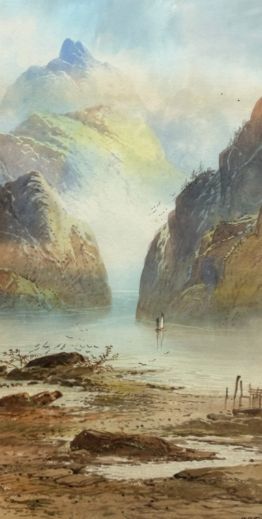
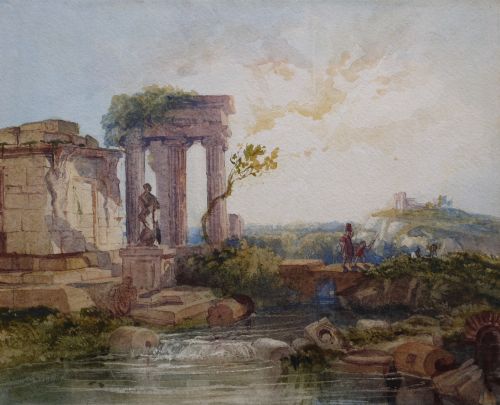
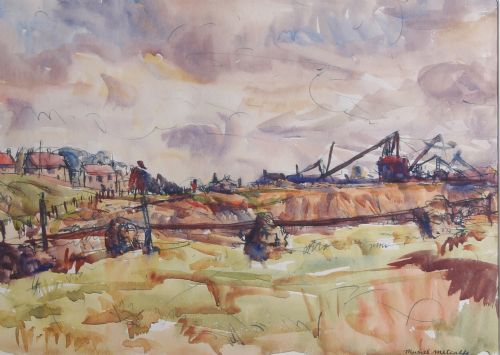
An earth tone watercolour landscape brings muted skies and earthy washes into a room, capturing rural valleys, coastal harbours and quiet villages across the British Isles and beyond.
Earth Tone Watercolour Landscape
An earth tone watercolour landscape is an original work on paper depicting scenery through pigment and water, often grounded in the natural ochres, umbers and siennas of the countryside. These pieces span from the nineteenth century through the Edwardian period and into mid-century modern British traditions, reflecting changing approaches to depicting rural and coastal views.
The selections on this page lean heavily toward British and European topography, capturing everything from Yorkshire dales and Welsh mountains to Italian street scenes and Nile villages. Buyers encounter framed original artwork created by named regional painters as well as accomplished contemporaries working within impressionist and classical idioms.
How They Were Made
Watercolour pigment was mixed with water and applied to heavy paper sheets, relying on the white of the unpainted paper to generate light through translucent washes. Artists built up depth through layered brushwork, sometimes combining fine pen or pencil lines with broader washes of earth colours.
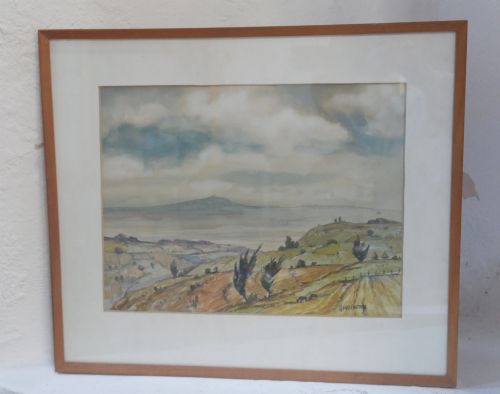
Finished paintings were commonly mounted behind glass within wooden frames, protecting the delicate paper surface from atmospheric moisture and handling over the decades.
Earth Tone Watercolour Landscape Retail Price Guide 2026
Typical asking prices for earth tone watercolour landscape among the pieces listed under this phrase on Sellingantiques today, from the lower quarter to the upper quarter. They describe what is for sale here now, not the wider market.
Several Victorian pastoral scenes meticulously record heavy working horses pulling ploughs through muddy fields, proving that even agricultural labour required a dedicated audience.
What Varies in Quality
The distinction between standard works and master examples lies in the assuredness of the brushwork and the subtlety of the colour palette. Stronger pieces demonstrate a confident control of light and atmosphere, turning simple rural subjects into compelling visual studies.
Condition also plays a central role, as paper can suffer from foxing or fading when exposed to direct light. Works that retain their original pigment intensity and paper stability stand apart from those dimmed by poor preservation.
William Henry Earp·Richard Principal Leitch·Alfred George Morgan·Oswald Garside·Fred Lawson·James Orrock·James Hardy Junior·John Syer·Sidney James Beer·John Edward Bale·Kate E Booth·Henry Charles Fox·Thomas James Lloyd·Stephen John Batchelder·Percy Brooke·Albert Robert Quinton·John Sowden·Thomas Pyne·John Abernethy Lynas-Gray·Edward Killingworth Johnson·Charles James Adams·William Manners·Frederick Tucker·Thomas Swift Hutton·J.D. Walker
The Earth Tone Watercolour Landscape Glossary
- Watercolour pigment
- Finely ground colour particles suspended in a water-soluble binder, applied to paper to create transparent washes. This medium allows light to reflect directly off the white paper beneath the paint layers.
- Wash
- A thin, fluid layer of diluted watercolour spread evenly across the paper. Painters use broad washes to establish atmospheric skies or distant rolling hills.
- Foxing
- Small brownish spots caused by chemical reactions in the paper over time. Collectors look closely at margins to assess how deeply these age marks penetrate the painted surface.
- Mount
- A cardboard border placed between the artwork and the glass. It prevents the delicate paper surface from sticking to the glazing over decades.
Earth Tone Watercolour Landscape: Frequently Asked Questions
What is an earth tone watercolour landscape?
These works are original paintings executed on paper using water-soluble pigments dominated by natural browns, greens, ochres and greys. They capture outdoor scenes ranging from Welsh valleys to Yorkshire harbours.
Created across the nineteenth and twentieth centuries, the pieces utilise translucent washes to render the shifting light of rural and coastal environments.
How should I frame and hang these watercolours?
Paper works require framing behind glass with a suitable mount to keep the surface away from humidity and direct contact. Acid-free backing materials protect the paper from degradation over time.
Keep them away from direct sunlight to prevent the watercolour pigments from fading or the paper from yellowing on the wall.
How can I tell the period of a landscape?
Stylistic clues, framing materials and paper characteristics often point towards specific eras like the Victorian period or the Edwardian decade. Many pieces carry period signatures, dates or titles inscribed by the artist on the front or reverse.
Subject matter and costume details in figurative scenes also help narrow down the decade in which the work was produced.
Where were these landscape watercolours painted?
The selections record views across the British countryside, including Yorkshire, West Sussex, Surrey and Wales, alongside continental scenes from Italy and Egypt. Artists travelled extensively to capture local topography, rural farming life and coastal harbours.
These depictions offer a window into historic rural communities and landscapes before modern industrial development reshaped them.