



Earth Tone Watercolour Art
Earth tone watercolour art brings together landscape and figurative works defined by muted palettes, paper supports, and traditional framing.
Earth Tone Watercolour Art
Earth tone watercolour art encompasses original paintings created on paper surfaces using pigment and water-based paints. Buyers seeking these works encounter pieces that primarily date from the nineteenth century through to the mid-twentieth century.
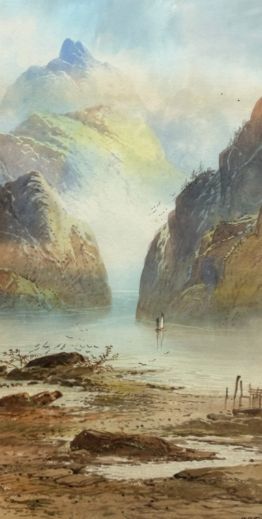
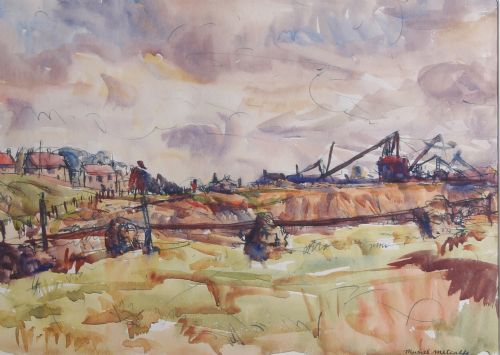
The selections on this page focus heavily on British landscapes, coastal scenes, and rural village views. Works span Victorian, Edwardian, and mid-century modern movements.
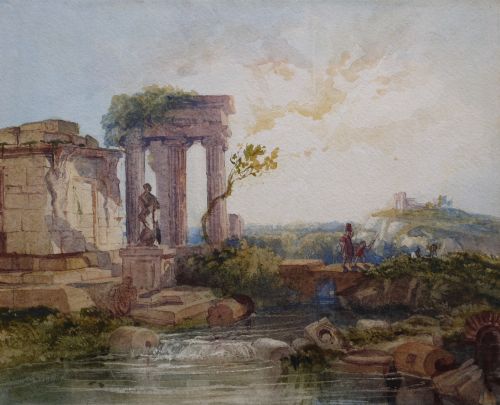
Framed watercolours dominate the selection, often protected behind glass to preserve the delicate pigment layers on paper. Subjects range from Scottish lochs and Yorkshire harbours to still life arrangements and Italian figurative interiors.
Materials and Technique
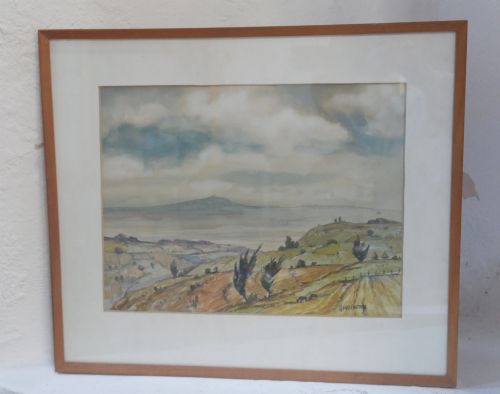
Artists painted directly onto paper sheets using watercolour pigment suspended in water, relying on the white of the paper to provide luminosity. Wood frames and glass glazing protected these fragile water-soluble compositions from moisture and handling.
Creators applied washes of brown, ochre, green, and grey tones to build up tonal depth in landscapes and rural scenes. Signatures, dates, and inscriptions were frequently added by hand in pencil or ink beneath the image.
Several artists braved muddy fields and stubborn livestock to paint rural plough teams in action.
Judging Quality
The strength of the composition and the confident handling of pigment separate finer works from standard student examples. Master painters achieved subtle gradations of tone and atmospheric light that lesser hands missed.
Condition plays a major role, particularly the preservation of the original pigments against fading from sunlight. Intact period wood framing and clear provenance inscribed on the reverse or mount enhance desirability.
William Henry Earp·Richard Principal Leitch·Thomas Ellison·Muriel Metcalfe·Alfred George Morgan·Oswald Garside·James Tower·Fred Lawson·Anne Dorrien Smith·James Orrock·James Hardy Junior·Louie Stanley Maurice Prince·John Syer·Sidney James Beer·John Edward Bale·Kate E Booth·Adrian Jones·Henry Charles Fox·Thomas James Lloyd·Stephen John Batchelder·Percy Brooke·Leonardo Morello·Albert Robert Quinton·John Sowden·Thomas Pyne
The Earth Tone Watercolour Art Glossary
- Watercolour
- A paint consisting of a pigment suspended in a water-soluble vehicle, applied to paper surfaces. It allows for transparent washes and delicate tonal layering.
- Wash
- A thin, transparent layer of diluted watercolour pigment applied across areas of paper. It creates smooth backgrounds for skies, water, and broad landscape elements.
- Gouache
- An opaque water-based paint sometimes combined with watercolour to add highlights and solid colour. It contains white pigment mixed with the colour to increase opacity.
- Support
- The physical material upon which the painting is executed, which for these works is consistently paper. The weight and texture of the paper influence how the pigment absorbs.
- Provenance
- The documented history of a work of art, including previous ownership, exhibition records, and attributions. It helps verify the authenticity and age of older paintings.
Earth Tone Watercolour Art: Frequently Asked Questions
What is earth tone watercolour art?
These works are original paintings on paper created with water-soluble pigments in muted natural palettes. They primarily depict landscapes, rural scenes, and architectural subjects from past centuries.
Most examples date from the Victorian era up to the mid-twentieth century. They are typically displayed behind glass within wooden frames.
How should I hang these watercolours?
Watercolour paintings require protection from direct sunlight to prevent the pigments from fading over time. Choose interior walls with stable humidity and gentle ambient lighting.
Ensure the framing uses acid-free mounts to prevent the paper from yellowing. Glass glazing keeps dust and moisture away from the delicate painted surface.
How do I date an antique watercolour?
Dates are often indicated by the artist's active lifespan, handwritten signatures, or inscriptions on the reverse of the paper. Stylistic clues such as costume, architecture, and framing methods also point to specific decades.
Victorian and Edwardian works frequently exhibit traditional landscape conventions. Mid-century pieces tend toward looser brushwork and more modern compositions.
Were these paintings made outdoors?
Many landscape and architectural watercolours began as plein air sketches created on location. Artists captured transient effects of light and weather quickly before finishing works in the studio.
Porter boxes and portable paper pads allowed nineteenth-century painters to travel easily through rural Britain and Europe.