





Early Wooden Armchair
An early wooden armchair brings centuries of solid craftsmanship and honest materials straight into a modern room.
Early Wooden Armchair
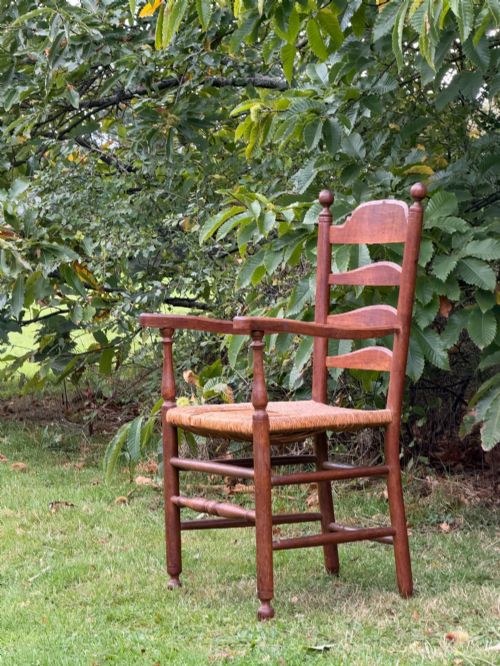
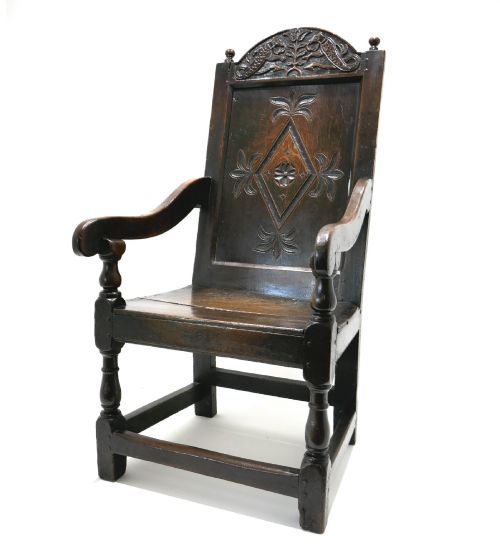
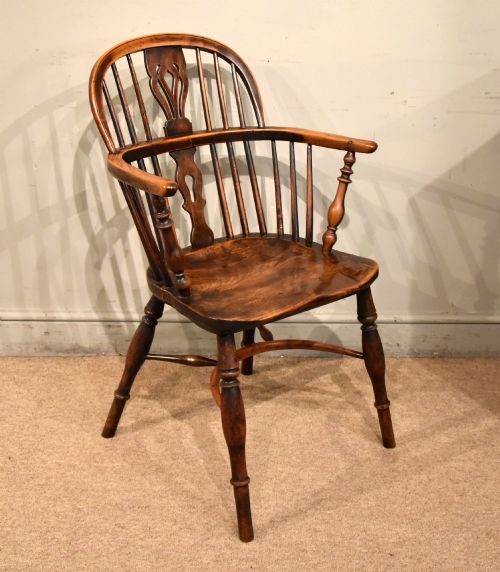
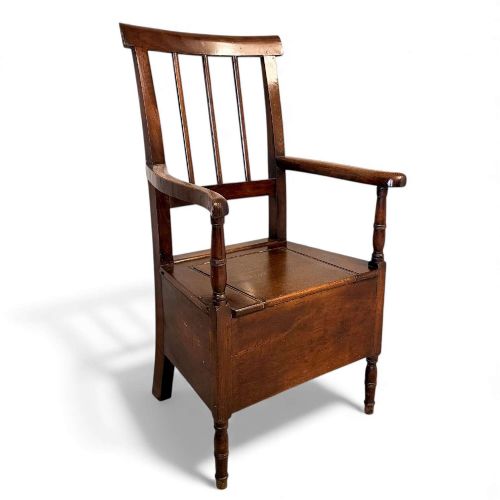
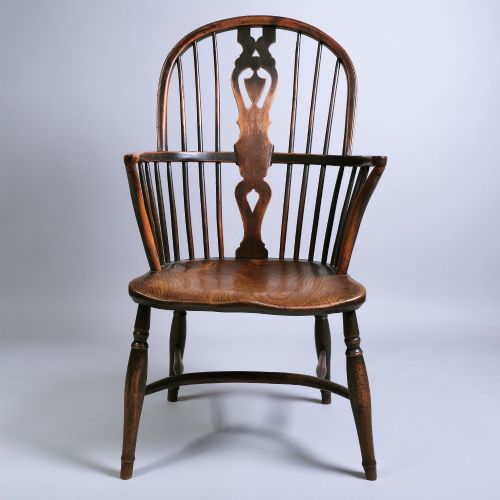
An early wooden armchair is a substantial seating form constructed from timber like oak, elm, ash, and yew, spanning centuries of domestic and official life. When you search for an early wooden armchair, you encounter diverse regional variations ranging from heavy 17th-century wainscot forms to country Windsor chairs and later 19th-century elm and rush-seated carvers.
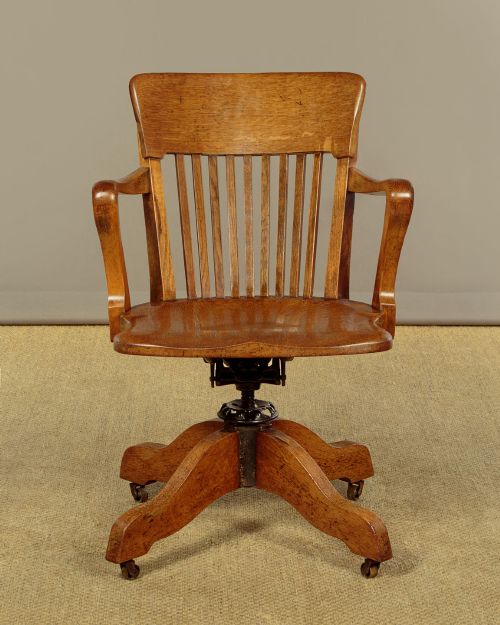
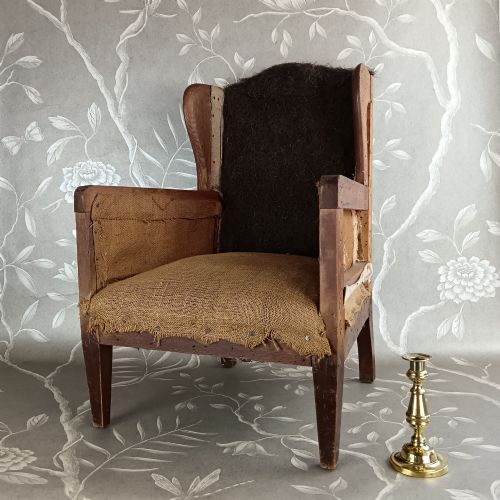
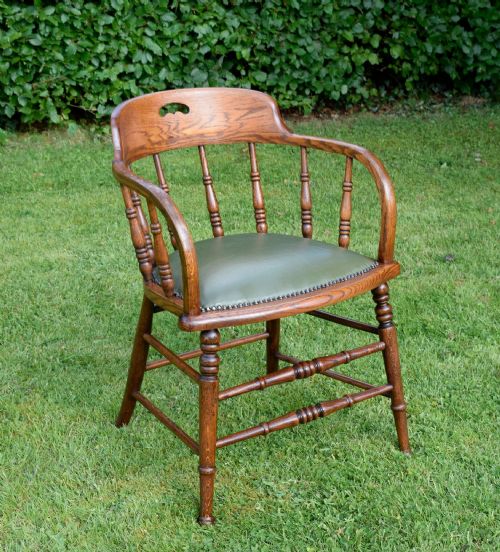
The pieces appearing on this page encompass various historical periods including the 17th century, Georgian eras, and the early 20th century. Forms stretch from sturdy desk chairs and rocking chairs to children's seating and expansive country house wingbacks.
Regional vernacular traditions shape these armchairs significantly, showing distinct local turning, spindle arrangements, and timber choices. Makers utilised native woods available locally, resulting in robust Windsor types, carved wainscot designs, and spindle-backed country carvers built for daily utility.
How they were made
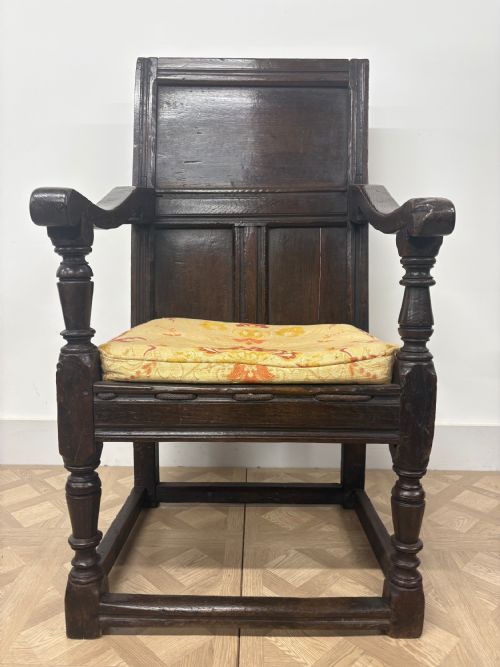
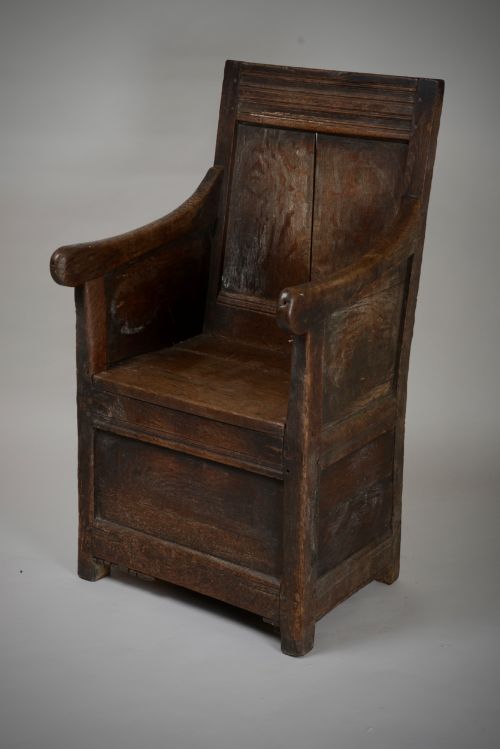
Joinery methods define the older wainscot and panelled examples, utilising pegged mortise and tenon joints to secure heavy oak members. Turners shaped uprights and stretchers on pole lathes, integrating components with seasoned timber pins.
Windsor and stick-back varieties relied on bodging techniques, combining flexible green wood bent under steam with dry-seasoned seating slabs. Elm, ash, and yew were selected for specific structural roles, balancing bendability in the hoops with rigidity in the seats and legs.
Early Wooden Armchair Retail Price Guide 2026
Typical asking prices for early wooden armchair among the pieces listed under this phrase on Sellingantiques today, from the lower quarter to the upper quarter. They describe what is for sale here now, not the wider market.
Several diminutive child's armchairs survive, proving that miniature humans have demanded their own imposing seating arrangements for centuries.
What varies in quality
Timber selection and surface preservation separate ordinary utilitarian seating from superior examples. Chairs retaining original unstripped surfaces, honest patination, and minimal structural replacement demonstrate higher integrity.
The fineness of turning on spindles and stretchers, alongside the proportional balance of arms and back hoops, determines visual distinction. Well-balanced armchairs display careful integration of contrasting woods, such as yew bows paired with elm seats and ash legs.
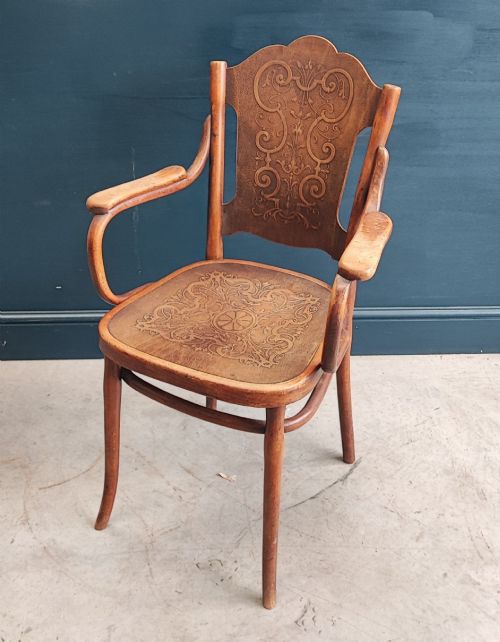
Jacob and Josef Kohn
The Early Wooden Armchair Glossary
- Wainscot chair
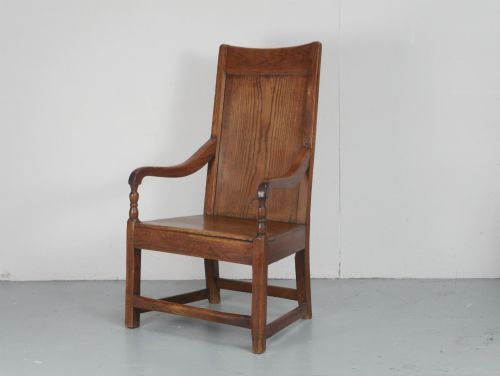
- A heavy wooden armchair of panelled construction, predominantly fashioned from oak during the 17th century. These pieces feature solid back panels and turned front legs.
- Windsor chair
- A timber armchair featuring a saddle-shaped wooden seat into which independent legs and back spindles are wedged. Hoop backs and comb backs are common regional variations.
- Carver chair
- A term applied to a traditional wooden armchair, often matching a set of simpler dining chairs. They frequently appear in country house and farmhouse contexts.
- Crinoline stretcher
- A curved metal or wooden stretcher connecting the legs of a Windsor chair below the seat. It provides structural reinforcement while doubling as a footrest.
- Rush seat
- A seating platform woven from dried marsh rushes around a wooden frame. This technique appears frequently on country rush-seated armchairs.
Early Wooden Armchair: Frequently Asked Questions
What is a wainscot armchair?
A wainscot armchair is a heavy wooden seat built with panelled oak construction, originating primarily in the 17th century. These chairs feature solid wooden backs and sturdy arm supports.
They represent early domestic comfort, often kept by the head of the household in panelled rooms.
Where were country armchairs made?
Country armchairs were produced by local vernacular woodworkers across various English regions, including Nottinghamshire and the West Country. Makers utilised locally harvested timbers such as elm, ash, and fruitwood.
Regional differences appear in the turning of stretchers and the shaping of arm bow supports.
How should I care for antique wooden armchairs?
Antique wooden armchairs require stable indoor humidity levels to prevent timber shrinkage and cracking. Regular dusting with a dry cloth helps preserve the wax finish and surface patination.
Avoid placing these chairs near direct heat sources or strong sunlight to protect the historic wood.