




Early Victorian Seating
Early victorian seating brings together mahogany and rosewood frames, functional dining chairs and library armchairs shaped by nineteenth-century cabinet makers.
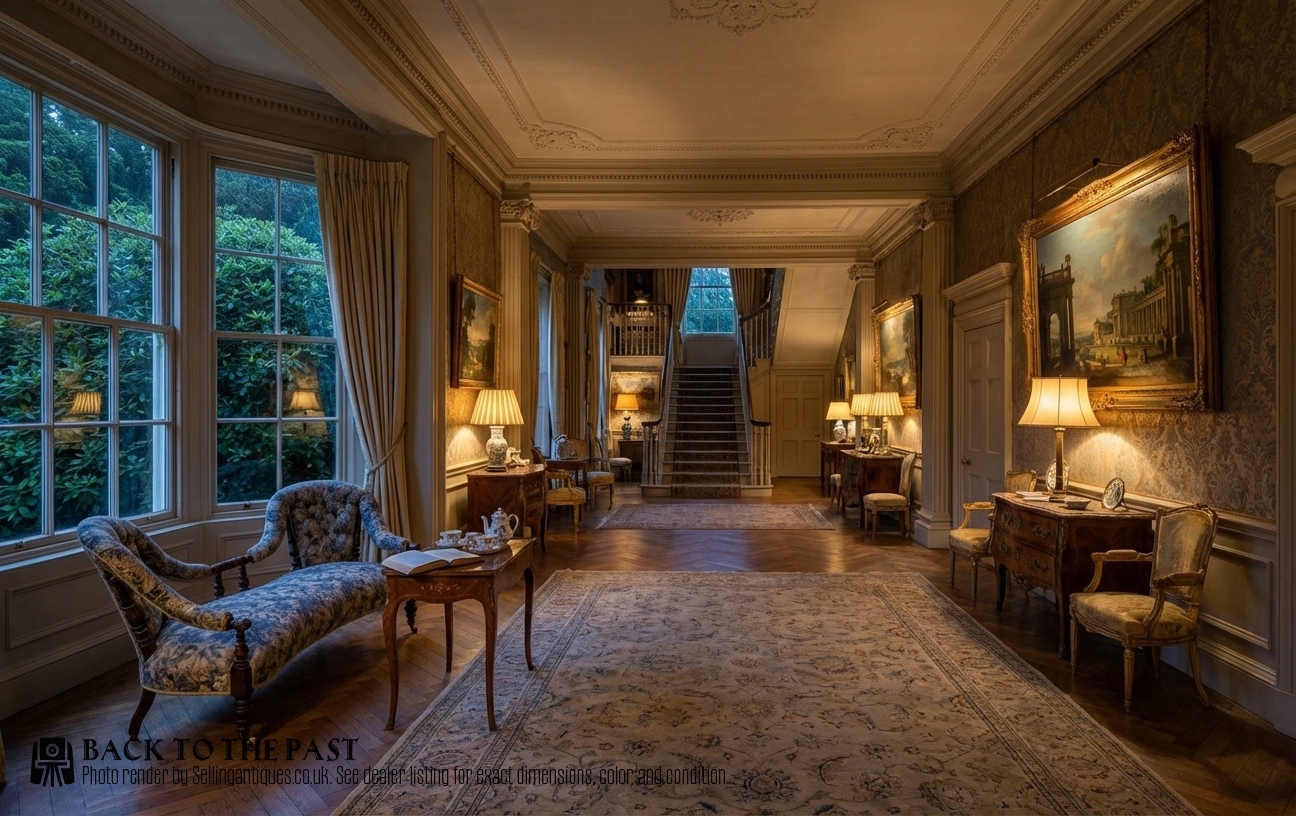
Early Victorian Seating
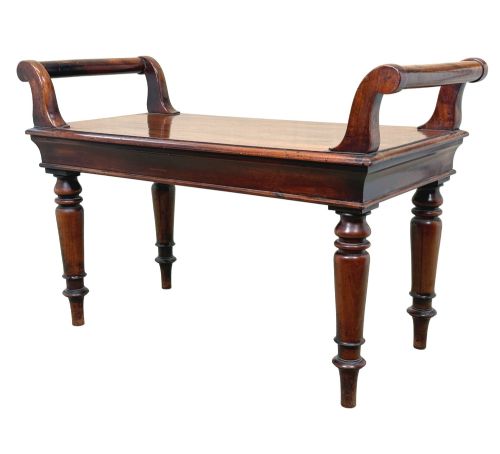
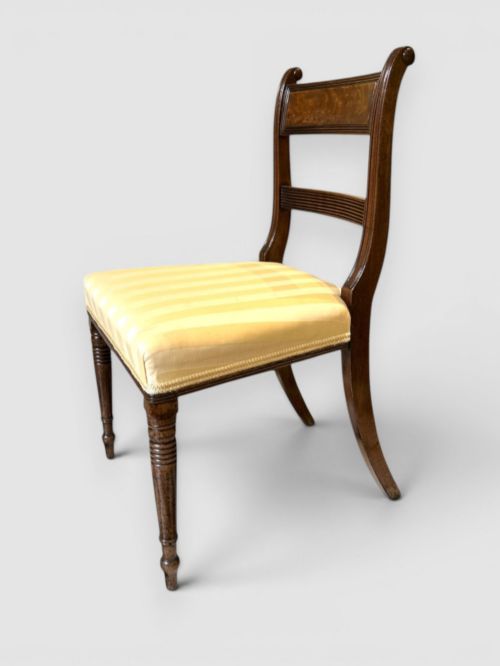
Early victorian seating encompasses a wide array of domestic forms, ranging from sets of dining chairs and hall chairs to specialised items like piano stools and nursing chairs. Buyers searching for early victorian seating frequently encounter mahogany and rosewood frames alongside functional pieces such as window seats and benches.
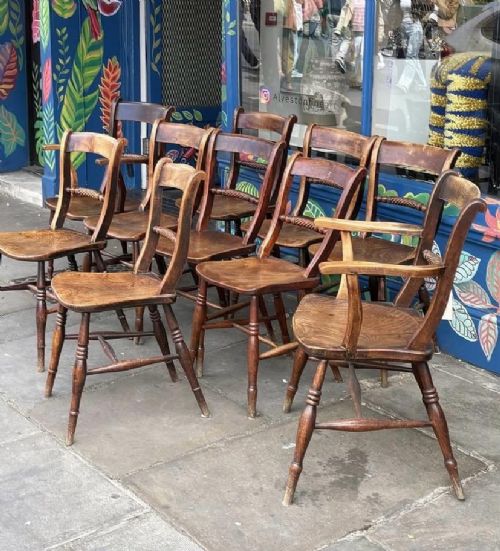
The selections span dining chairs in sets, library armchairs, and childs chairs constructed from ash, elm, and pine. Pieces often overlap stylistically with regency, william iv, and gothic revival designs, reflecting the transitional tastes of the nineteenth century.
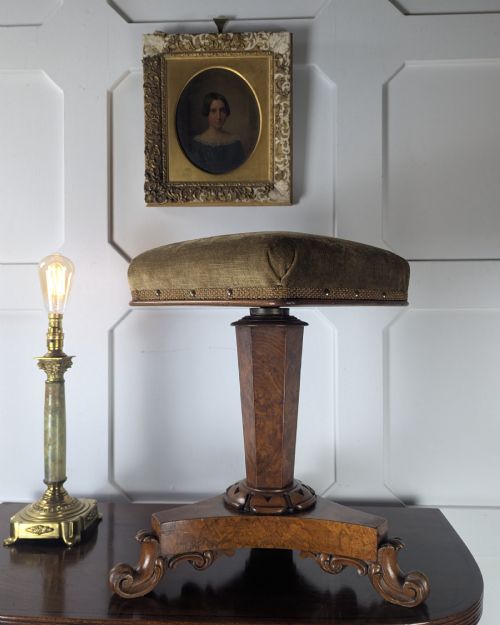
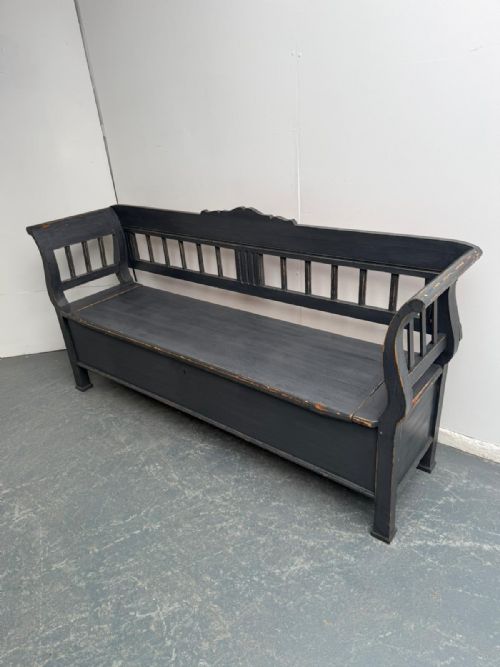
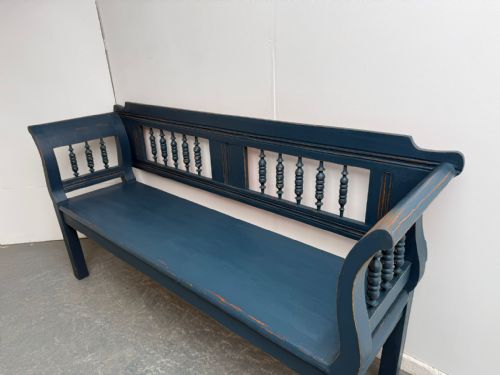
Specialised forms like revolving piano stools, painted settles, and garden seats provide variety in function. The origins stretch from local British workshops to continental examples, including Hungarian benches.
Materials and construction
Makers utilised dense hardwoods like mahogany and rosewood for primary framing, often turning and carving the timber to create ornate scroll backs and detailed legs. Softer woods such as pine, ash, and elm appear in vernacular pieces like childs chairs and country settles.
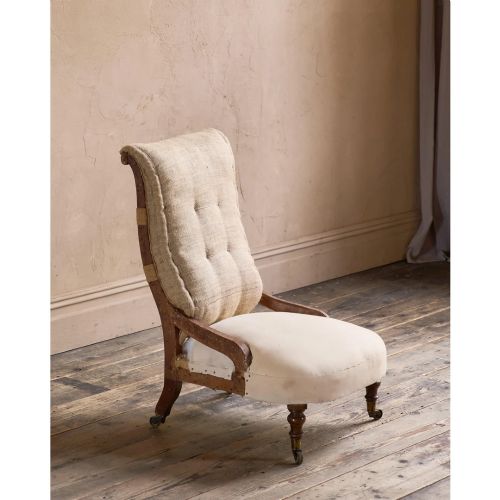
Upholstery methods involved horsehair stuffing secured beneath fabric, velvet, leather, or ticking, sometimes finished with buttoning. Metal elements including brass fixtures and cast iron feature in structural supports and garden seats.
Several heavy railway station benches stamped with station names offer an unexpected industrial alternative to domestic parlour seating.
Defining quality in execution
Quality rests upon the crispness of carved details on rosewood and mahogany frames, alongside the integrity of turned woodwork. Superior examples maintain original frames and upholstery foundations without intrusive structural alterations.
Cohesion within larger sets of dining chairs dictates desirability, as matched groups demonstrate uniform timber selection and consistent joinery. Finer library armchairs and piano stools exhibit balanced proportions and robust mechanical adjustments where applicable.
Howard and Sons·Coalbrookdale
The Early Victorian Seating Glossary
- Rosewood
- A dense, heavily grained timber prized for its rich dark colour and polished finish on nineteenth-century chair frames.
- Settle
- A wooden bench with high backs and arms, often constructed as a singular solid seating unit for domestic halls.
- Ticking
- A tightly woven heavy cotton fabric historically used as a durable base layer for upholstered armchair stuffing.
- Gothic Revival
- An architectural and decorative style utilising medieval pointed arches and structural motifs on furniture frames.
Early Victorian Seating: Frequently Asked Questions
How do I identify early victorian dining chairs?
These dining sets typically feature rosewood or mahogany timbers with carved scroll backs or turned legs characteristic of the mid nineteenth century.
They often appear in sets of six or eight, maintaining proportions derived from earlier regency and william iv designs.
What is a nursing chair used for?
Nursing chairs were built low to the ground with open or low arms to accommodate the voluminous dresses worn by women during the nineteenth century.
They frequently showcase upholstered seats in leather, velvet, or tapestry supported by rosewood frames.
Are piano stools adjustable?
Many period piano stools incorporate revolving mechanisms or screw tops to allow the player to alter their seating height.
These pieces often utilise figured walnut or rosewood with circular upholstered tops.
Where were hall chairs placed?
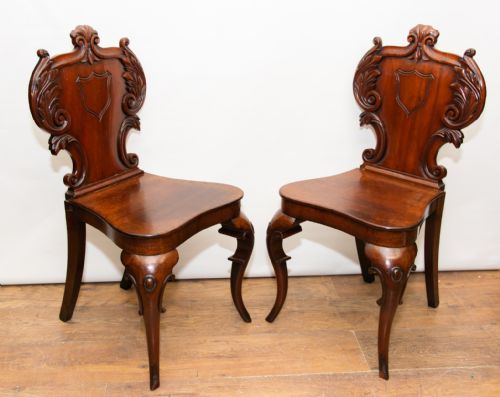
Hall chairs served as functional seating in entrance passages and corridors, constructed primarily from solid carved woods.
They typically lack padded upholstery, relying instead on shaped wooden seats and carved heraldic or decorative backrests.