
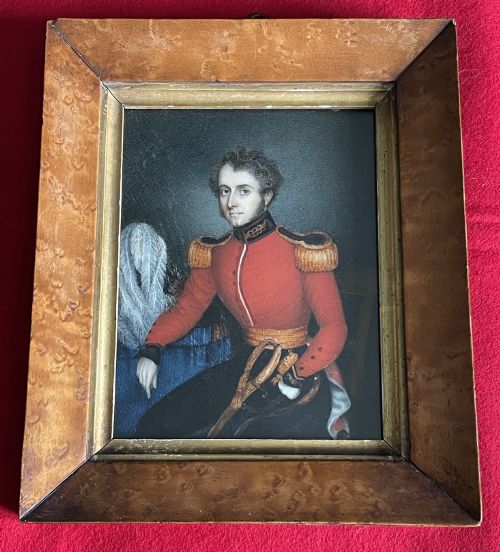


Early Victorian Portrait Artwork
Early victorian portrait artwork captures individual likenesses through delicate watercolours, cut silhouettes and oil paintings.
Early Victorian Portrait Artwork
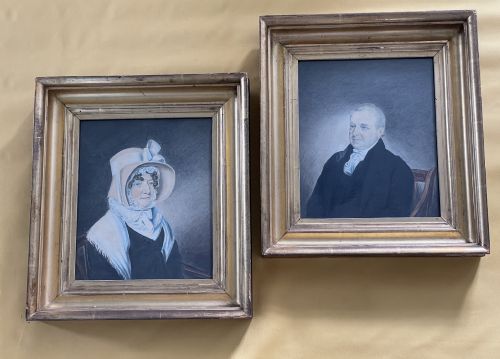
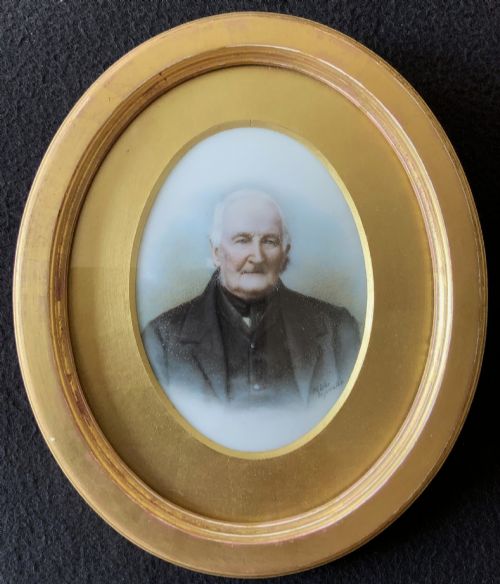
When you search for early victorian portrait artwork, you encounter framed pieces depicting sitters from the nineteenth century. These works capture subjects through oil on canvas, watercolours on paper and glass, alongside cut paper silhouettes.
The objects take the form of miniature portrait paintings, wall art and framed prints. Subjects range from military officers and gentlemen to children and family groups.
Most examples originate from the broader nineteenth century, spanning Georgian, Regency, William IV and Victorian periods. You find works by named artists alongside pieces from the English naive school.
Materials and methods
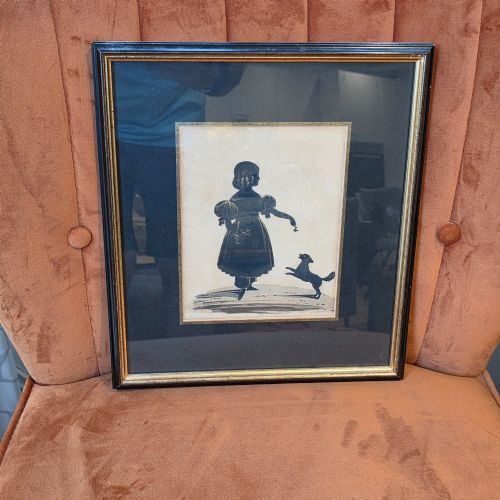
Artists worked primarily with watercolours on paper or card, and oil paints applied to canvas or board. Silhouettes combined cut black paper with ink and watercolour highlights, sometimes mounted behind glass.
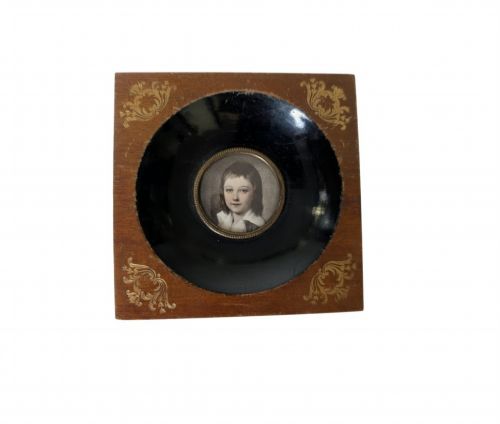
Frames utilised wood and gilt wood with gold leaf finishes to house these works. Miniature paintings on glass required precise brushwork executed at a small scale.
A nineteenth-century silhouette captures a girl alongside her dog, preserving a pet's likeness in crisp black paper.
Distinctions in quality
Quality rests upon the precision of the draughtsmanship and the psychological depth captured in the sitter's face. Stronger pieces display confident brushwork in oils or meticulous detail in watercolour miniatures and cut silhouettes.
The survival of original frames, often in gilt wood or with gold leaf, enhances the integrity of the piece. Provenance recorded on the reverse, such as signatures and dates, separates documented works from anonymous examples.
William James Hubard·Frederick Frith·George Chinnery·William Egley·Karl Feiertag
The Early Victorian Portrait Artwork Glossary
- Silhouette
- A solid black profile likeness cut from paper or painted on card. These profiles were popular before photography became widespread.
- Miniature painting
- A small-scale portrait executed with fine detail on ivory, paper, glass or card. These portable likenesses were often kept in private rooms or worn.
- Naive school
- Art produced by self-taught painters working outside academic traditions. These works emphasise directness and charm over strict proportion.
- Gilt wood
- Wood coated with a thin layer of gold leaf or metallic powder. Frames made this way provided a bright border for nineteenth-century canvases.
Early Victorian Portrait Artwork: Frequently Asked Questions
What is early victorian portrait artwork?
These pieces comprise painted and drawn likenesses of people from the nineteenth century. They include oil paintings on canvas, watercolour miniatures and cut paper silhouettes.
Artists recorded family members, military officers and children using traditional media. Many retain their original wood and gilt frames.
How were portrait miniatures displayed?
Miniatures were designed to be portable or hung closely together on domestic walls. Their small scale allowed owners to keep family likenesses near in private spaces.
Protective glass and sealed backing boards kept delicate watercolours safe from dust and moisture.
How do I date a portrait?
Dates often appear on the reverse of the canvas, on backing paper or within the artist's signature. Clothing styles, hair arrangements and framing materials also offer clues to the decade.
Inscribed names and sitters' details help connect the artwork to historical records from the nineteenth century.
What is a silhouette portrait?
A silhouette is a profile portrait cut from black paper or painted in solid dark tones. Artists like William James Hubard specialised in this sharp form of likeness.
Some examples include added watercolour details or tinsel highlights to accent clothing and accessories.
How should I care for these portraits?
Keep framed paper and watercolour works away from direct sunlight to prevent fading. Stable indoor humidity protects wood frames and canvas integrity.
Avoid opening sealed frames, as the original glass and backing papers form part of the historical object.