


Early Victorian Glass Bottle
An early victorian glass bottle brings deep colour and heavy metal mounts to a desk, cabinet or table.
Early Victorian Glass Bottle
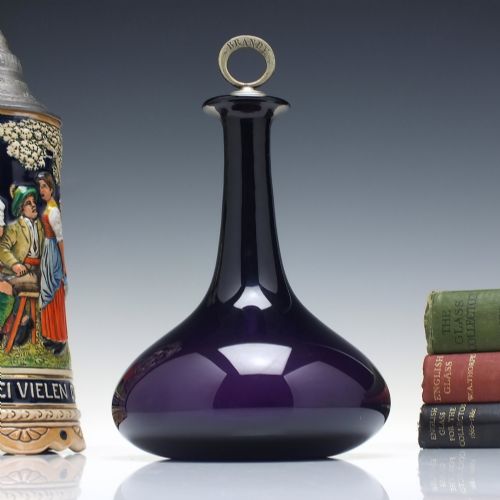
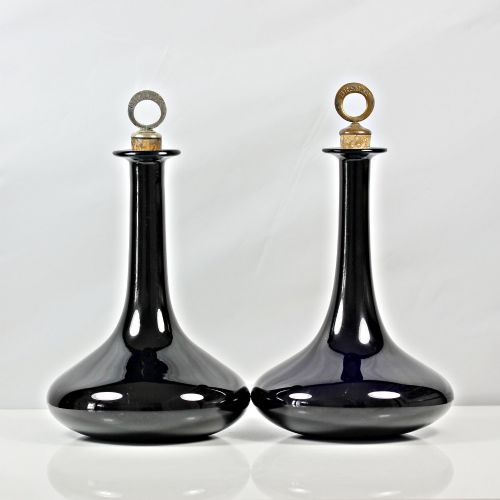
When someone searches for an early victorian glass bottle, they encounter a range of functional vessels spanning decanters, scent bottles, inkwells and apothecary jars. These pieces emerge primarily from the nineteenth century, reflecting the domestic, medical and personal habits of the era.
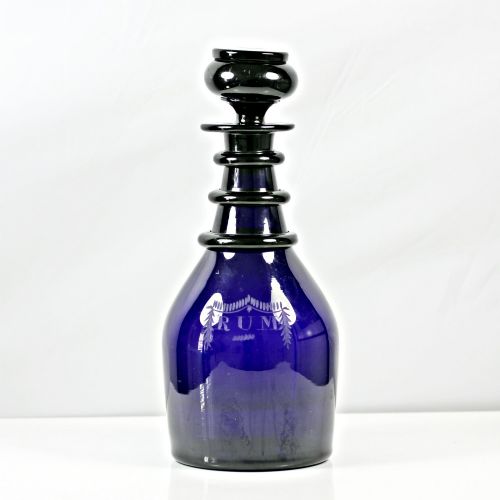
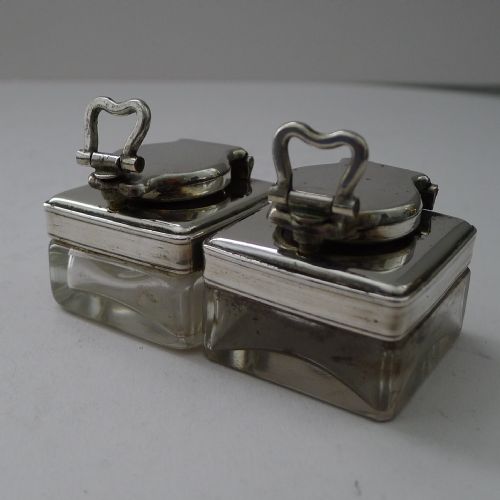
The versions most commonly met on this page include deep blue, amethyst and teal scent bottles alongside heavy ringed decanters and travelling inkwells. Metal mounts, silver plate and cork stoppers frequently accompany the glass bodies.
Makers and craftsmen of this period produced these glass items for daily utility as well as display, utilising rich hues and cut designs that define the style.
How they were made
The construction of these vessels relies on heavy blown glass, frequently enriched with cobalt, amethyst, teal or Bristol blue colourants. Artisans shaped the molten material into distinct forms such as mell decanters, carboys and miniature scent bottles.
Metal components such as sterling silver, bronze and silver plate provide mounts, collars and travel cases for the glass bodies. Details like gold leaf decoration and slice-cutting enhance the surface texture and visual depth of the pieces.
The listings show glass, silver plate, gold leaf and velvet across nineteenth-century forms including apothecary jars, travel inkwells and decanters.
What varies in quality
The distinction between tiers of quality rests upon the depth of the glass colour, the crispness of any cut facets and the integrity of the metal mounts. Richly saturated amethyst, teal and Bristol blue hues command attention through their intensity.
The presence of original silver mounts, stoppers or velvet-lined cases elevates a piece above standard utility examples. Finer items display precise metalwork and harmonious proportions between the glass body and its hardware.
The Early Victorian Glass Bottle Glossary
- Bristol blue glass
- A deep cobalt-coloured glass traditionally produced in the English city during the eighteenth and nineteenth centuries. It gained popularity for drinking vessels and apothecary wares.
- Mell decanter
- A specific bottle shape featuring a rounded body and a tapering neck, often fitted with multiple glass rings. These vessels served wine and spirits on formal dining tables.
- Carboy
- A large, bulbous glass bottle traditionally enclosed in a protective basket or metal frame for transporting liquids. In medical settings, larger examples stored chemicals and solutions.
- Silver plate
- A thin layer of silver fused to a base metal, frequently utilised for mounts, collars and travel lids on nineteenth-century scent bottles. This technique provided the appearance of solid silver at a lower cost.
Early Victorian Glass Bottle: Frequently Asked Questions
How do I clean an old glass bottle?
Cleaning requires lukewarm water and mild soap, avoiding harsh scrubbing brushes that might scratch the interior or damage old glass surfaces. Metal mounts should remain dry to prevent corrosion of silver plate or sterling components.
Allow the vessel to air dry completely before replacing any original cork or stopper. Gentle maintenance preserves the internal residue and exterior patina valued by collectors.
Are these glass bottles safe for liquids?
While many of these vessels originally held wine, spirits, ink or medicine, modern use for consumption is generally discouraged. Historic manufacturing methods can introduce trace elements into stored liquids over time.
Display and dry storage remain the safest methods for preserving nineteenth-century glass and metal mounts. Enjoying them visually protects both the material and any remaining contents.
What is a mell decanter?
A mell decanter is a distinct bottle form featuring a rounded, globular base that tapers smoothly toward the neck. They frequently incorporate multiple glass rings around the neck to ensure a secure grip during pouring.
These decanters appear in rich colours like Bristol blue and amethyst, designed for serving wine or rum.
How do I identify a Victorian scent bottle?
Victorian scent bottles typically feature small, pocket-sized glass bodies encased in silver mounts, hinged lids or bronze travel cases. The glass itself often displays deep coloration or precise slice-cutting.
Many examples include internal stoppers and retain traces of gilt decoration or velvet travel linings from the mid-nineteenth century.