





Early Oak Panelled Chest
An early oak panelled chest is a sturdy domestic storage piece built to hold linens and valuables, prized for its honest construction and centuries of patina.
Early Oak Panelled Chest
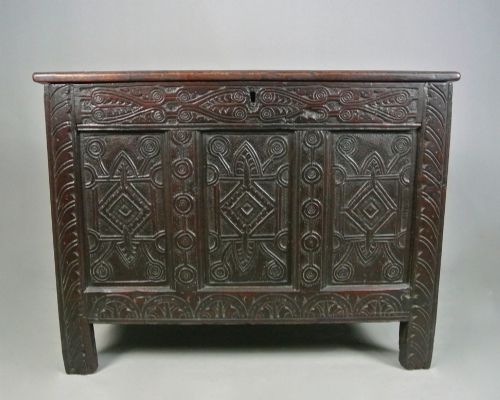
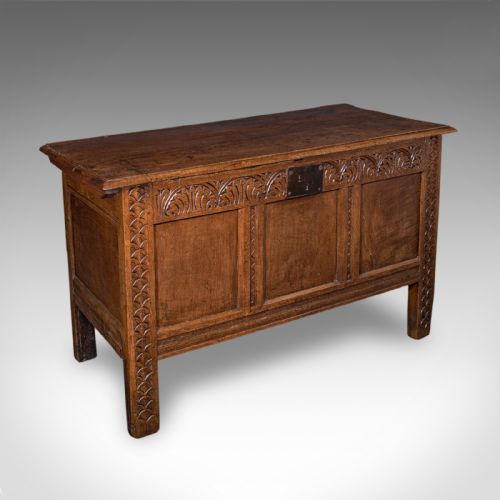
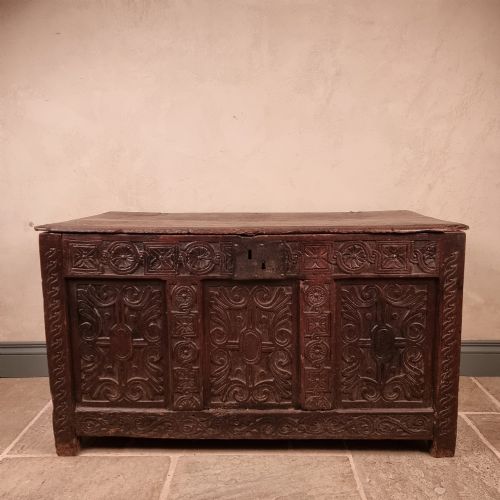
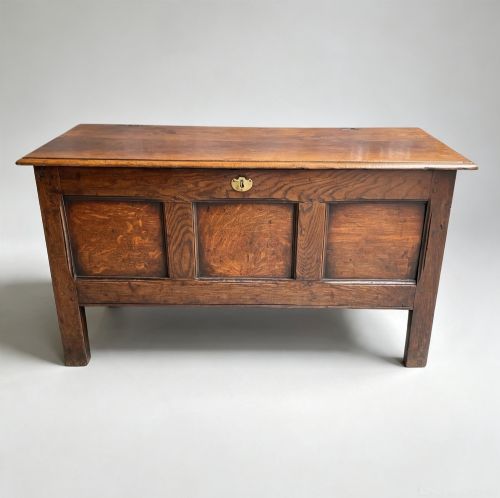
An early oak panelled chest serves as the foundational storage container of the medieval and early modern home, evolving from simple boarded boxes into sophisticated framed structures. When you search for an early oak panelled chest, you encounter sturdy timber receptacles designed to secure household textiles, documents and valuables against dampness and theft. The form appears predominantly in seventeenth and eighteenth century editions, alongside occasional sixteenth century examples and later provincial revivals.
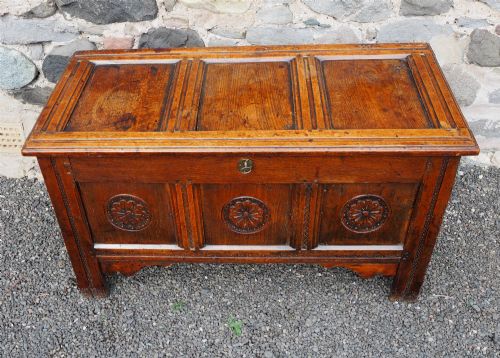
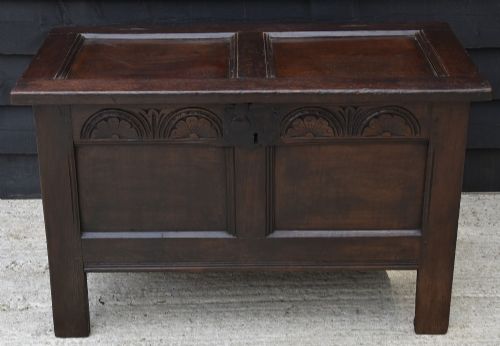
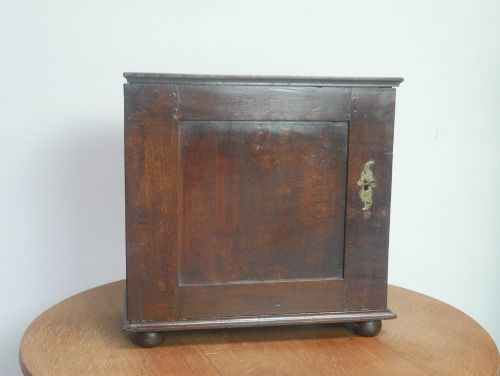
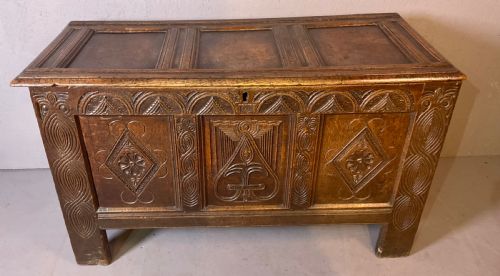
These pieces manifest chiefly as coffers and blanket chests, though variations include spice cupboards, mule chests with lower drawers, and regional Welsh forms. The construction relies on frame and panel joinery, which accommodates the natural expansion and contraction of timber without splitting the boards. Makers utilised this method to create stable faces adorned with carved mouldings, arcading, or linenfold motifs.
The surface timber tells a story of domestic utility, bearing the marks of adzes, pit saws, and centuries of wax polishing. Smaller proportions surface occasionally alongside large domestic examples, offering versatile proportions for modern hallways or living spaces. Each piece carries the distinct regional characteristics of English, Welsh or continental workshops.
Materials and construction
Joiners built these chests primarily using English and European oak, selected for its density, durability, and handsome medullary rays. Secondary timbers such as fruitwood and walnut occasionally appear in regional pieces or decorative inlays. Carpenters shaped the stiles and rails with hand planes, fitting thin panels loosely within grooved frames to allow for seasonal wood movement.
Iron and brass hardware fastened the lids and secured the contents, featuring hand-forged strap hinges, iron lock plates, and wrought iron hasps. Blacksmiths hammered these metal fittings by hand, attaching them with handmade nails or screws that sit flush with the timber surface. The structural integrity relies entirely on mortise and tenon joints secured with wooden pegs, or trunnels, rather than modern adhesives.
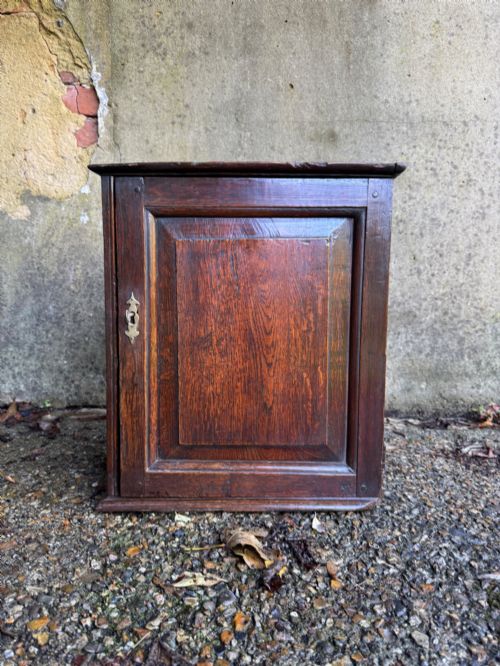
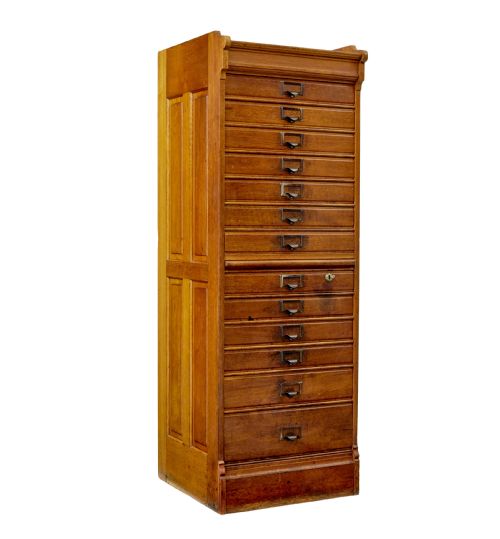
Storage forms on this page range from simple boarded coffers and panelled blanket chests to spice cupboards, mule chests, and bureau bookcases.
Determining quality and survival
Quality in these chests rests upon the integrity of the original construction and the degree of subsequent timber replacement. Pieces retaining their original boarded lids, floorboards, and ironwork command greater respect from collectors than those rebuilt with later timber. The crispness of the hand-carved panels, whether geometric arcading, foliage, or linenfold, reveals the skill of the original joiner.
Proportion and scale dictate the visual appeal of a chest, with smaller dimensions and well-balanced linenfold panels representing the more desirable survivals. The depth of the colour and the quality of the surface skin, developed through generations of dry waxing, separate untouched examples from over-restored surfaces.
The Early Oak Panelled Chest Glossary
- Panelled
- Construction method where vertical stiles and horizontal rails frame a thinner central board, allowing the wood to move safely with humidity changes. This technique replaced heavier boarded construction in sixteenth and seventeenth century furniture.
- Coffer
- A heavy timber chest with a hinged lid, traditionally used for storing valuables, plate, or documents. Many examples feature robust iron locks and banded ironwork for added security.
- Linenfold
- A style of wood carving popular in the Tudor period that mimics the appearance of folded linen fabric. Craftsmen carved these motifs onto the recessed panels of chests and cupboards.
- Mule chest
- A storage chest featuring one or more drawers built into the base beneath the main compartment. This transitional form bridges the traditional coffer and the modern chest of drawers.
- Arcaded
- Ornamentation carved into woodwork featuring a series of arches supported by columns or pilasters. This classical motif frequently decorates the friezes of seventeenth century Jacobean furniture.
Early Oak Panelled Chest: Frequently Asked Questions
Were these chests used as seating?
Households frequently utilised sturdy chests as benches or window seats in addition to their primary function as storage containers. Flat lids provided a convenient surface to sit upon in halls and chambers where seating was scarce.
Frequent use as a seat often resulted in polished wear on the lid boards and occasional replacement of the hinges or feet over the centuries.
How should I care for an antique oak chest?
Maintain a stable indoor environment away from direct heat sources and dramatic humidity fluctuations to prevent the timber from splitting. Apply a traditional beeswax polish sparingly to nourish the dry wood and preserve the historic surface patina.
Avoid modern silicon-based sprays or liquid furniture polishes, which can penetrate open oak grain and permanently damage the finish.
What is the difference between a coffer and a chest?
Makers and collectors often use the terms interchangeably, though a coffer traditionally implies a more secure, heavily constructed container for valuables. Coffers frequently feature more elaborate front carvings and robust locking mechanisms than simple blanket chests.
Storage chests span a wide variety of domestic forms, including mule chests with base drawers and plain boarded boxes intended for everyday linen storage.