


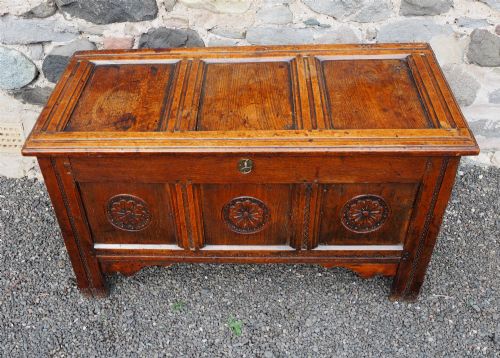


Early Oak Panel
An early oak panel carries the straightforward grain and carved weight of centuries past, offering buyers a tactile anchor of domestic history.
Early Oak Panel
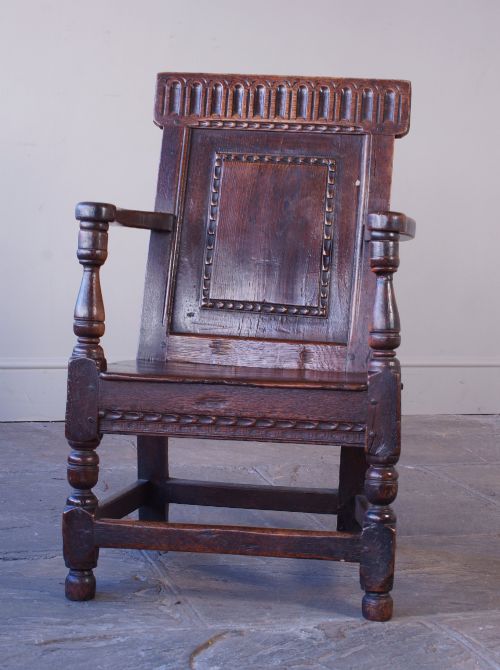
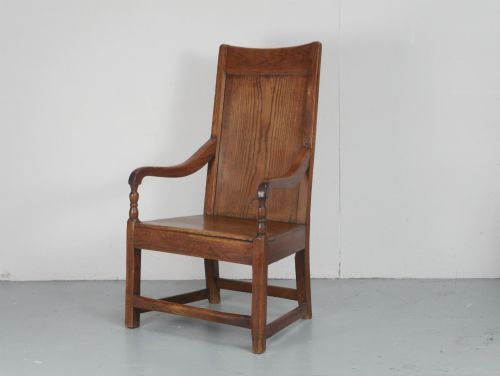
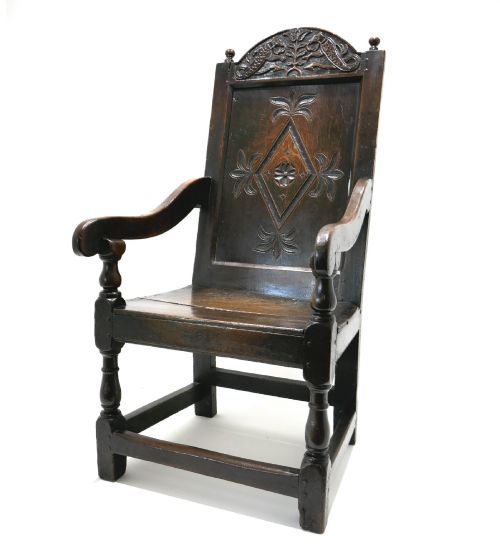
An early oak panel represents the foundational woodwork of historic domestic interiors, often preserved from dismantled furniture or architectural salvage. These components emerge primarily from the sixteenth and seventeenth centuries, taking the form of singular carvings, linenfold assemblies, or structural elements integrated into coffers and wainscot armchairs.
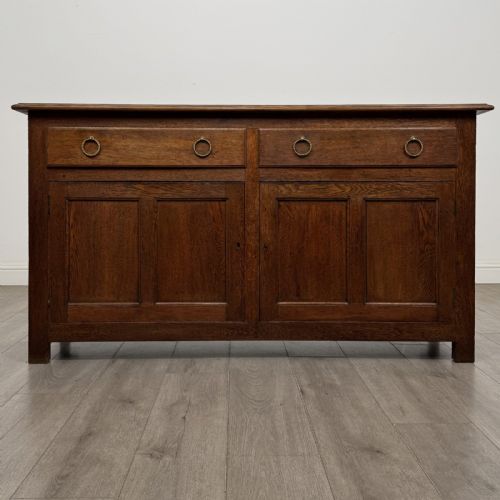
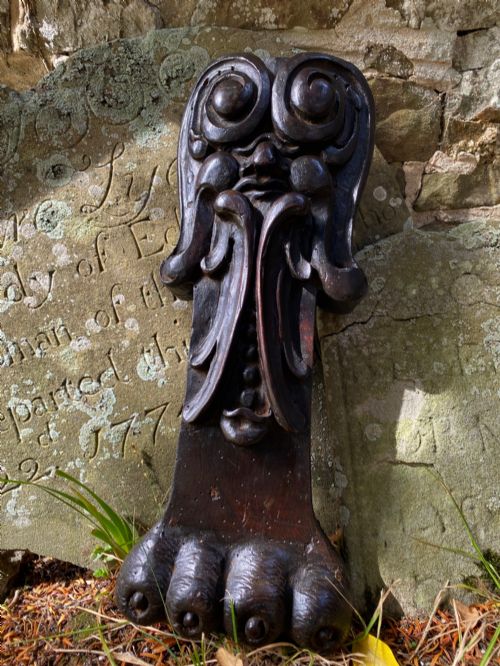
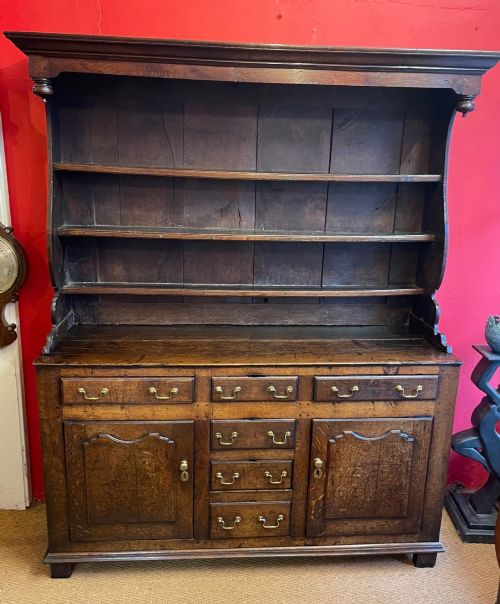
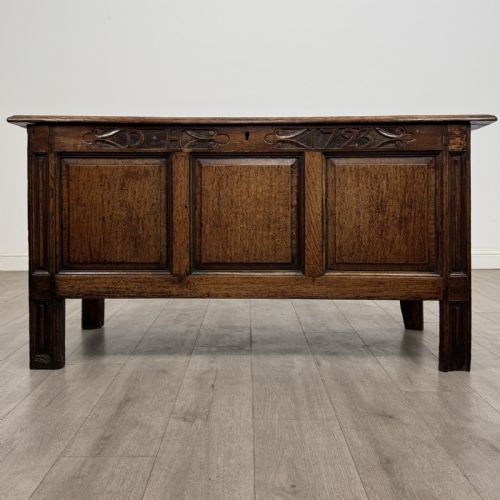
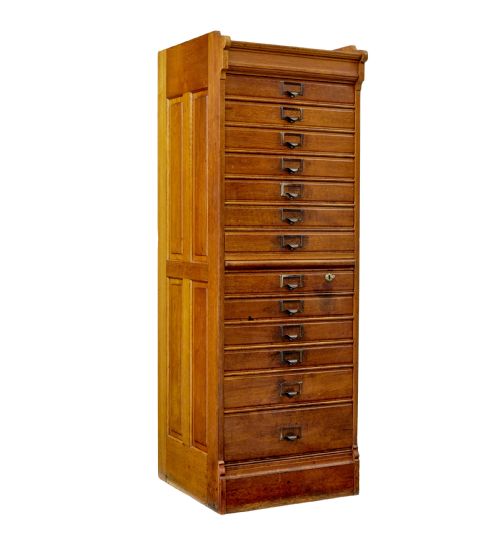
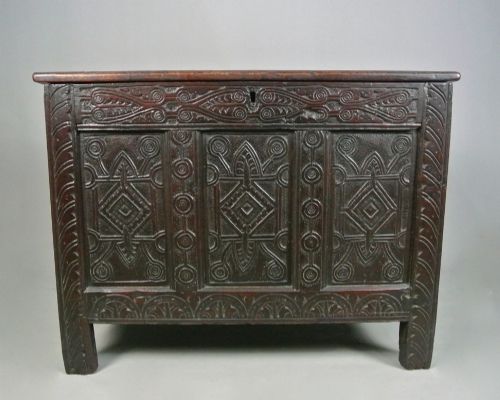
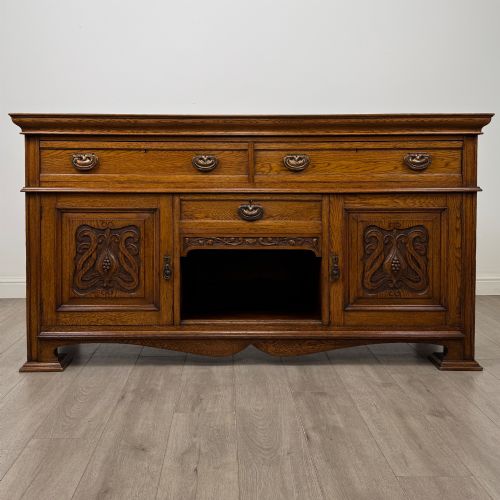
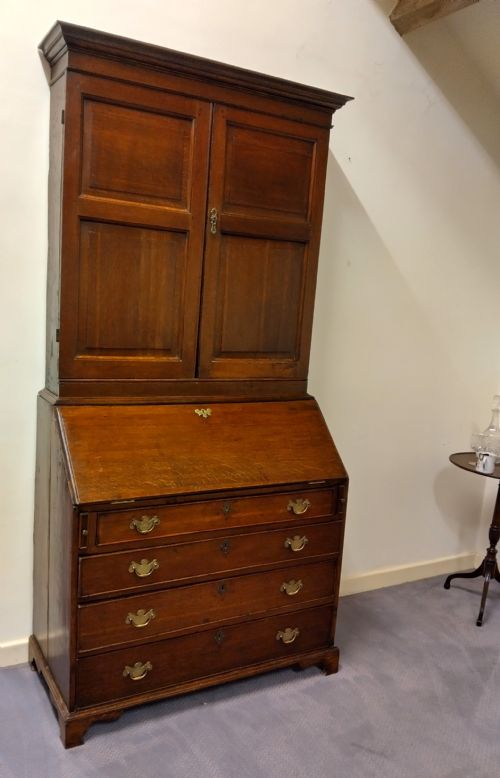
The selections available span from simple boarded chests to intricate folk art carvings and robust panelled furniture such as spice cupboards and dresser bases. Buyers encounter examples ranging from sixteenth-century ecclesiastical fragments to eighteenth-century golden oak coffers, each showing the direct utility of early English craft.
How they were made
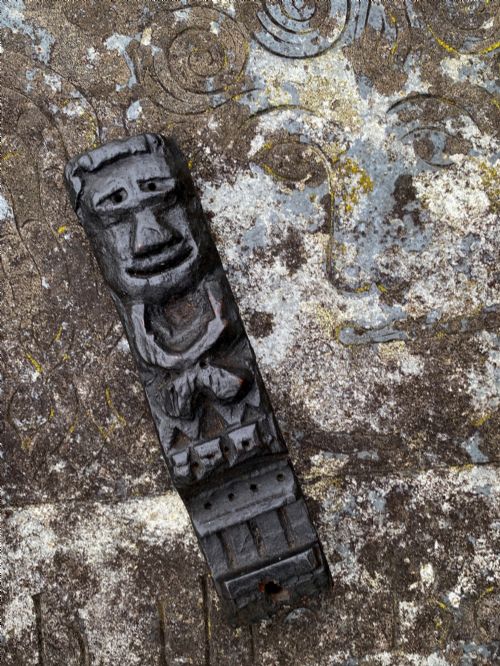
Joinery relied on traditional methods where solid oak boards were held together by mortise and tenon joints secured with wooden pegs. Carvers worked directly onto the dense timber using gouges and chisels to produce geometric patterns, stylized foliage, and figural motifs such as the green man.
Auxiliary materials appear sparingly, limited to iron hardware for hinges and brass details on later pieces, whilst secondary timbers such as fruitwood support specific interior elements. Surface finishes developed through decades of waxing and handling, allowing the natural dark oak tone to deepen without heavy modern intervention.
Early Oak Panel Retail Price Guide 2026
Typical asking prices for early oak panel among the pieces listed under this phrase on Sellingantiques today, from the lower quarter to the upper quarter. They describe what is for sale here now, not the wider market.
Forms range widely from seventeenth-century wainscot armchairs and coffers to eighteenth-century spice cupboards and Welsh dressers.
What varies in quality
The depth and clarity of the chisel work distinguish superior carvings from routine production, separating confident regional craftsmanship from simpler repetition. Relief details remain crisp on better pieces, whereas lesser examples show softer edges or later adaptation.
Integrity of the timber dictates the standing of a piece, with sound original surfaces and minimal replacement parts commanding greater regard. The balance between structural wear and the survival of early tool marks determines the character of the wood.
The Early Oak Panel Glossary
- Linenfold
- A style of relief carving imitating folded linen cloth, frequently seen on sixteenth-century panels. This vertical motif creates a textile effect across rigid wooden surfaces.
- Wainscot
- A type of heavy wooden armchair constructed with panelled backrests and solid seats. These chairs date predominantly to the seventeenth century and reflect high status.
- Coffer
- A large wooden chest used for storage, constructed with heavy frame and panel techniques. Early examples often feature carved fronts and boarded lids.
- Green man
- A sculptural motif representing a human face entwined with leaves and vines. It appears in early woodcarvings as a symbol of rebirth.
- Spice cupboard
- A small wall-mounted or table cabinet fitted with internal drawers for storing valuable provisions. These items date widely to the eighteenth century.
Early Oak Panel: Frequently Asked Questions
How do I date an oak panel?
Dating relies upon observing the construction joints, tool marks, and stylistic motifs relative to known historical periods. Hand-riven timber and pegged mortise joints typically indicate seventeenth-century origin or earlier.
Secondary indicators include the presence of traditional moulding profiles and the natural patina developed over generations of exposure. Comparing the carving style to documented regional furniture helps narrow the manufacturing decade.
Where were these panels originally placed?
Historic panels formed structural components of interior wall panelling, ecclesiastical screens, or the integrated framework of large furniture items such as cupboards and settle backs. They provided insulation and decorative richness to domestic halls.
Many surviving elements were later salvaged when buildings were modernized or furniture was dismantled. These pieces now function as standalone decorative wall art or repurposed architectural elements.
How should I clean historic oak?
Maintenance requires only gentle dusting with a dry, soft cloth to prevent particulate buildup on the historic surface. Avoid modern polishes and chemical sprays that can strip the accumulated wax layers.
Applying a traditional beeswax sparingly helps nourish dry timber without altering the natural colour. Keeping the wood away from direct heat sources prevents shrinkage and splitting of the grain.
What is wainscot oak?
Wainscot refers to high-quality, straight-grained oak timber imported from the continent or selected domestically for fine interior panelling and seating. The term eventually became synonymous with heavy, panel-built armchairs of the seventeenth century.
Furniture described this way typically exhibits substantial structural framing and pegged joinery. The dense material allowed craftsmen to cut deep mouldings that survive cleanly today.