



Early Oak Panel Back
An early oak panel back is a sturdy timber seat offering direct contact with centuries of domestic history.
Early Oak Panel Back
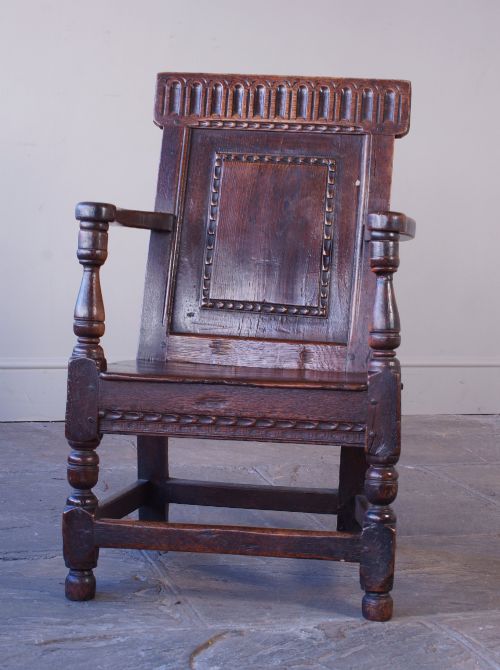
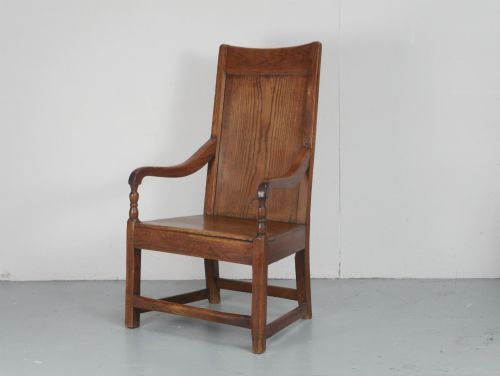
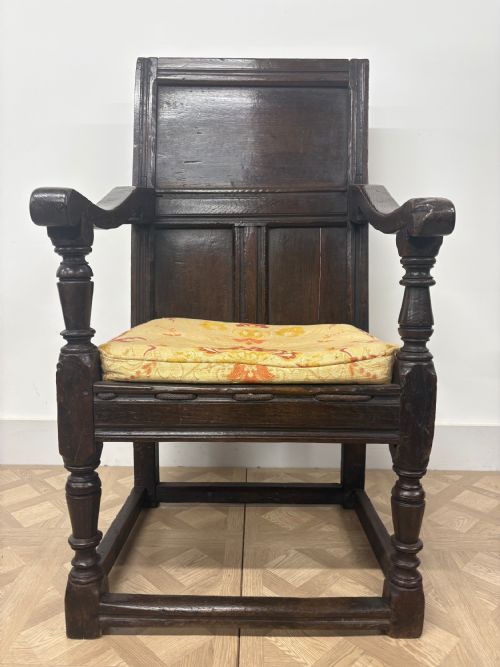
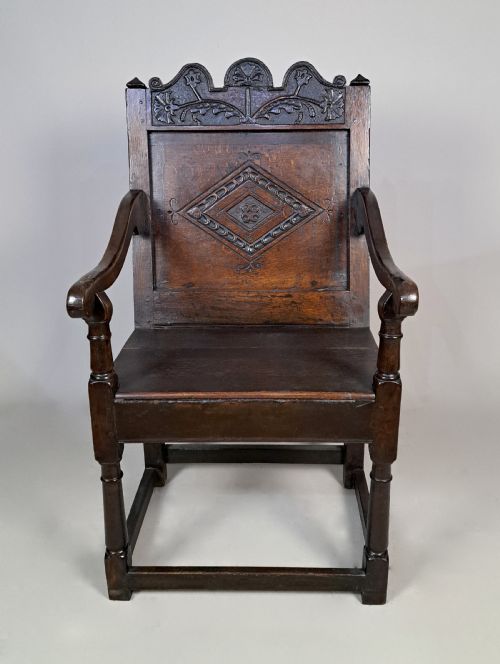
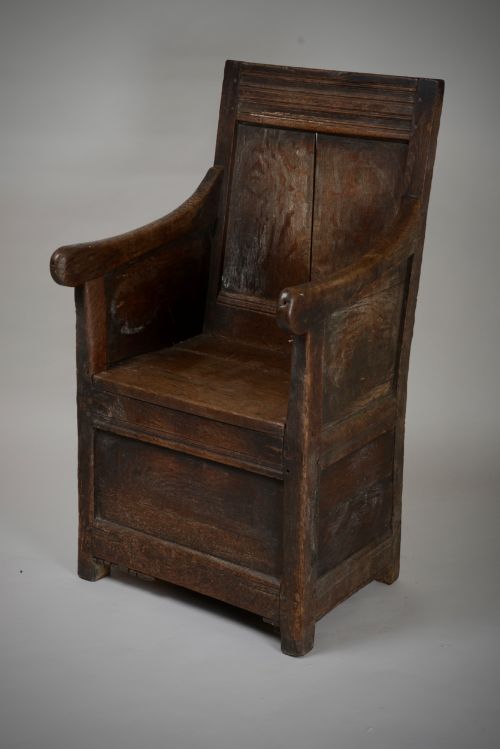
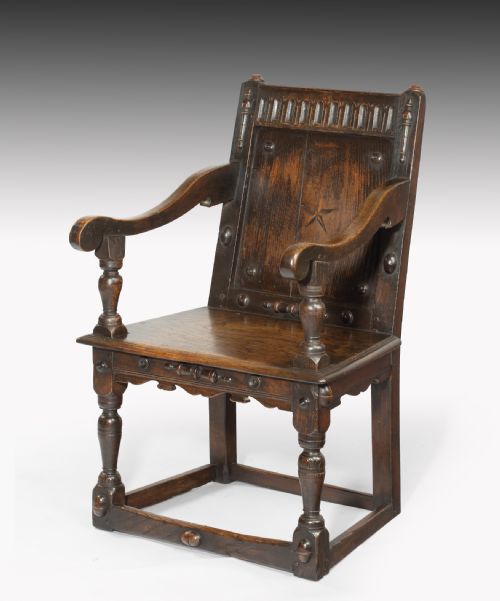
When you search for early oak panel back pieces, you encounter substantial seating designed to anchor a room through sheer presence and architectural timber construction. The selection centres on wainscot armchairs, box chairs, and high-backed settles spanning the sixteenth to the nineteenth centuries. Regional variations appear from Yorkshire, Wales, and wider English country workshops, each displaying distinct proportions and carving traditions.
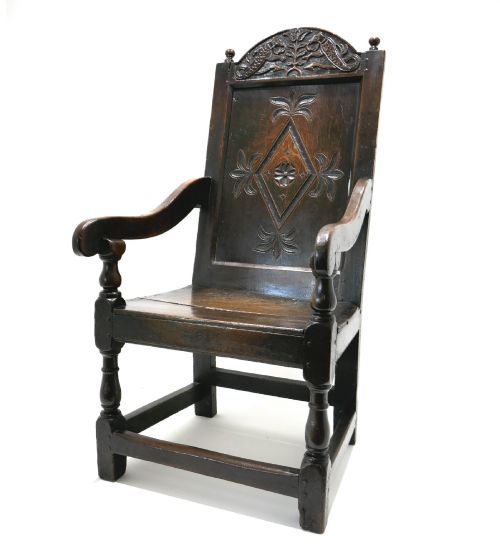
The core of the category consists of wainscot armchairs originating in the seventeenth century, alongside later country interpretations and settles. These items feature rigid timber backs composed of framed panels, solid wooden seats, and sturdy armrests supported by robust turned or straight legs. Later nineteenth-century examples often emulate these earlier Jacobean, Elizabethan, and Charles I forms using solid oak and elm.
Judging the quality of panel back seating
Quality rests on the integrity of the original timber frame and the depth of carving on the panel back. Superior pieces maintain their original joinery without excessive replacement timber, while lesser examples suffer from heavy structural attrition or unsympathetic later alterations.
Proportion and stance dictate visual success, separating master joinery from straightforward vernacular utility. The crispness of carved details, such as lunettes or scrollwork on the crest rail, distinguishes workshop execution from basic regional output.
Early Oak Panel Back Retail Price Guide 2026
Typical asking prices for early oak panel back among the pieces listed under this phrase on Sellingantiques today, from the lower quarter to the upper quarter. They describe what is for sale here now, not the wider market.
Some settles feature concave barrel backs engineered specifically to cup around a single lucky person guarding the hearth.
The Early Oak Panel Back Glossary
- Wainscot
- A heavy wooden armchair constructed with panelled backboards and solid arms, common in sixteenth and seventeenth-century English interiors. This term originally described fine imported oak panelling before being applied to these substantial seats.
- Settle
- A wooden bench featuring a high panelled back designed to block draughts, often incorporating a hinged seat with storage beneath. These seats anchored communal spaces in country halls and farmhouses.
- Mortise and tenon
- A primary joint where a projecting tongue on one piece fits tightly into a matching cavity on another, secured by a wooden dowel. This method provides the rigid skeleton characteristic of early joined furniture.
- Crest rail
- The top horizontal member of a chair or settle back, frequently shaped, carved, or arched. It marks the highest decorative point of the piece.
- Elm
- A tough, interlocking timber commonly utilised for chair seats because it resists splitting under heavy use. Cabinet makers valued its resilient grain for components subjected to constant stress.
Early Oak Panel Back: Frequently Asked Questions
What is a wainscot chair?
A wainscot chair is a heavy, panel-backed wooden armchair constructed by joiners using framed oak components. These seats date predominantly from the sixteenth and seventeenth centuries and served as important household furniture.
They feature solid wooden seats, sturdy armrests, and rigid upright backs that protected occupants from cold draughts in large rooms. Their construction relies on pegged mortise and tenon joints rather than upholstered padding.
How were settles used in historical homes?
Settles functioned as long benches placed near hearths to shield occupants from cold air currents circulating through open halls and farmhouses. Their high panelled backs and solid sides trapped heat from the fire.
Many examples included a box compartment beneath the hinged seat to store household blankets or dry goods. They accommodated multiple people and formed the social centre of domestic rooms.
How do I date an early oak chair?
Dating relies on examining construction techniques, tool marks, timber shrinkage patterns, and stylistic carving details. Changes in leg turnings and crest rail shapes offer clear chronological indicators across the centuries.
Earlier pieces from the sixteenth and seventeenth centuries exhibit hand-riven oak, pegged joints, and characteristic strapwork or floral carving. Nineteenth-century revivals often display more uniform machine-sawn timber and different surface patination.
How do I care for antique oak furniture?
Antique oak requires a stable indoor environment away from direct heat sources and dramatic humidity fluctuations that cause timber to crack. Natural beeswax applied sparingly helps nourish the dry grain and preserves the historic surface finish.
Avoid modern liquid polishes containing silicones, which penetrate open pores and damage the historic patina. Gentle dusting with a dry cloth keeps the surface clean without wearing down the softened edges of the joinery.