

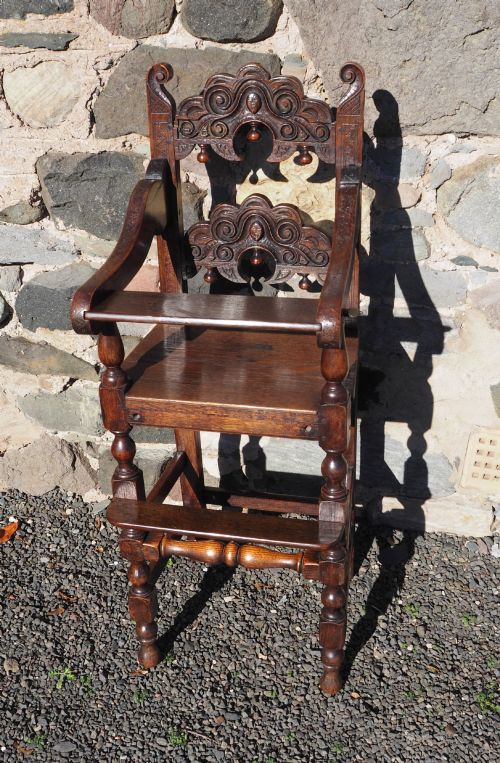
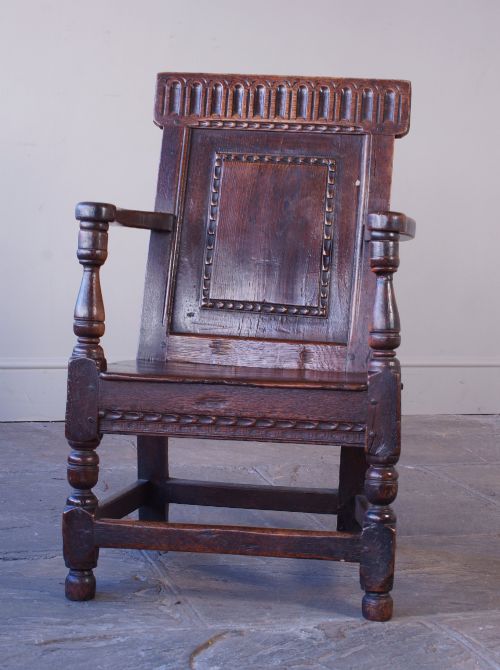


Carved Oak Childs Chair
A carved oak childs chair brings centuries of domestic history into a room through solid timber and honest proportions scaled down for the youngest sitters.
Carved Oak Childs Chair
When you search for a carved oak childs chair, you encounter scaled-down seating intended for domestic use across several centuries, ranging from early country forms to later revival styles. The pieces recorded here span the seventeenth, eighteenth, and nineteenth centuries, alongside early twentieth-century examples.
The forms vary considerably across the selection, taking shape as high chairs, highchairs on stands, armchairs, wainscot chairs, Windsor chairs, side chairs, and stools. Many rely on traditional timber construction with joined oak framing, occasionally incorporating rush, rattan cane, leather, fabric, velvet, or brass details.
Early periods bring substantial joined construction with carved panels, whilst later nineteenth-century and early twentieth-century examples show Victorian country influence, Georgian style revival, Arts and Crafts design, and primitive folk art characteristics.
How they were made
The primary construction relies on solid oak, shaped through traditional joined framing, mortise and tenon joints, and occasional panel carving. Craftspeople built these small seats to withstand daily domestic use by children, employing robust timber frames that endured over generations.
Seating areas utilise a variety of traditional materials depending on the period and regional style, including woven rush, rattan cane, solid oak boards, and upholstered panels featuring leather, fabric, or velvet secured with brass tacks.
Carved Oak Childs Chair Retail Price Guide 2026
Typical asking prices for carved oak childs chair among the pieces listed under this phrase on Sellingantiques today, from the lower quarter to the upper quarter. They describe what is for sale here now, not the wider market.
One seventeenth-century highchair on stand carries the carved initials R.D. and the exact date 1688.
What varies in quality
Quality in these small chairs rests on the integrity of the original oak timber, the crispness of the hand-carved ornament, and the survival of early or untouched surfaces. Pieces that retain their original joined structure and period seating materials demonstrate greater authenticity.
Proportion and execution distinguish regional vernacular work from formal urban interpretations. Early joined examples with dated inscriptions or initials display distinct cabinetmaking competence compared to later revival pieces.
The Carved Oak Childs Chair Glossary
- Joined oak
- Furniture constructed using mortise and tenon joints secured with wooden pegs rather than metal nails. This method defines early British cabinetmaking.
- Wainscot chair
- A heavy wooden armchair panelled in the back, typically constructed from oak. These domestic seats mirror full-size adult forms scaled down for children.
- High chair
- An elevated childs chair designed for table height seating, occasionally constructed as a detachable chair set upon a separate wooden stand.
- Rush seat
- A seating surface woven from dried marsh rushes twisted into cords. It forms a durable, textured base traditional in country seating.
- Bergere
- An enclosed upholstered armchair featuring woven cane panels on the back and sides. The style appears in later nineteenth-century children's seating.
- Primitive folk art
- Objects made outside formal guild traditions by local makers or rural craftspeople. These pieces emphasise functional utility and direct construction.
Carved Oak Childs Chair: Frequently Asked Questions
Were these chairs meant for everyday use?
Historical examples of these small chairs served practical domestic purposes in nurseries and dining spaces for children.
Built from sturdy oak timber, they were designed to withstand regular use by young family members rather than sit as decorative ornaments.
How do I identify a 17th-century chair?
Seventeenth-century pieces typically feature heavy joined oak construction, pegged joints, and hand-carved panels reflecting period aesthetics.
Early examples may also display initials or dates carved directly into the woodwork, characteristic of seventeenth-century craftsmanship.
What is a high chair on a stand?
This form consists of a childs chair fitted to a tall wooden base to elevate the sitter to table height.
The design allowed young children to join family meals, and the upper chair component could sometimes be detached from its supporting stand.
How should I care for an oak childs chair?
Maintain the timber by keeping the chair away from direct heat sources and sudden humidity changes that dry out old oak.
Apply traditional beeswax occasionally to nourish the surface without building up synthetic residues on the historic wood.