

Jacobean High Chair
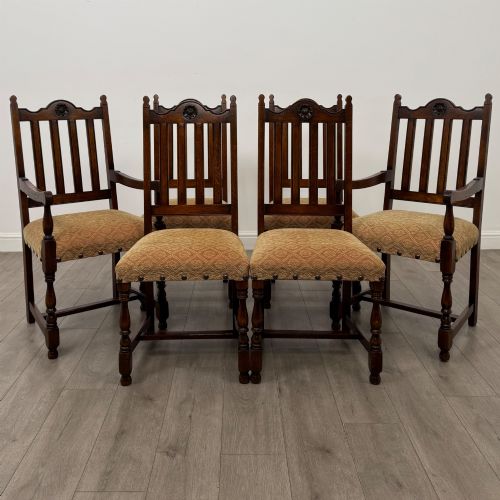
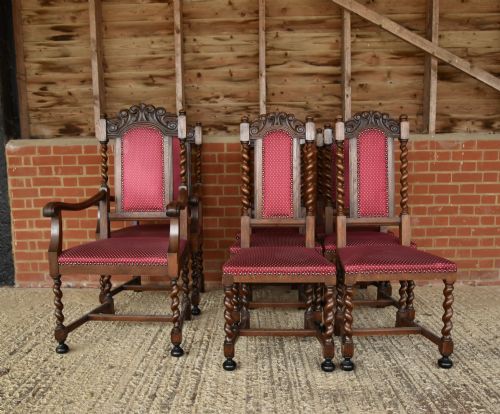
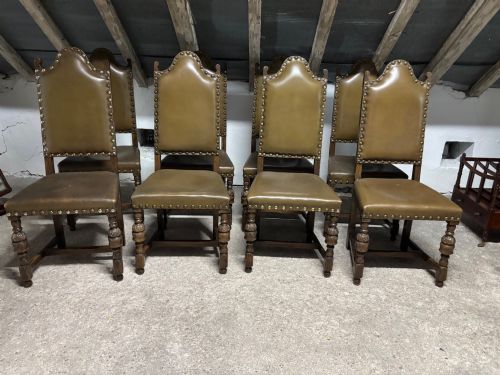
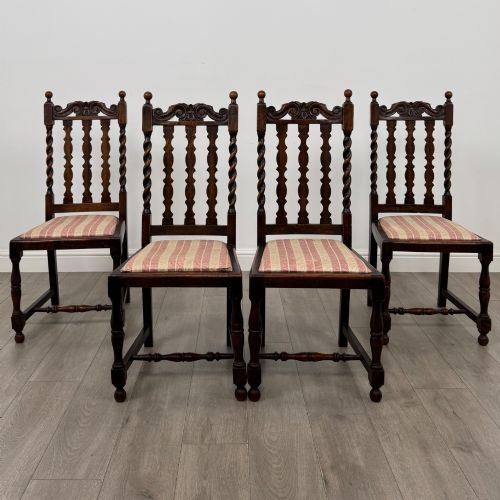
A jacobean high chair brings heavy carved timber and early seat forms into a room, offering sturdy presence rooted in centuries of woodworking.
Jacobean High Chair
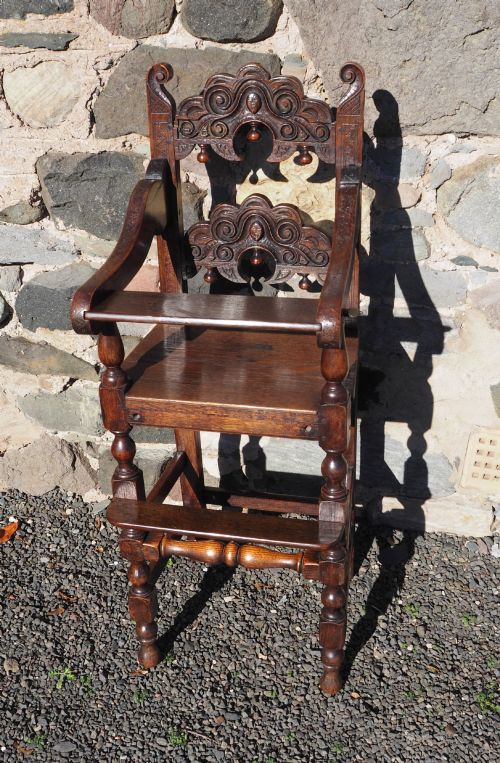
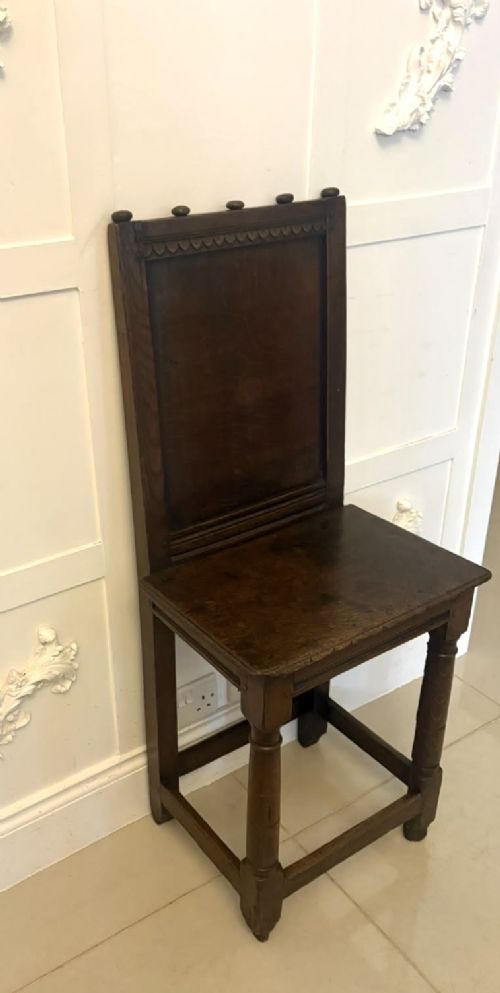
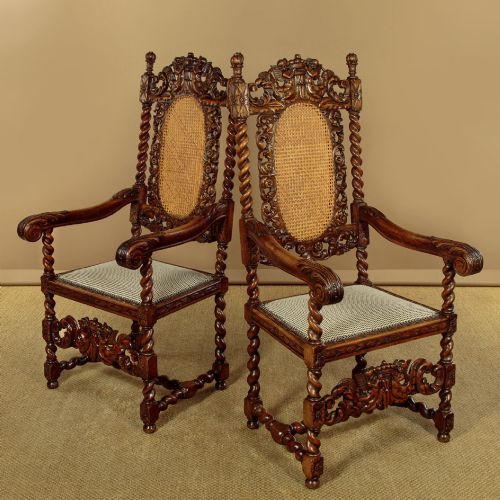
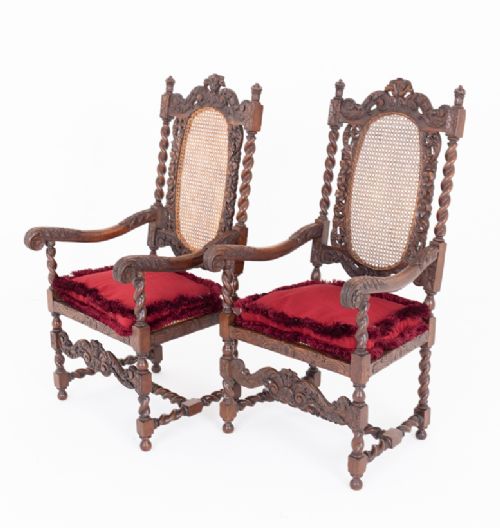
A search for a jacobean high chair directs attention to robust seating built for elevated children's dining or master seating, drawing on seventeenth-century motifs. Most examples encountered in this selection originate from later revival periods spanning the nineteenth and early twentieth centuries, alongside scarce seventeenth-century survivals.
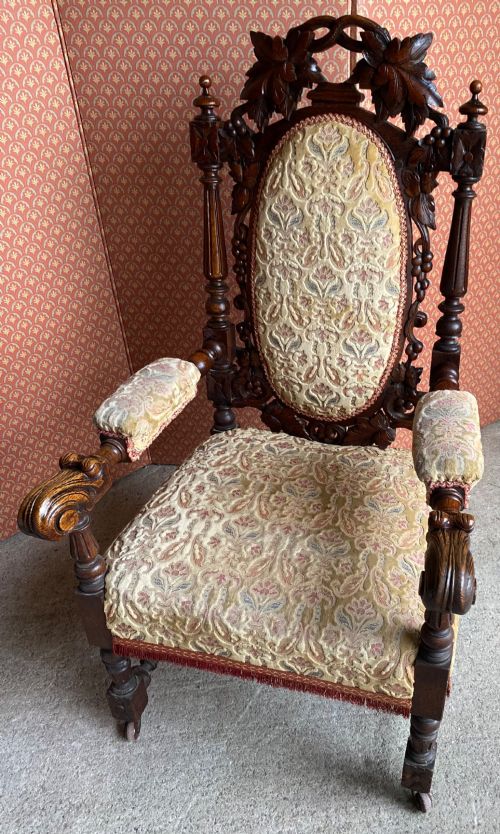
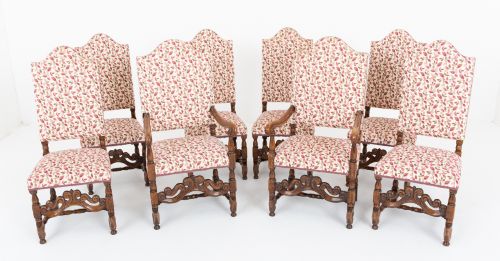
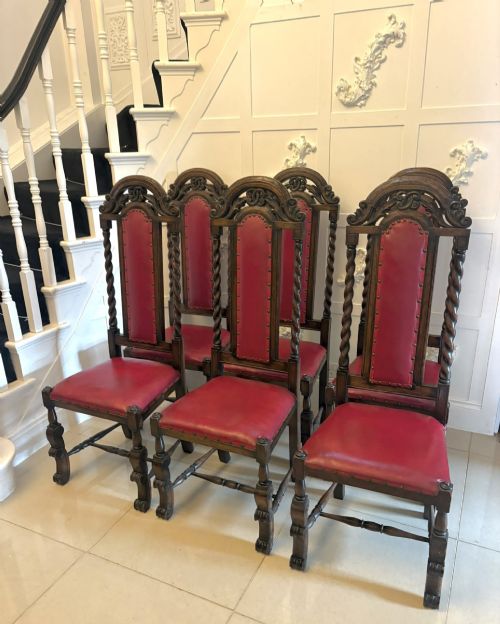
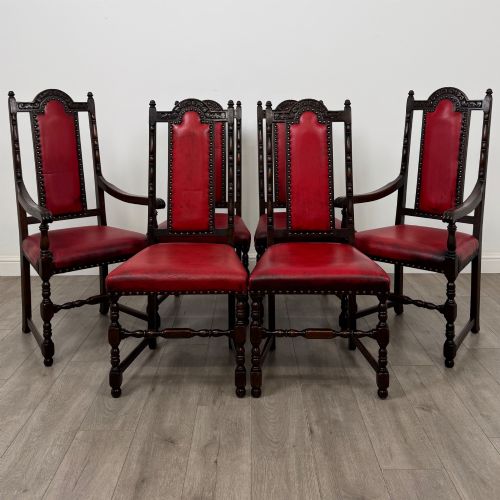
Makers of these revival pieces replicated the high backs, joined timber construction, and architectural turning seen in earlier centuries. Alongside true high chairs, the listings include related oak armchairs, baronial thrones, and child's highchairs on stands.
The dominant material across these forms is solid oak, frequently paired with walnut, cane, and leather. Buyers encounter pieces ranging from humble joined construction to heavily carved revival armchairs designed for grand halls.
Materials and Construction
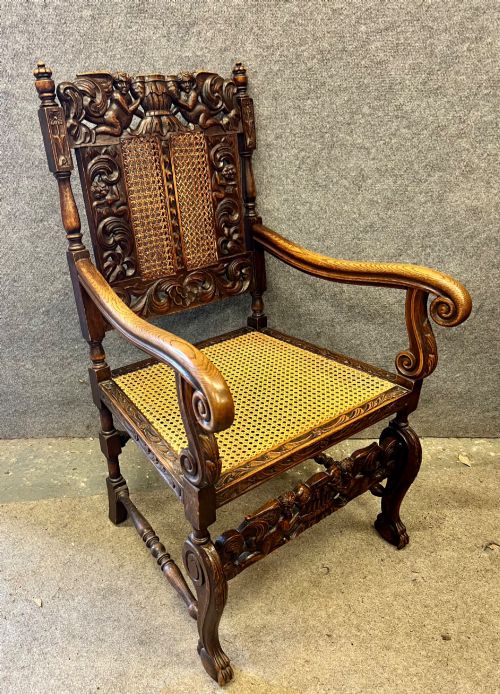
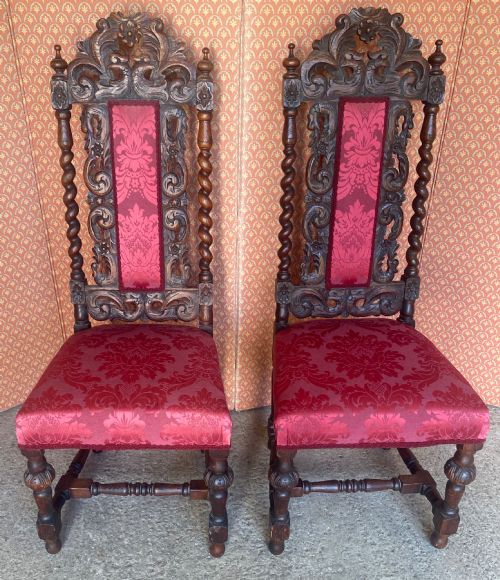
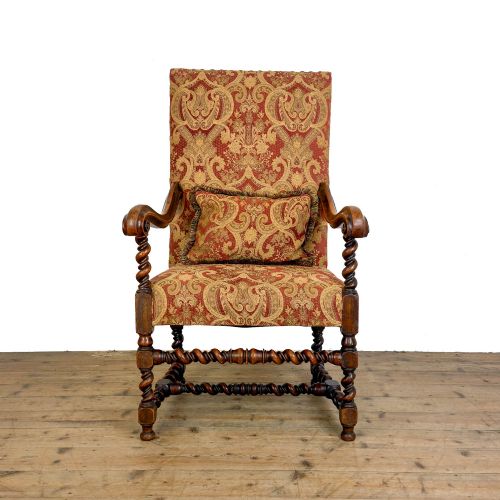
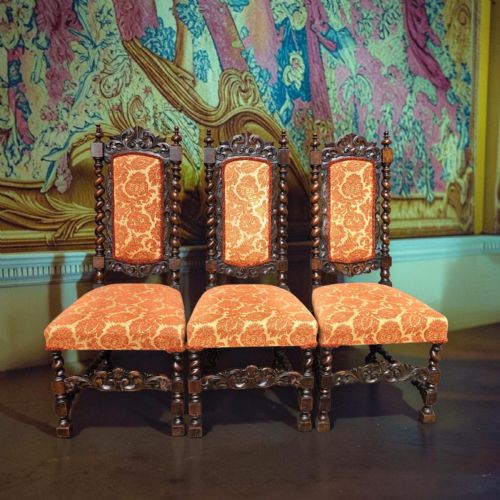
Carpenters relied on sturdy domestic timbers, primarily oak and walnut, joined using traditional peg and mortise-and-tenon methods to ensure longevity. Turning lathes shaped upright members into barley twist or bobbin profiles, whilst hand chisels formed flat and strapwork carving on top rails and back panels.
Upholstery materials such as leather, fabric, and tapestry were secured with brass tacks to padded backs and seats. Cane work appeared on panel inserts, requiring careful weaving through drilled frames to support the sitter.
Jacobean High Chair Retail Price Guide 2026
Typical asking prices for jacobean high chair among the pieces listed under this phrase on Sellingantiques today, from the lower quarter to the upper quarter. They describe what is for sale here now, not the wider market.
Listings span oak, walnut, cane, leather, and brass, recording revival styles from the Victorian era alongside seventeenth-century originals.
Assessing Quality and Execution
The depth and crispness of hand-carved detail separate ordinary production from superior examples. Crisp relief work on crest rails and arms indicates skilled bench work rather than shallow machine routing.
The integrity of the joined frame dictates structural merit. Tighter joints, heavier timber gauges, and minimal replacement timber distinguish better preservation and more faithful adherence to original seventeenth-century construction.
The Jacobean High Chair Glossary
- Barley twist
- A type of woodturning shaped like a helix, resembling a twisted rope. This turned detail appears frequently on the legs and stretchers of revival chairs.
- Crest rail
- The top horizontal member of a chair back. Carvers often decorated this specific part with dates, initials, or intricate foliage.
- Joined oak
- Furniture construction utilising closely fitted mortise and tenon joints secured with wooden pegs. This method formed the structural core of early seating before the widespread adoption of screws.
- Strapwork
- Flat ornamental carving resembling interlaced bands of leather or parchment. It is a common decorative motif on seventeenth-century panels.
- Caquetoire
- A light, high-backed armchair originating in sixteenth-century France, designed for conversation. Examples feature narrow bodies suited to the dress styles of the period.
Jacobean High Chair: Frequently Asked Questions
How do I identify a true seventeenth century chair?
Examine the timber shrinkage, tool marks, and peg construction closely. Genuine pieces exhibit dry, oxidised oak with hand-cut peg ends and irregular joint alignment.
Revival pieces from the nineteenth and twentieth centuries often display mechanical saw marks, uniform timber colour, and machine-turned components that lack historic wear.
Can I use an antique high chair daily?
Solid oak construction provides substantial stability for regular seating. However, delicate cane panels and historic upholstery require careful weight distribution and gentle use.
Positioning the chair away from direct heat sources prevents timber splitting and preserves fragile leather or fabric coverings over time.
What is a baronial armchair?
Baronial armchairs are heavy, high-backed seats designed to project authority, featuring deep relief carvings and solid panel backs. Makers produced them in large numbers during the Victorian and Edwardian revival periods.
These pieces suit large dining rooms or entrance halls where their imposing proportions balance spacious interiors.
How should I care for oak furniture?
Maintain timber surfaces by applying natural beeswax sparingly and buffing with a soft cloth to nourish the grain. Avoid chemical sprays that strip historic patination.
Keep humidity stable within the room to prevent timber movement and protect old joints from loosening.