



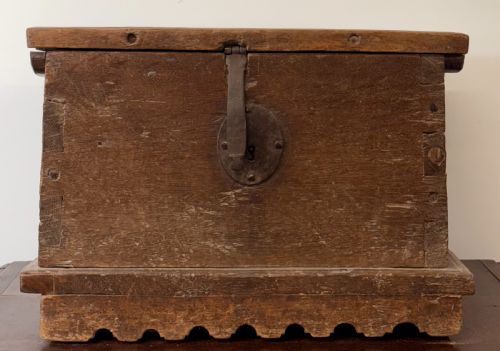
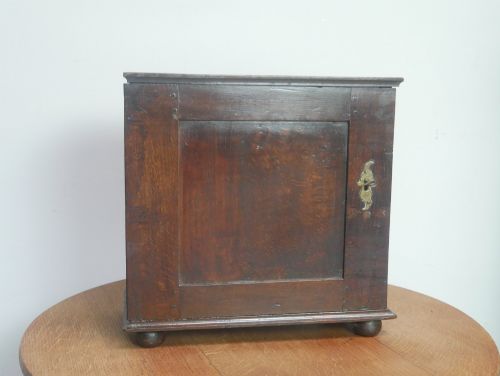
Early Oak Box
An early oak box is a sturdy container holding centuries of domestic history, prized for its honest construction and rich timber patination.
Early Oak Box
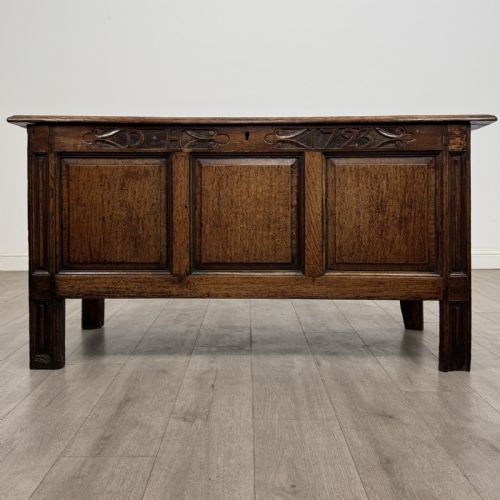
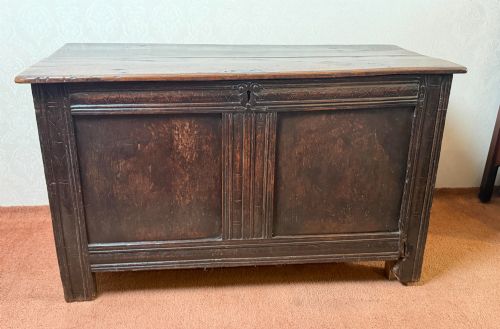
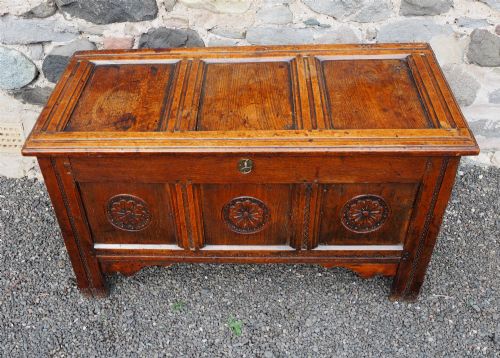
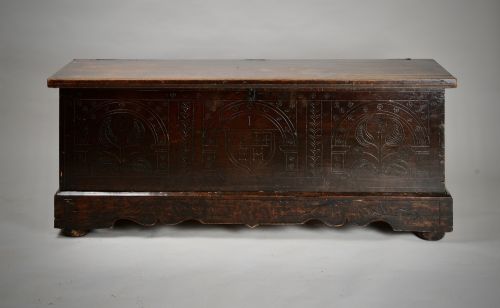
Buyers most frequently encounter robust plank construction and panelled receptacles displaying the characteristic grain and medullary rays of English and European timber. These objects often reflect vernacular traditions, employing straightforward joinery designed to safeguard documents, valuables, and textiles.
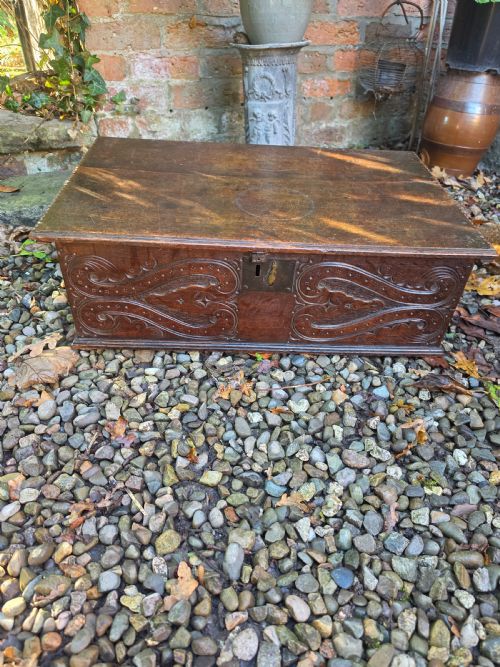
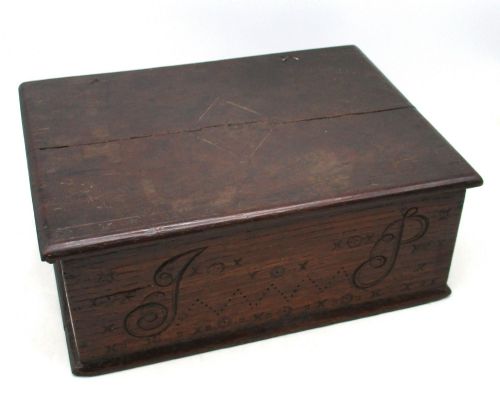
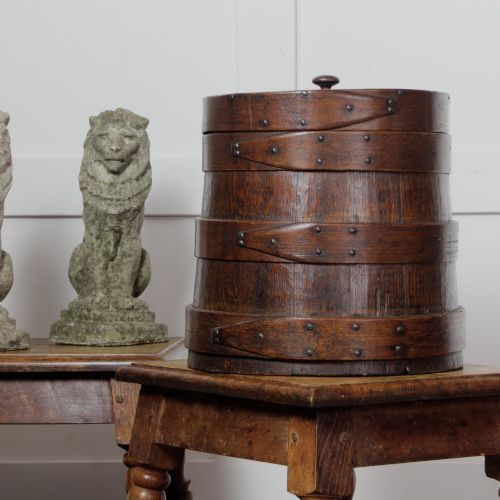
The inventory extends across periods spanning the Tudor, Jacobean, and Georgian eras, demonstrating the enduring utility of heavy timber storage. Pieces include miniature chest forms, sword chests, and document boxes reflecting domestic life from past centuries.
What varies in quality
Quality rests upon the proportion of original timber retained and the integrity of the original joints rather than mere decorative elaboration. Plain six-plank constructions demonstrate high merit when boards remain unreplaced and retain their authentic surface texture.
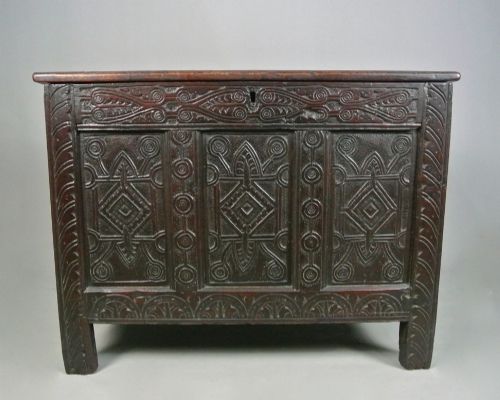
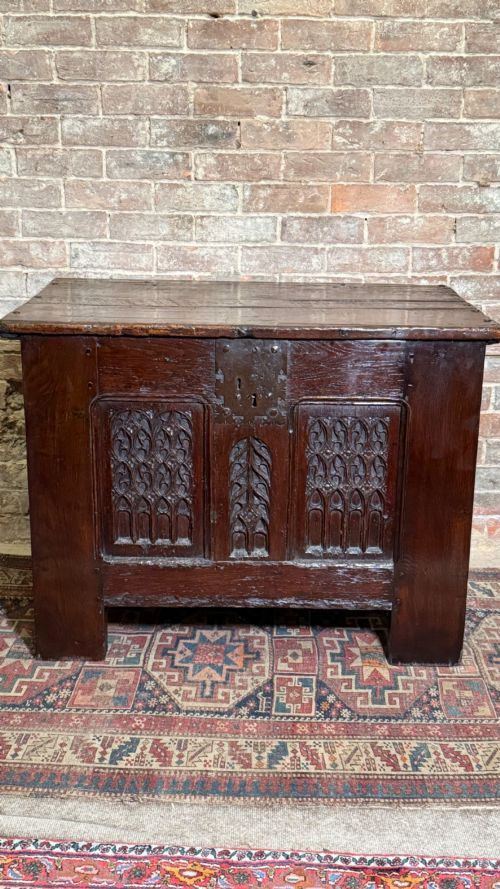
The crispness of hand-carved panels and the survival of original iron hardware distinguish finer examples from later alterations or marriages of components. A rich, undisturbed surface patination accumulated through decades of use elevates the standing of an individual piece.
Early Oak Box Retail Price Guide 2026
Typical asking prices for early oak box among the pieces listed under this phrase on Sellingantiques today, from the lower quarter to the upper quarter. They describe what is for sale here now, not the wider market.
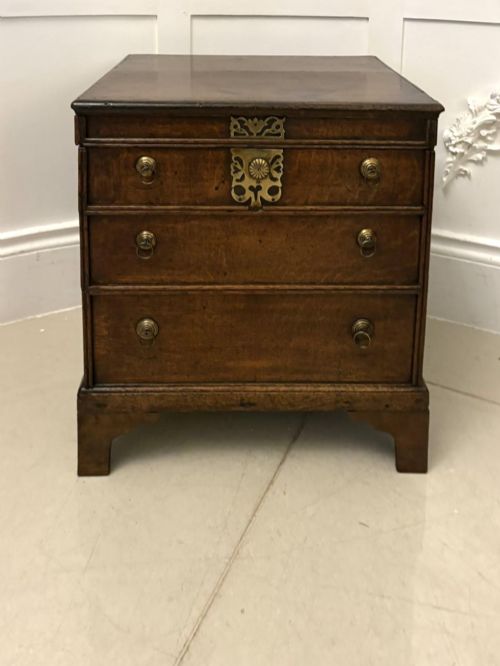
Listings feature sixteenth-century examples alongside seventeenth-century plank coffers and eighteenth-century spice cupboards in solid oak.
The Early Oak Box Glossary
- Bible box
- A small desk-like box with a sloping or flat lid, originally built to hold family scriptures and writing materials. These portable receptacles often sat upon tables.
- Coffer
- A large heavy chest utilised for storing valuables, linens, and documents, typically fitted with a hinged lid and robust iron mounts. They frequently served multiple domestic purposes including seating.
- Plank coffer
- A primitive form of chest constructed by joining thick boards directly at the edges using nails or dowels. This style predates complex frame-and-panel joinery.
- Mule chest
- A storage chest featuring one or more drawers beneath the main lift-top compartment, combining the functions of a coffer and a chest of drawers.
- Patina
- The deep surface sheen and colour developed by wood over centuries through handling, waxing, and exposure to light. This finish serves as an indicator of age and authenticity.
Early Oak Box: Frequently Asked Questions
What were early oak boxes used for?
These containers served practical domestic needs for keeping documents, valuable textiles, and small household items safe from dampness and theft. Their robust construction allowed them to double as impromptu seating or tables within modest homes.
Larger variants held blankets and clothing, while smaller sloped versions provided a stable surface for reading and writing important family records.
How do I identify a seventeenth-century box?
Seventeenth-century examples typically display hand-split oak boards, pegged mortise and tenon joints, and forged iron strap hinges. Surfaces often exhibit geometric chip-carving or scratch-mouldings characteristic of the period.
Construction methods rely heavily on trunnels and dovetails executed entirely by hand tool work rather than machine assistance.
Where should I place an oak box at home?
These versatile pieces suit placement in hallways as blanket storage, upon side tables as display surfaces, or beside seating areas. Their neutral timber tones complement both traditional and contemporary interior schemes.
Avoid positioning timber furniture directly beside heat sources or in areas subject to rapid humidity changes to protect the ancient wood.
Are all these pieces entirely original?
Survival over several centuries means many pieces have undergone minor repairs, such as replaced hinges or feet, while retaining their primary structural timber. Listings detail specific attributes and any notable restorations observed on individual items.
Examining the interior surfaces and underside often reveals the physical evidence of age, tool marks, and historical repairs.