



Early Grandfather Clock
An early grandfather clock measures the hours through centuries of cabinetmaking, combining brass movements with timber cases built to stand firm in a hall.
Early Grandfather Clock
When you search for an early grandfather clock, you enter a field dominated by longcase clocks spanning the late seventeenth century through the early nineteenth century. These tall horological pieces house weight-driven movements within fitted wooden housings designed to protect the pendulum and dial.
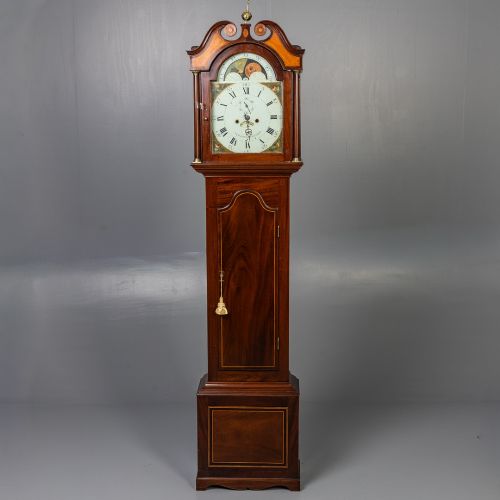
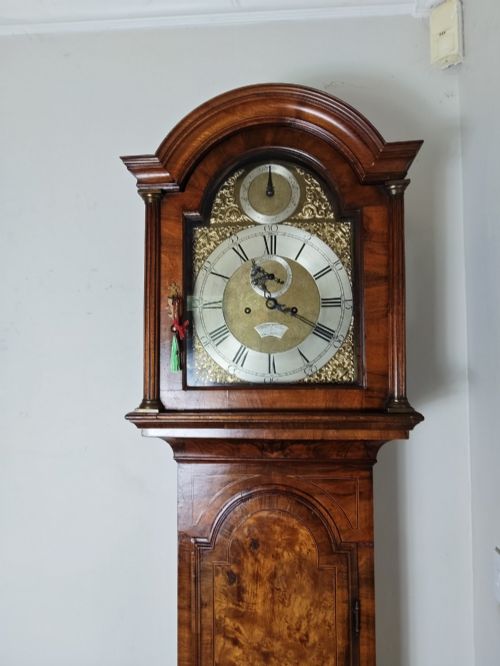
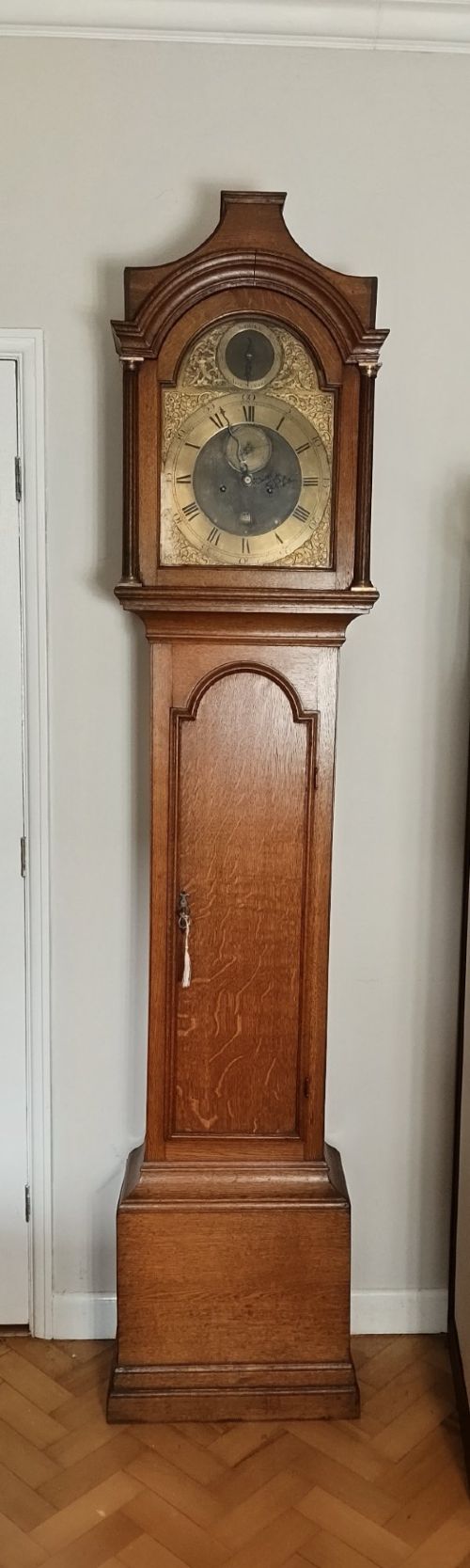
The version you are most likely to meet on this page is an oak or mahogany longcase clock from the Georgian period or the eighteenth century, frequently featuring either a brass or painted dial. Cases range from simple regional timbers to sophisticated walnut and marquetry finishes produced by metropolitan makers.
Beyond standard oak examples, the selection includes specialised forms such as single-handed movements, moon dials, and diminutive proportions often described as small or grandmother clocks. Each surviving piece records the evolving domestic requirements and mechanical ambitions of its period.
How they were made
Cabinetmakers constructed the tall cases using solid timbers like oak, mahogany, walnut, and pine, frequently applying veneers, marquetry inlay, or dark green chinoiserie finishes. The woodwork required stable joinery to support the height of the trunk and the weight of the hood door enclosing the dial.
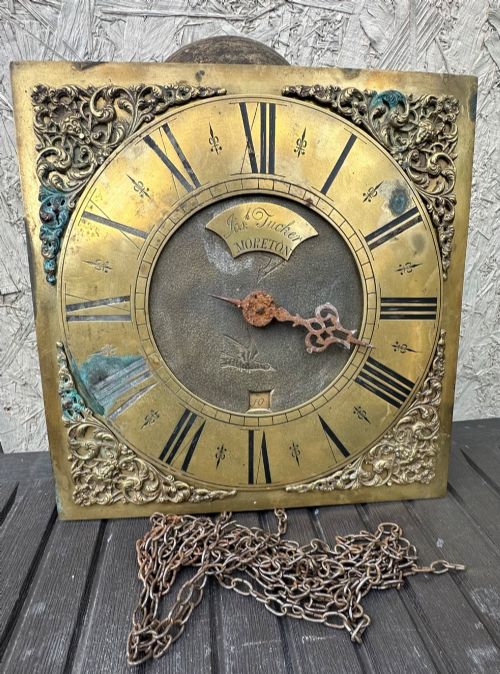
Movements combine brass plates and wheels with steel arbours and pinions, powered by lead or iron weights suspended on lines or chains. Dials utilise cast brass chapter rings, engraved spandrels, or painted iron faces protected behind flat or curved glass.
Early Grandfather Clock Retail Price Guide 2026
Typical asking prices for early grandfather clock among the pieces listed under this phrase on Sellingantiques today, from the lower quarter to the upper quarter. They describe what is for sale here now, not the wider market.
Several clocks carry strike-silent levers, proving that even eighteenth-century households valued the option of muting the bell when sleep beckoned.
What varies in quality
The distinction between tiers rests upon the fidelity of the movement to its original layout and the choice of primary timber in the case. Finely figured burr walnut, intricate marquetry, or documented maker signatures elevate an example far above standard regional utility pieces.
Proportion and surface preservation dictate the presence of quality in these longcase clocks. Untouched patination on the timber, crisp engraving on the brass dial, and original case mouldings separate well-preserved survivals from heavily restored or married assemblies.
Thomas Webbe of New Quay·David Morice of Auchtermuchty·William Smith of Keighley·John Harrington of London·George Adams·John Welsh of Luton·Ganthony of London·John Drew of London·Joseph Jackeman of London·Hampston Prince and Cattles of York·John Bishop of Sherborne Dorset
The Early Grandfather Clock Glossary
- Longcase clock
- Alternative term for a grandfather clock, describing a tall floor-standing timepiece with a weighted movement. The case typically consists of a hood, a long trunk, and a wider base.
- Dial
- The face of the clock displaying the hours and minutes. These can be formed of engraved brass with corner spandrels or painted iron showing lunar phases.
- Spandrel
- The decorative corner piece placed outside the chapter ring on a square or arched dial. Early examples are cast brass in various floral or cherub patterns.
- Count wheel
- An older mechanical component used to control the striking of the hours on a bell. It sits on the outside of the movement plate and rotates to drop the striking lever.
- Chinoiserie
- European imitation of traditional Chinese artistic styles, applied as painted lacquer decoration on furniture cases. It appears in dark green and other coloured grounds on select eighteenth-century clocks.
Early Grandfather Clock: Frequently Asked Questions
What is the difference between a grandfather clock and a longcase clock?
There is no mechanical or structural difference between the two terms. Longcase clock is the traditional and historical name used by horologists, while grandfather clock became the popular domestic term.
Both describe the tall, weight-driven pendulum timepieces housed in protective wooden cases that stand directly on the floor.
How do I wind an eight day longcase clock?
An eight-day movement requires winding approximately once a week using a matching key or crank inserted into the winding holes on the dial face. This action draws the internal weights back up to the top of the trunk.
Care must be taken not to over-wind the mechanism when the weights reach their upper limit, ensuring the suspension spring and gut lines remain undamaged.
Why do some early clocks have only one hand?
Early timekeeping standards did not demand the precision of modern minutes, making a single hand sufficient to read the approximate time. Single-handed clocks relied on divided chapter rings to allow the reader to estimate quarters and halves of hours.
As technical standards shifted and manufacturing improved during the eighteenth century, twin hands for hours and minutes became the standard configuration.
How can I tell a brass dial from a painted dial?
Brass dials are composed of a heavy metal plate, often featuring applied silvered chapter rings and cast brass corner spandrels. They rely on engraving and black wax infill for the numerals and maker signatures.
Painted dials, which generally appear from the late eighteenth century onward, consist of a smooth painted iron sheet that can incorporate floral corners, calendar displays, and lunar phase mechanisms.