
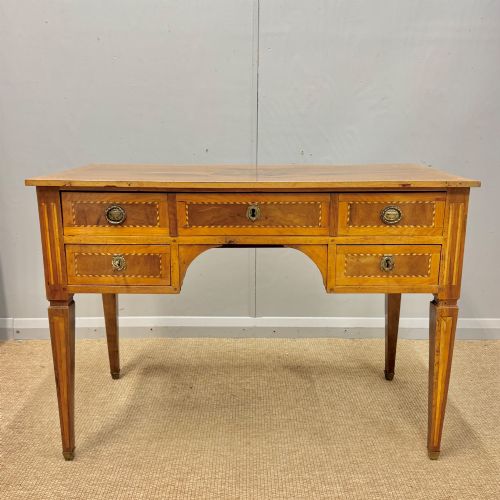
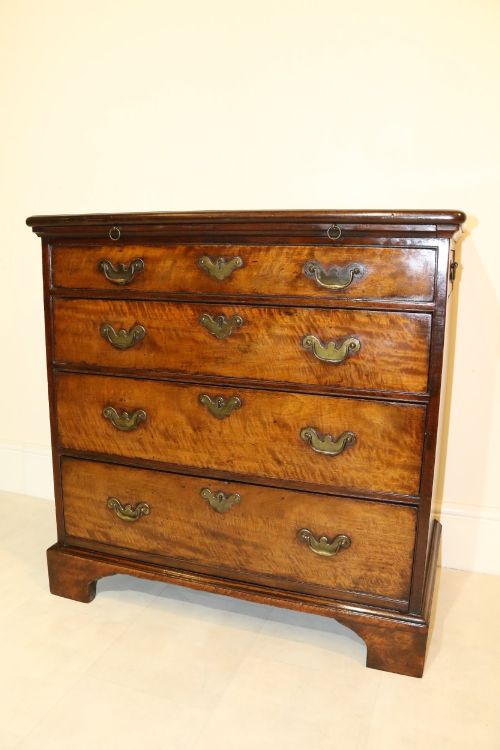
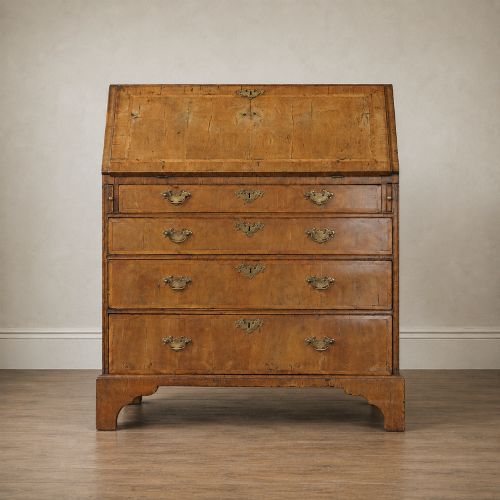
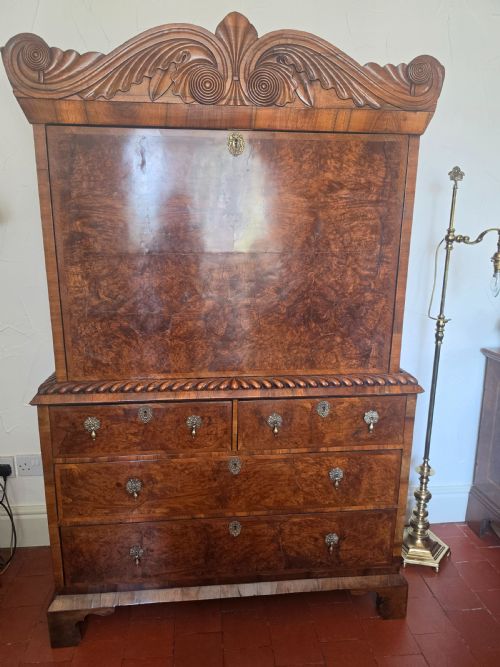

Early Georgian Walnut Desk
An early georgian walnut desk brings rich timber figures and traditional craftsmanship into a room.
Early Georgian Walnut Desk
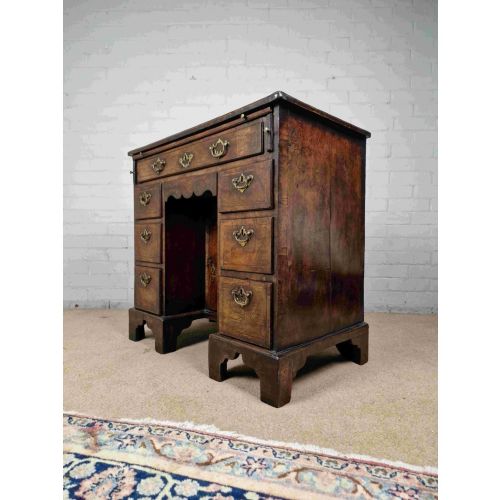
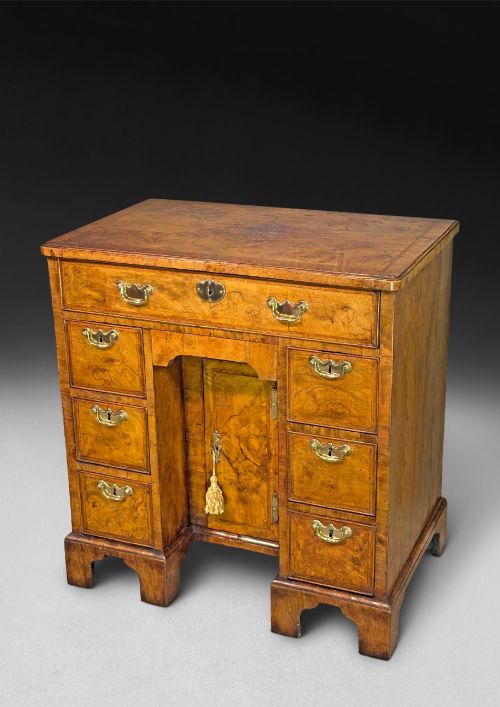
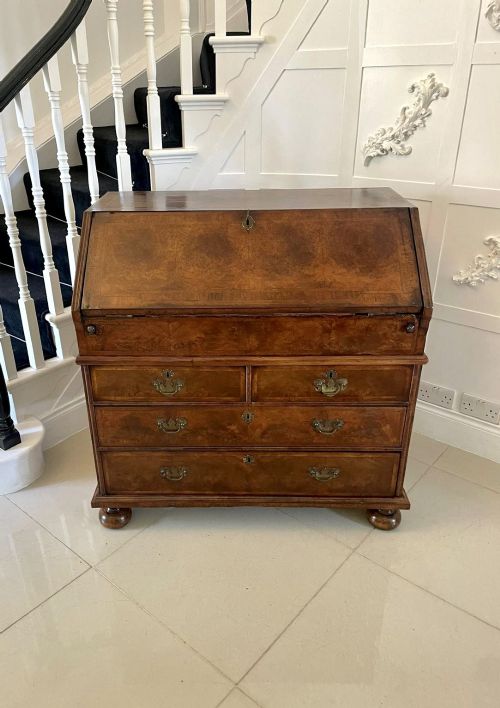
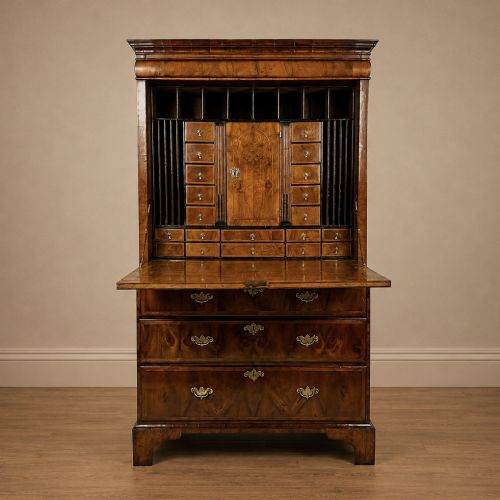
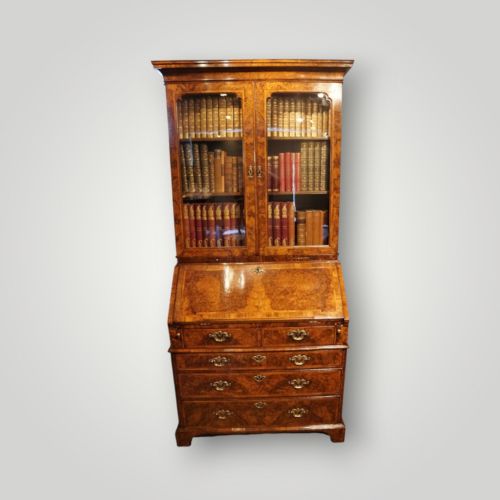
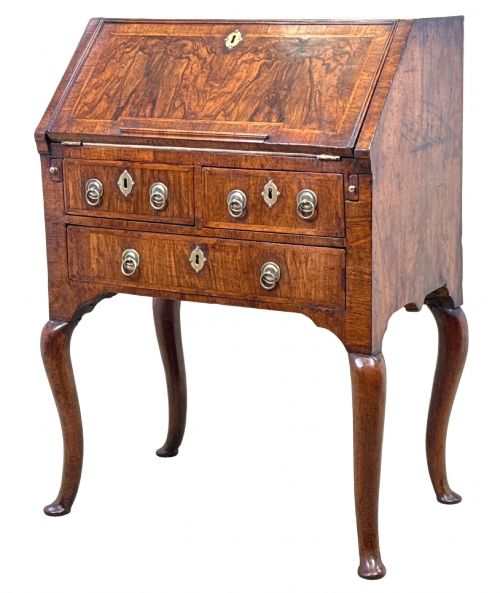
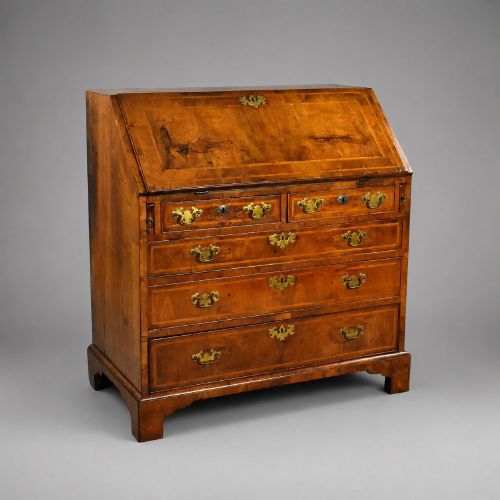
An early georgian walnut desk encompasses writing furniture fashioned during the reigns of Queen Anne, George I, and George II. The selections here typically present as kneehole desks, fall-front bureaux, and bureau bookcases originating from the eighteenth century.
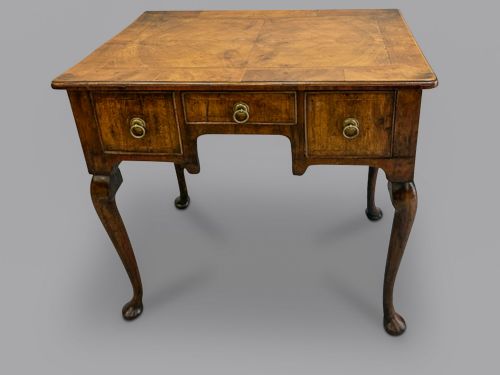
Buyers encountering this search phrase find various forms including lowboys, escritoires, and secretaire chests. Bureaux dominate the selection, offering fitted interiors behind hinged writing flaps.
The objects stem predominantly from the eighteenth century, though occasional nineteenth-century examples and later revivals appear. Walnut remains the unifying material across these centuries.
How they were made
Cabinetmakers utilised solid timber and veneers, frequently applying burr walnut to create dramatic figured surfaces on the main facades. Herringbone inlay and crossbanding often frame the drawer fronts and writing surfaces.
Internal construction relies on secondary timbers such as oak, while brass handles, escutcheons, and hinges provide structural and decorative hardware. Glass panels appear in the upper sections of taller bookcase variants.
The listings span the eighteenth, nineteenth, and twentieth centuries, uniting walnut, burr walnut, oak, and brass across bureaux, kneehole desks, and lowboys.
What varies in quality
The selection of timber grain largely dictates the visual appeal of an early georgian walnut desk. Figured and burr veneers matched symmetrically across drawer fronts elevate the visual standard of the piece.
Originality of surface finish, handles, and internal fittings distinguishes pieces that retain their historical integrity from those with extensive replacement parts. The depth of the natural patina accumulated over centuries also separates examples.
The Early Georgian Walnut Desk Glossary
- Burr walnut
- A specialised timber veneer harvested from walnut tree growths, producing swirling and mottled patterns. Cabinetmakers prized this grain for principal display surfaces.
- Kneehole desk
- A compact writing table featuring a central recessed cupboard flanked by small drawers. This form provides comfortable clearance for the seated writer.
- Escritoire
- A tall writing cabinet featuring a fall-front writing flap that conceals numerous small drawers and pigeonholes. It combines storage with a dedicated writing surface.
- Herringbone inlay
- A decorative band of contrasting veneer laid in a V-shaped pattern. It typically borders drawer perimeters on finer pieces.
- Lowboy
- A small table with drawers, commonly used as a writing or dressing surface during the early eighteenth century. It typically stands on four cabriole legs.
Early Georgian Walnut Desk: Frequently Asked Questions
How do I use a bureau desk?
The hinged flap lowers to form a horizontal writing surface while revealing small drawers and pigeonholes inside. Papers and writing implements stow away safely when the flap closes.
Original candleslides pull out from beneath the writing surface on certain tall bookcases to illuminate the desk area after dark.
How do I maintain walnut furniture?
Keep the timber away from direct sunlight and strong heat sources to prevent the veneers from drying out or splitting. Gentle dusting with a dry cloth protects the polished surface.
Occasional application of appropriate wax preserves the historic finish and maintains the deep patina of the wood.
How do I identify the period?
Examine the secondary timbers inside the drawers, such as oak, alongside the construction methods used for the dovetails and carcase. Hardware styles and cabinet proportions also offer clues to the decade of manufacture.
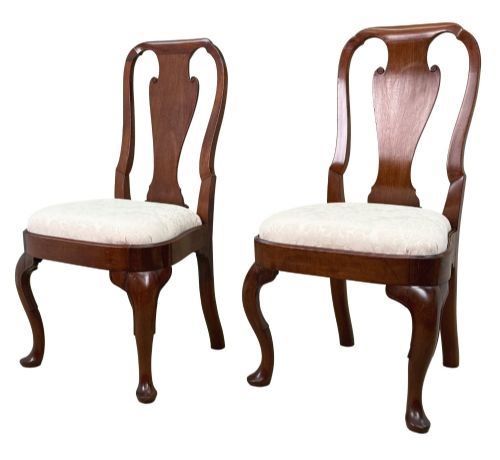
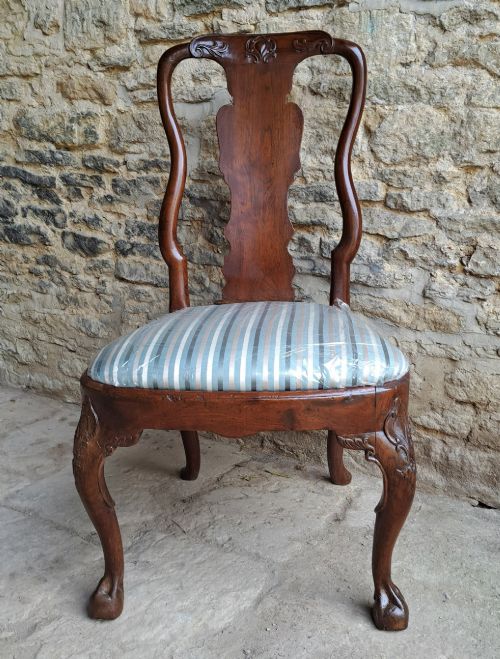
Stylistic markers like cabriole legs or bracket feet help distinguish pieces made under George I from later Georgian variations.