




Early Georgian Tripod Table
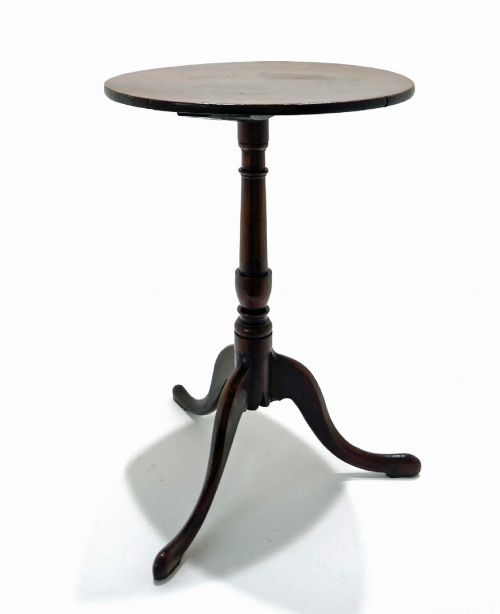
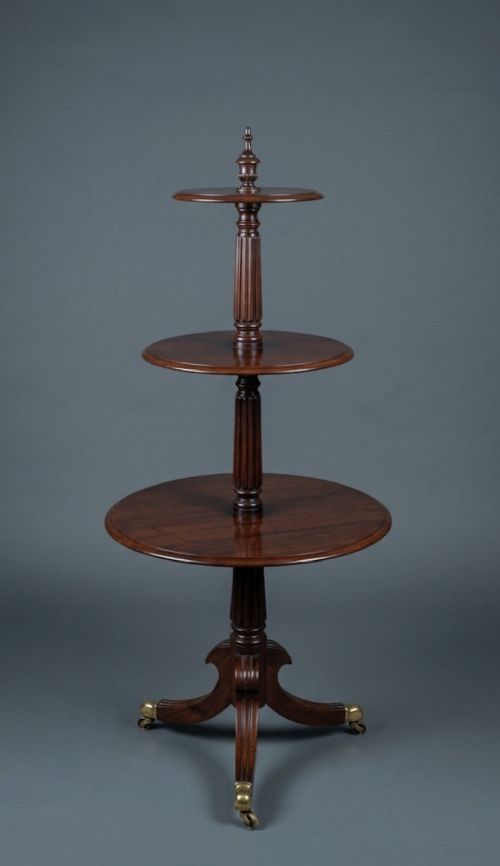
An early georgian tripod table balances a circular top on three slender legs, designed for utility and mobility in eighteenth-century rooms.
Early Georgian Tripod Table
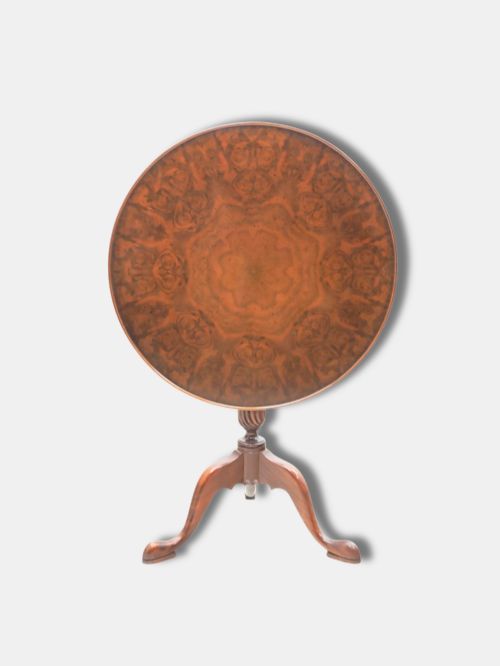
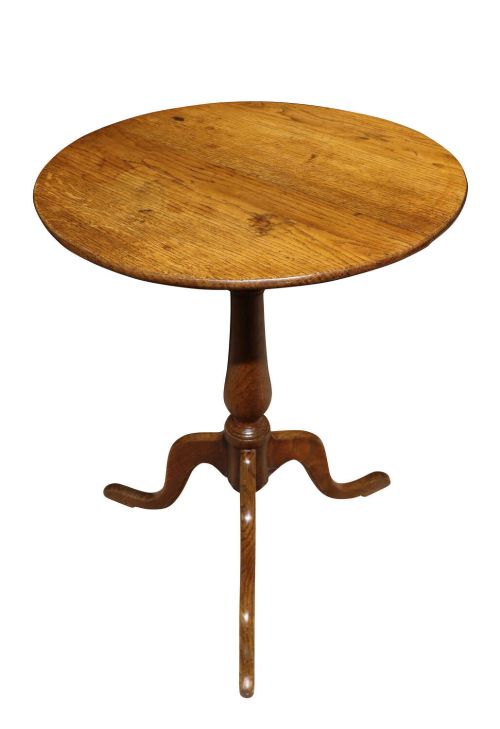
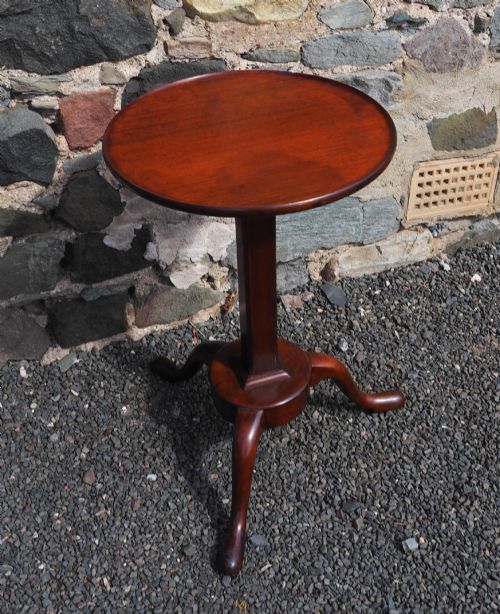
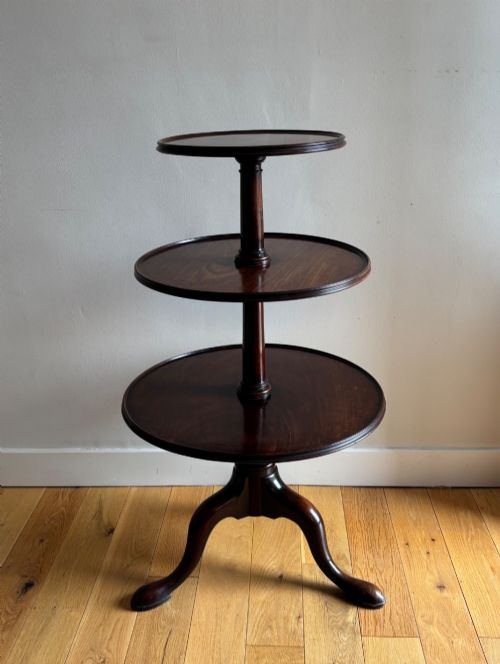
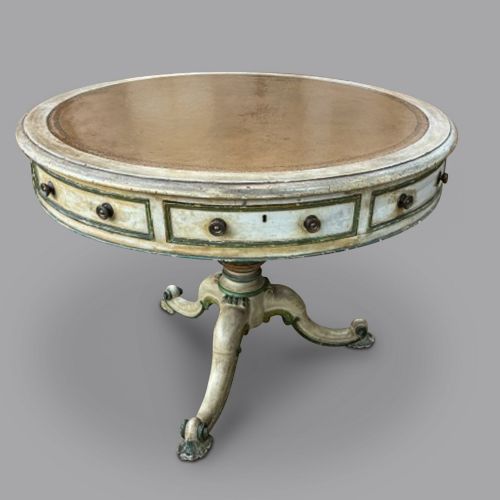
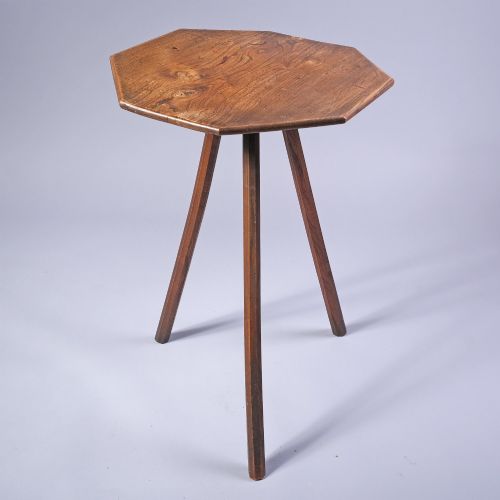
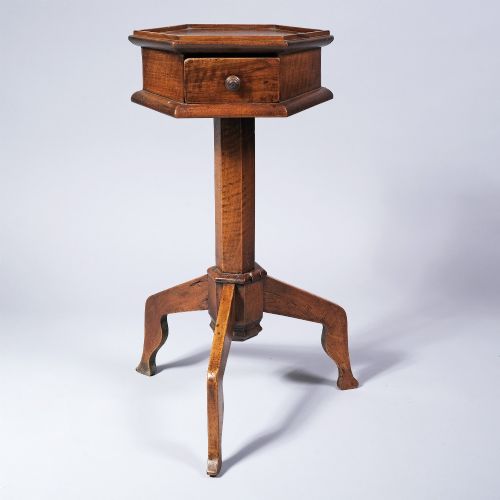
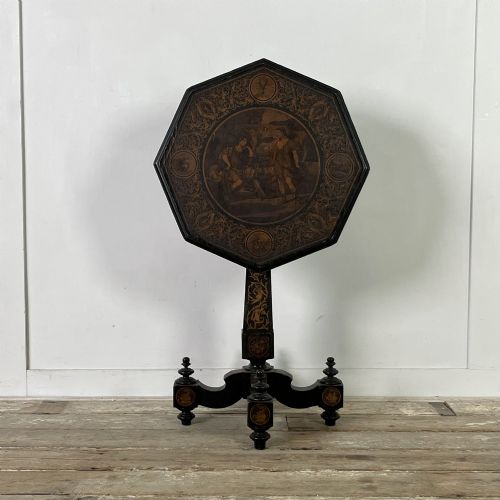
An early georgian tripod table appears in forms such as occasional tables, candlestands, and tilt-top tables. The selection ranges from eighteenth-century oak and mahogany pieces to later revivals.
Makers constructed these tables for easy movement around a room, often employing mechanisms like birdcage actions or tilting tops to save space when not in use.
Materials and Construction
Cabinetmakers worked predominantly in timbers such as mahogany, oak, walnut, and fruitwood, sometimes incorporating burr veneers or painted finishes. Turning and joinery shaped the central columns and three-legged bases.
Tilting mechanisms and birdcage connections required precise carpentry so the top pivoted smoothly and locked flat when lowered.
Some tilt-top tables retain ink stains from past centuries of letter writing by candlelight.
Evaluating Quality
Proportion and timber selection dictate the standard of an early georgian tripod table, separating utilitarian items from finer parlor pieces. Figured grain in walnut or mahogany and well-turned pedestals indicate skilled workmanship.
The integrity of the pivot mechanism and the stability of the leg joints reveal the original joiner's precision and subsequent care.
The Early Georgian Tripod Table Glossary
- Birdcage
- A wooden framework beneath the table top that allows the surface to rotate and tilt. This mechanism connects the top to the central column.
- Tilt top
- A table design where the surface hinges vertically to rest flat against the pedestal. This function allowed the furniture to stand against a wall when unoccupied.
- Tripod base
- A support structure consisting of three curved legs radiating from a central pillar. It provides stable placement on uneven floors.
- Dish top
- A circular table top with a raised edge carved from the solid timber. This rim prevented items from rolling off the surface.
Early Georgian Tripod Table: Frequently Asked Questions
What is a birdcage action?
A birdcage action is a rotating wooden assembly beneath the table top. It permits the surface to turn horizontally and tilt vertically.
This mechanism links the tabletop directly to the central column.
How were these tables used?
People used them as portable surfaces for tea, reading, or candlelight. Their light weight allowed servants to move them easily between rooms.
Tilt-top variants stood against walls to save space when not in service.
What woods are common?
Mahogany and walnut appear frequently in formal examples, particularly from the eighteenth century onwards. Oak and fruitwood feature in country or provincial pieces.
Secondary timbers often include elm or ash in the leg structures.
How do I spot a revival piece?
Revival items from the twentieth century often display machine-cut joinery and standardised turning. Eighteenth-century originals show hand-carved details and timber shrinkage consistent with age.
Hardware and screw types also help indicate the period of manufacture.