


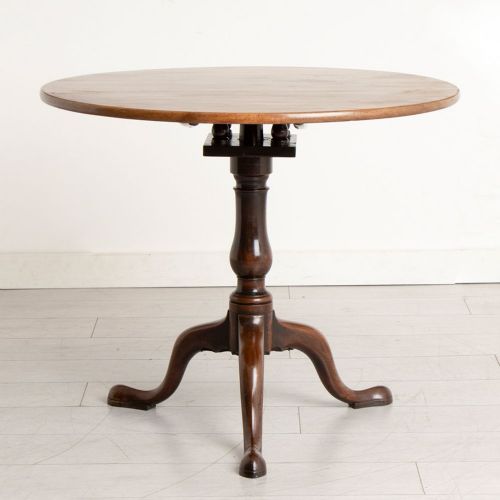

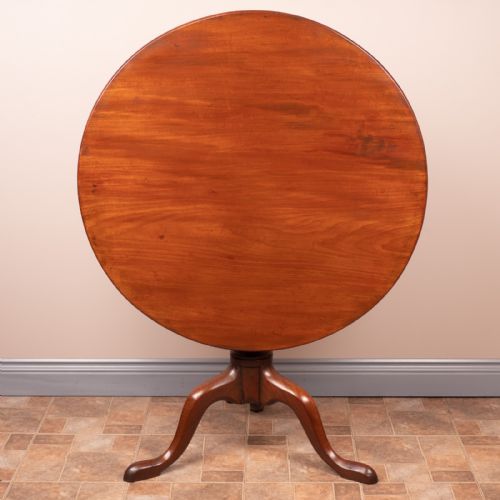
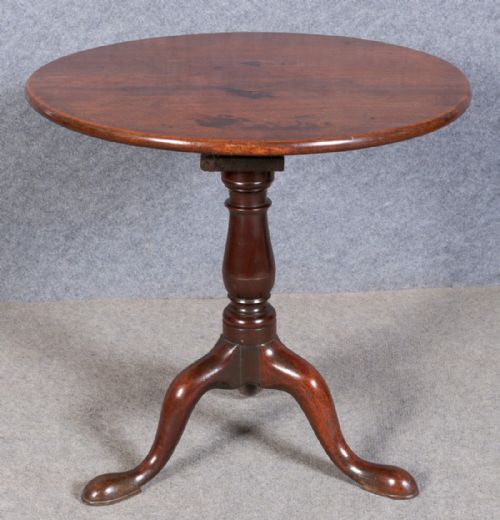

Georgian Bird Cage Table
A georgian bird cage table combines a practical pivoting top with a clever revolving wooden frame.
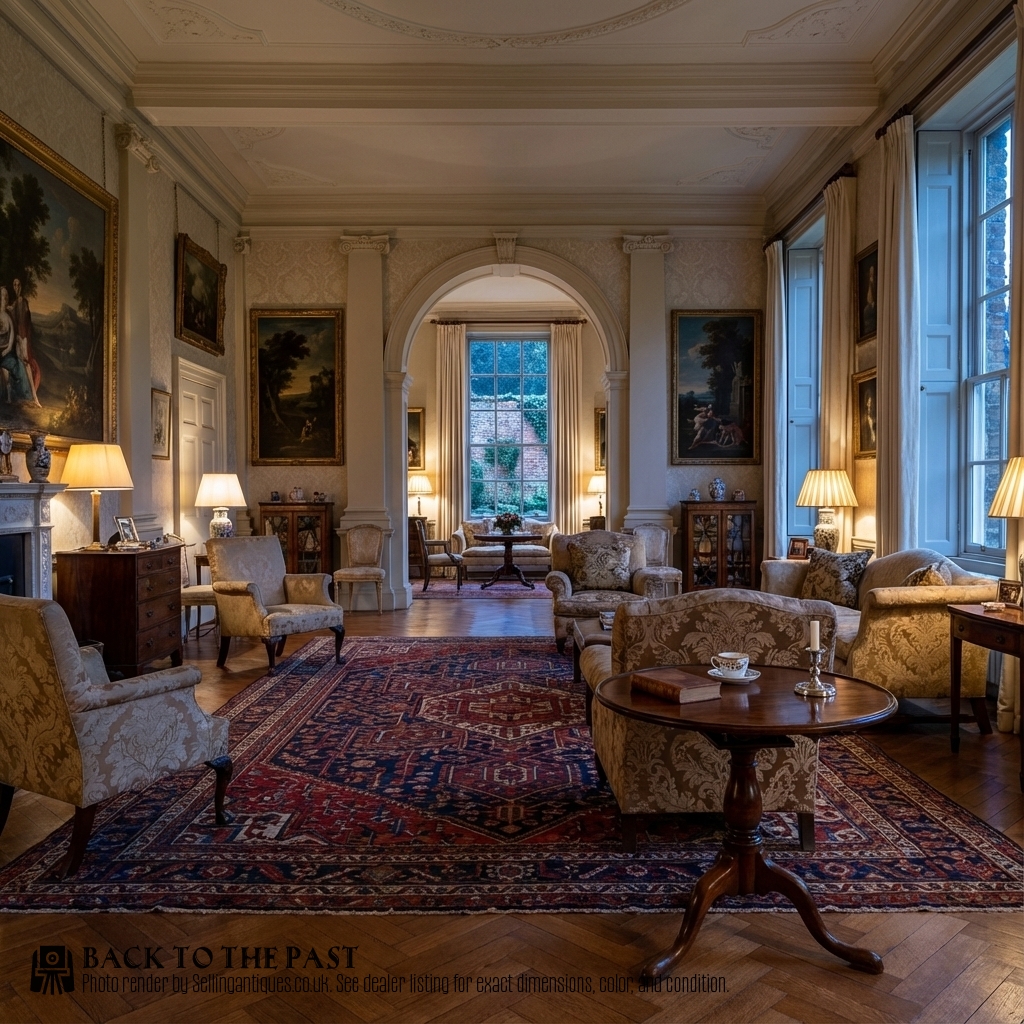
Georgian Bird Cage Table
When you search for a georgian bird cage table, you find tripod occasional pieces designed for dining, tea, and supper use in eighteenth-century rooms. These items feature a distinctive revolving wooden frame beneath the surface that allows the top to tilt and rotate independently.
The versions most common on this page date from the Georgian era and the eighteenth century, constructed primarily as circular tables supported by three legs. Examples span from early Georgian dish top variations to later George III and William IV iterations.
Makers built these objects as versatile furnishings that moved easily beside seating or tucked against walls when not in active service. The combination of a tip-up mechanism and a rotating cage solved space issues in period interiors.
Distinguishing Quality Across the Range
The upper tier of these pieces demonstrates superior timber selection, such as single-piece solid mahogany boards or highly figured plum pudding veneers. Execution of carved pie-crust edges, lobed borders, and detailed claw and ball feet separates fine workshop output from standard production.
Mechanism stability defines functional quality, where tightly fitted bird cage joints rotate cleanly without excessive wobble in the central column. The proportional balance between the tripod base and the diameter of the top indicates the care taken by the original maker.
Early owners utilised the revolving frame not for birds, but to keep their evening port from spilling during lively parlour debates.
The Georgian Bird Cage Table Glossary
- Bird cage
- A timber framework beneath the table top that enables both pivoting and rotation. This component houses parallel wooden spindles that resemble an avian enclosure.
- Tilt top
- A mechanism allowing the surface to fold into a vertical position for storage. Tables with this action rested flat against walls when meals concluded.
- Tripod base
- A support structure comprising three legs radiating from a central pillar. This configuration ensured stability on uneven floorboards.
- Pie crust edge
- A raised, carved border shaped with alternating curves and points around the perimeter of the top. This decorative profile prevented tableware from sliding off during use.
- Occasional table
- A moveable furnishing utilised for specific tasks such as tea, wine, or supper. These pieces migrated around the room as daily requirements shifted.
Georgian Bird Cage Table: Frequently Asked Questions
What is a bird cage table?
A bird cage table is a small support piece featuring a rotating wooden frame beneath the surface. This mechanism allows the top to swivel horizontally and tilt vertically.
Carpenters designed these items during the eighteenth century for flexible use in parlours and dining spaces. The combination of rotation and tilting made them easy to store against walls.
How do you use a tilt top table?
You release the securing catch or pin to tilt the surface upright when the item is not needed for service. This action reduced the footprint of the furniture in crowded rooms.
During meals or gatherings, the top lowered back to a horizontal position and locked securely onto the central pillar. The rotating cage permitted users to adjust the angle without moving the entire base.
How do I identify a Georgian table?
Georgian pieces display construction methods typical of the eighteenth and early nineteenth centuries, including hand-cut joinery and native or imported hardwoods. Timber choice often includes solid mahogany or oak.
Details such as tripod legs with pad feet, dish tops, or carved edge treatments point toward this period of British cabinet making. Mechanisms rely on timber pivots and simple metal fasteners rather than modern hardware.
Where were these tables placed?
These items stood beside seating in parlours, drawing rooms, and dining areas to hold tea service, wine bottles, or supper dishes. Their compact footprint suited intimate interior layouts.
Because the top folded away, staff moved them freely between locations as household activities changed throughout the day.