


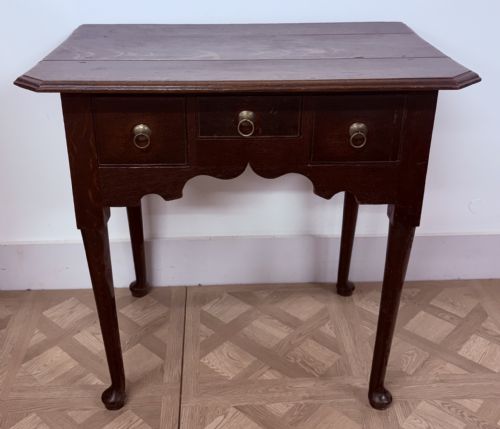
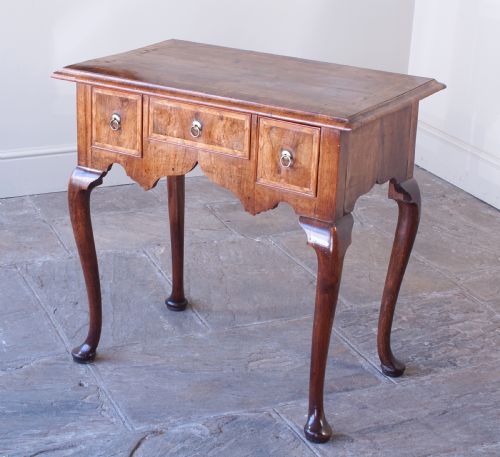
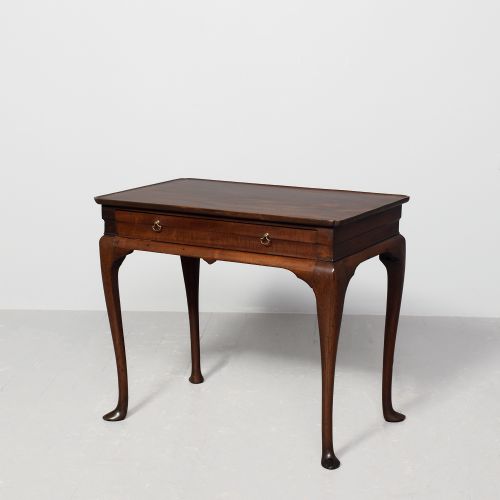
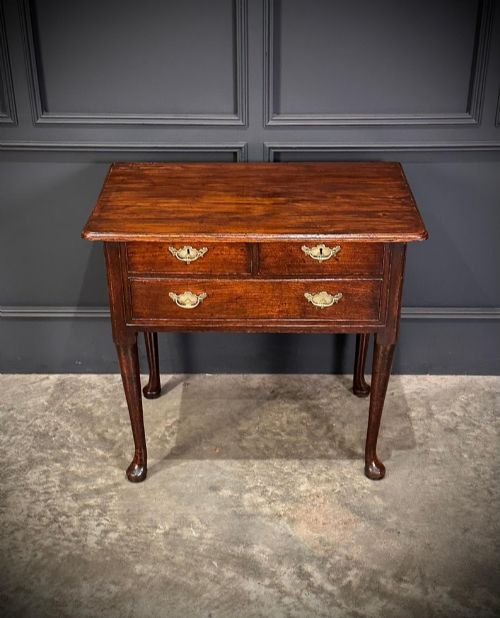
Early Georgian Dressing Table
An early georgian dressing table brings quiet proportions and figured veneers to a bedroom, combining drawers and mirrors for personal grooming.
Early Georgian Dressing Table
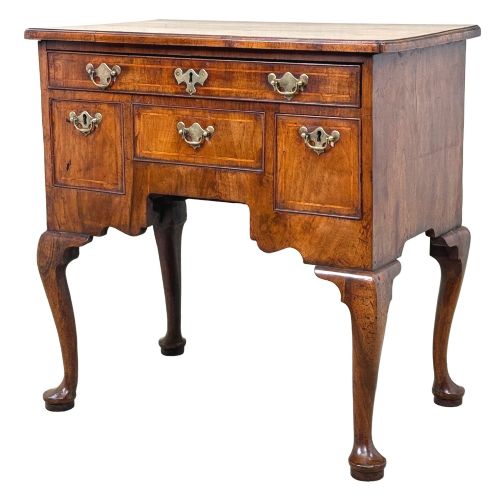
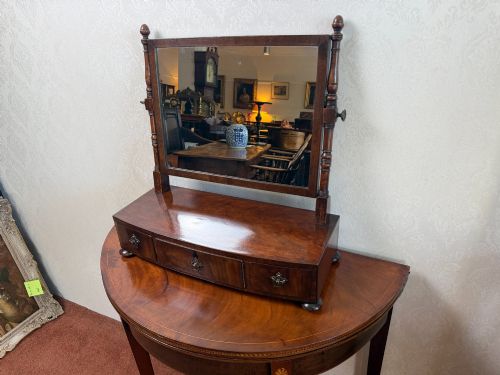
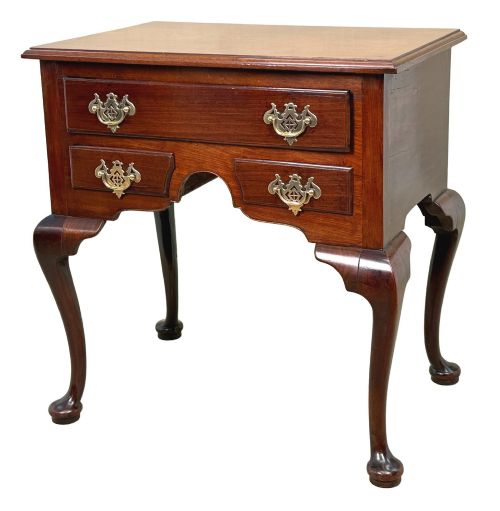
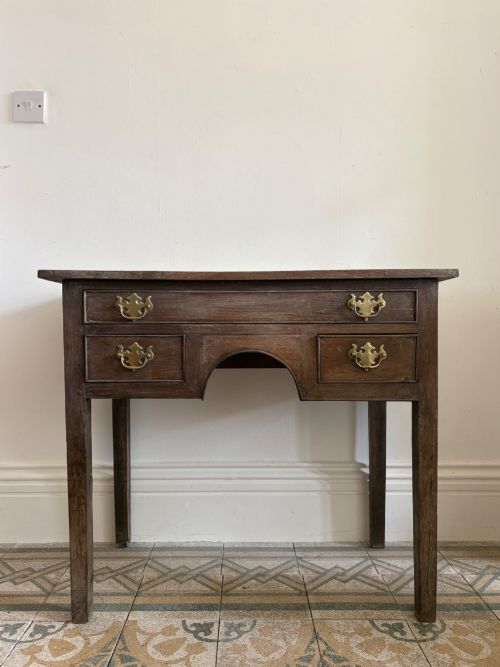
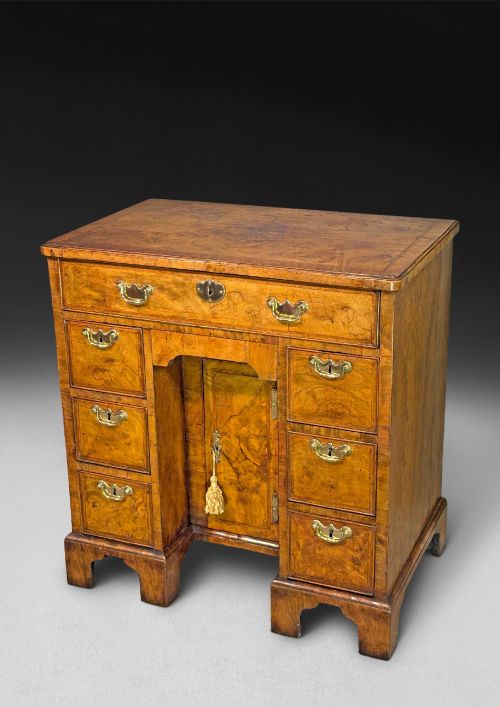
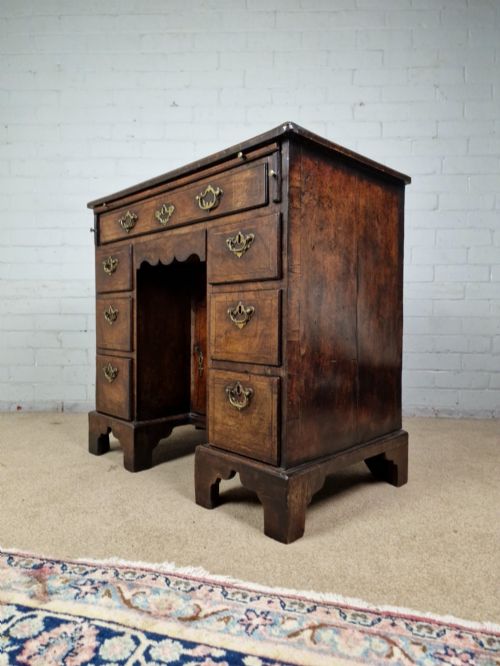
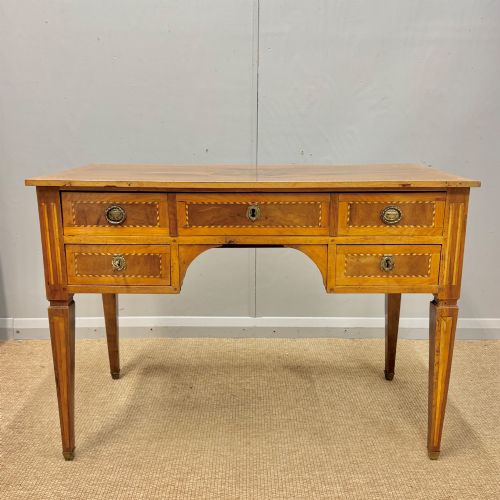
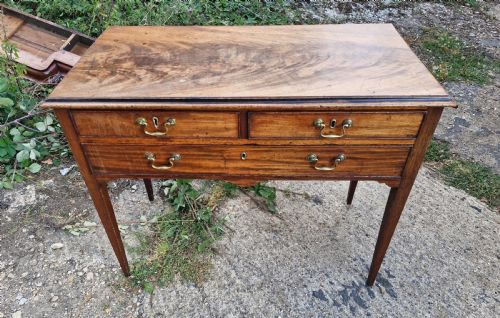
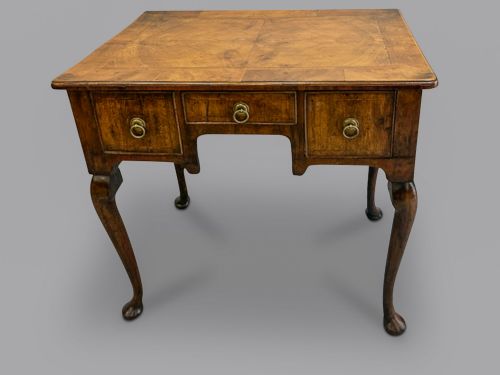
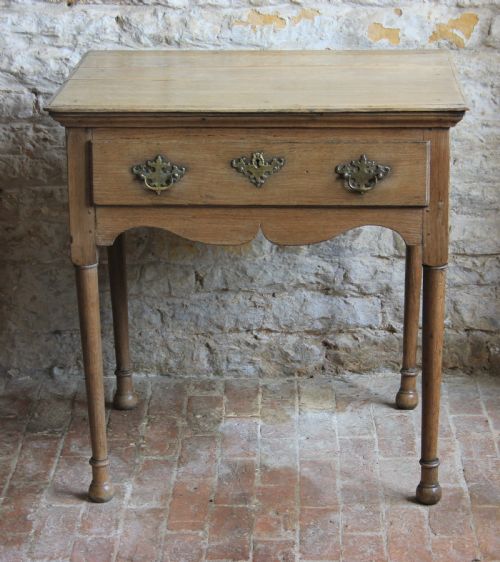
An early georgian dressing table typically takes the form of a lowboy, kneehole desk, or dressing table mirror originating from the eighteenth century. Walnut, oak, and mahogany feature heavily across these forms, alongside related side tables and writing desks.
Makers and craftsmen of the period constructed these pieces with single or multiple drawers to hold cosmetics, papers, and personal items. Lowboys and kneehole desks serve interchangeably as dressing tables or writing surfaces in domestic interiors.
How they were made
Makers utilised native and imported timbers, notably figuring walnut, dense oak, and rich mahogany, often applying decorative banding to drawer fronts and tabletops. Brass handles, escutcheons, and hinges secure the moving parts.
Joinery techniques relied on dovetailed drawer construction and pegged mortise and tenon frames. Glass components include mirror glass for dressing mirrors and lead glass on smaller table accessories.
Early Georgian Dressing Table Retail Price Guide 2026
Typical asking prices for early georgian dressing table among the pieces listed under this phrase on Sellingantiques today, from the lower quarter to the upper quarter. They describe what is for sale here now, not the wider market.
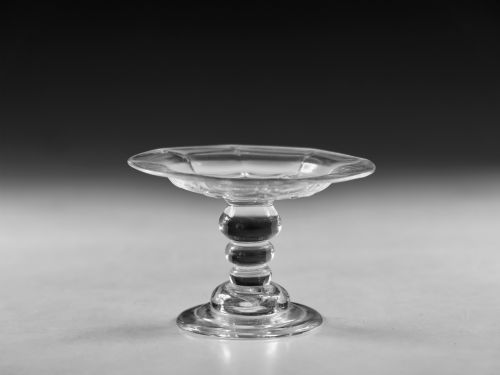
Tiny lead glass patch stands kept decorative beauty spots close at hand during the early seventeen-thirties.
What varies in quality
The sophistication of the timber figure dictates much of the visual merit, with highly figured walnut and select yew wood sitting above plain oak or pine. Original brass hardware and untouched surface patination elevate an example significantly.
Construction nuance separates standard regional items from sophisticated metropolitan pieces. Crisp moulding profiles and careful proportion distinguish the finer workshops from basic joinery.
Gillows of Lancaster
The Early Georgian Dressing Table Glossary
- Lowboy
- A small table with one or more drawers, standing on four legs, commonly used as a dressing table or side table in the eighteenth century. These low tables provide compact storage without dominating a room.
- Kneehole desk
- A writing desk or dressing table featuring a central recessed space for the legs, flanked by pedestals of small drawers. This form allows the user to sit comfortably close while working or grooming.
- Dressing table mirror
- A small mirror mounted in a pivoting frame atop a miniature set of drawers, designed to sit upon a table surface. They reflect light and aid personal preparation.
- Patch stand
- A small pedestal or stand intended to hold cosmetic patches used in period fashion. These tiny decorative items often feature lead glass construction.
Early Georgian Dressing Table: Frequently Asked Questions
What is an early georgian dressing table?
An early georgian dressing table is a low table, lowboy, or kneehole desk dating from the eighteenth century, equipped with drawers for personal items.
These pieces combine functional storage with decorative timbers like walnut and mahogany, designed to sit neatly in a bedroom or dressing room.
How were lowboys used historically?
Lowboys functioned as versatile tables for holding mirrors, writing letters, or organising grooming equipment.
Their compact size allowed them to move easily between rooms depending on the daily needs of the household.
How do I distinguish walnut from mahogany pieces?
Walnut pieces generally date earlier, displaying rich, warm brown grain patterns with distinctive figuring. Mahogany items often appear darker and heavier, becoming more prominent later in the eighteenth century.
Examining the tone and growth rings helps identify the primary wood used by the maker.
Can I use a lowboy as a modern desk?
A lowboy makes a suitable writing desk provided the knee clearance matches your chair height. Many historical examples offer adequate surface area for modern notebook writing.
Ensure you check the internal drawer depth if you intend to store modern stationery.