

Early Georgian Console Table
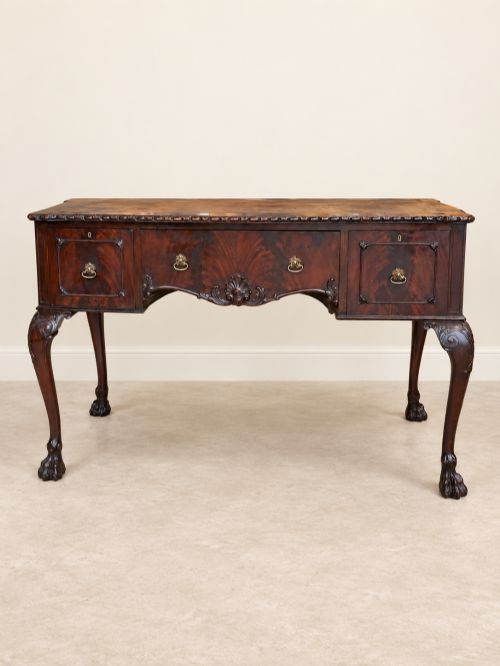
An early georgian console table brings architectural presence and rich timber surfaces into a room, serving as a functional wall piece with deep historical roots.
Early Georgian Console Table
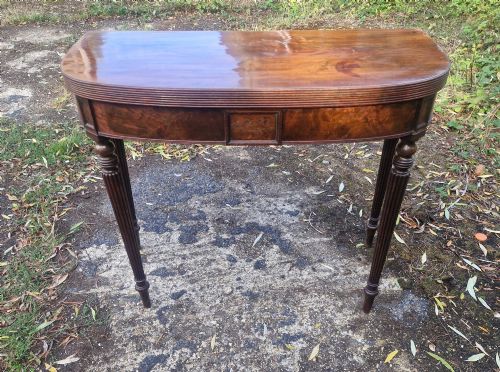
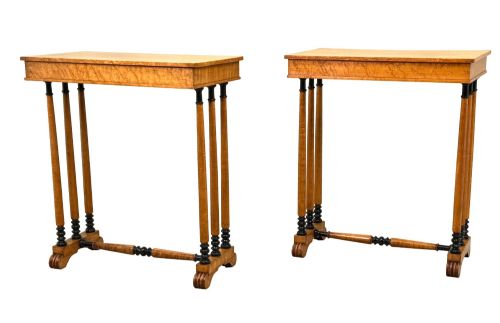
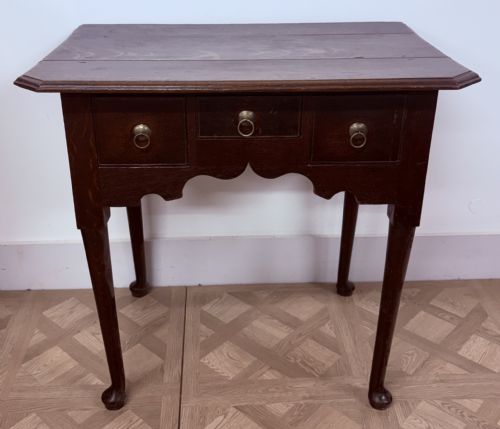
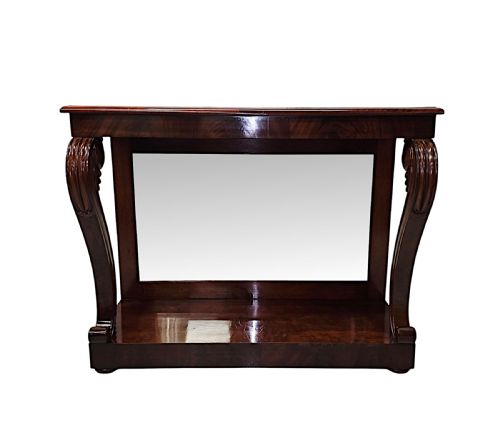
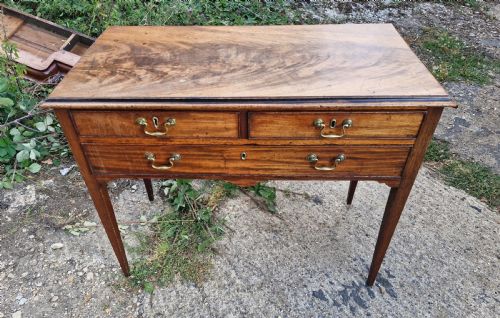
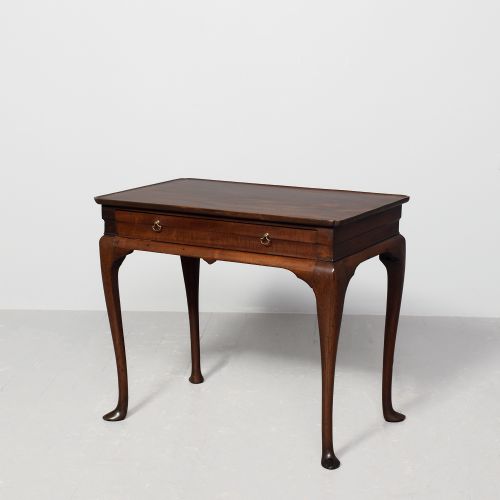
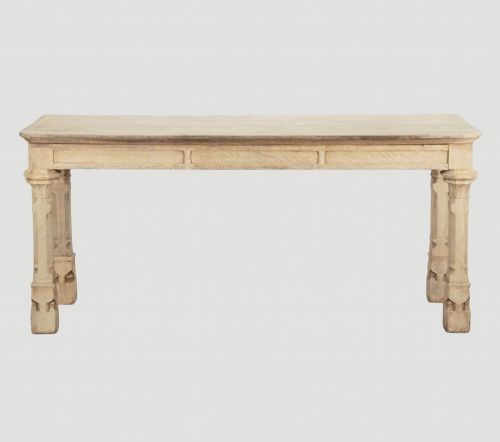
An early georgian console table stands as a form of architectural furniture designed to sit flush against a wall, frequently constructed during the eighteenth century. These pieces appear alongside related forms such as side tables, serving tables, and lowboys built from durable timbers.
The selection ranges from genuine eighteenth-century walnut and oak pieces to nineteenth-century interpretations and later revival styles. Buyers encounter both plain utility forms and sophisticated crossbanded or figured walnut examples originating from English and Irish workshops.
How they were made
Cabinetmakers utilised solid timbers such as mahogany, oak, and walnut, frequently applying fine wood veneers and crossbanding to enhance the visual depth of the top surfaces. Secondary woods like pine appear in structural elements and drawer construction.
Joinery techniques relied on traditional hand-cut joints, while decorative flourishes involved subtle stringing, inlay, and carved leg profiles matching prevailing period aesthetics from Queen Anne through to the Regency era.
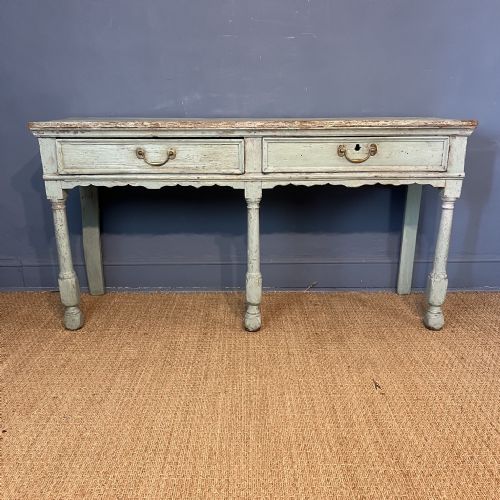
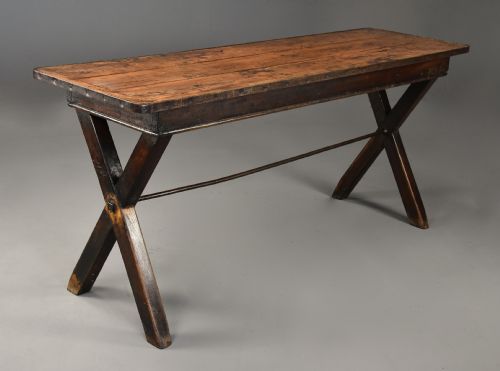
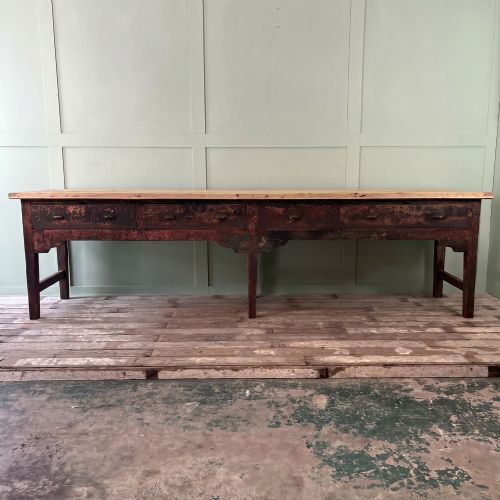
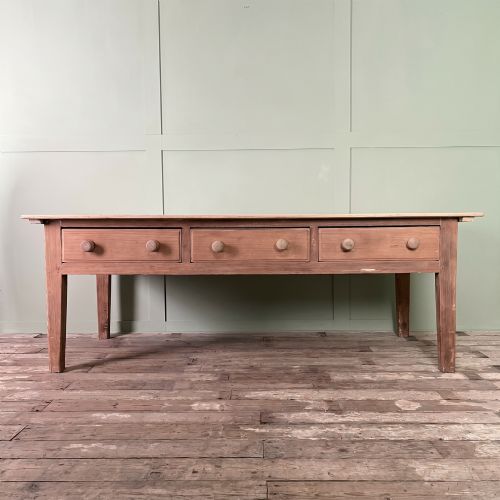
Several dairy prep tables manage to sneak into the company of grand mahogany serving pieces, proving that practical work surfaces endure just as well.
What varies in quality
The distinction between standard examples and superior pieces rests upon the choice of timber figure, such as highly grained walnut or figured mahogany, and the crispness of any carved detailing. Original surface patination and untouched construction integrity elevate the standing of a table significantly.
Proportion and architectural balance dictate the overall success of the design, where refined edge moulding and harmonious leg forms separate utilitarian furniture from high-status cabinet work.
Gillows·Gillingtons of Dublin·W Williamson and Sons
The Early Georgian Console Table Glossary
- Crossbanding
- A narrow strip of veneer laid around the border of a tabletop with the grain running perpendicular to the centre panel. This technique creates a distinct visual frame.
- Lowboy
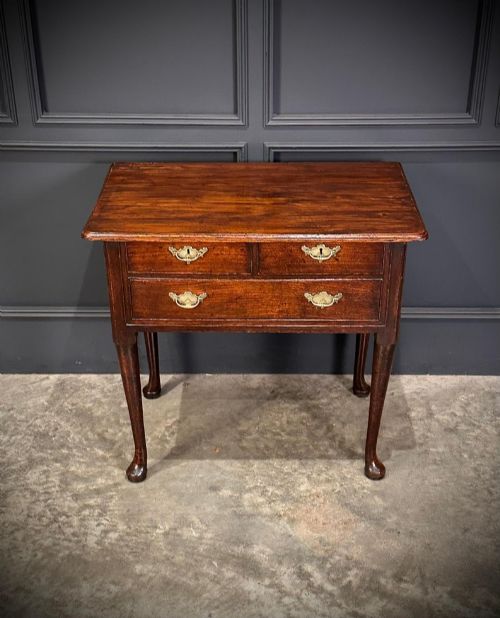
- A small dressing or side table featuring one or more rows of drawers beneath a flat top, typically raised on four legs. These pieces date frequently to the early eighteenth century in oak or walnut.
- Patina
- The surface sheen and mellowing developed by wood over centuries of exposure and handling. It reflects age and continuous use.
- Console table
- A table supported against a wall by brackets or legs, often designed to display decorative objects. They emerged as grand architectural fixtures in period interiors.
Early Georgian Console Table: Frequently Asked Questions
Where should I place a console table?
These tables suit hallways, entrance spaces, or living rooms where they occupy minimal floor depth while offering a surface for lamps or decorative objects. Their flat backs require placement directly against a wall for stability.
Historically, they sat beneath large mirrors or window piers to complete a unified interior decorative scheme. Today, they function well in modern interiors as focal anchor points in narrow circulation areas.
How do I distinguish walnut from mahogany furniture?
Walnut displays a warmer, golden-brown hue with intricate dark grain figure patterns, and it dominated cabinet making through the early eighteenth century. Mahogany possesses a denser reddish-brown tone and became the preferred timber later in the Georgian period.
Examining the weight, colour undertones, and grain pattern helps identify the primary wood used in the construction. Revival pieces from later centuries often mimic these earlier timber choices.
Did these tables always have folding tops?
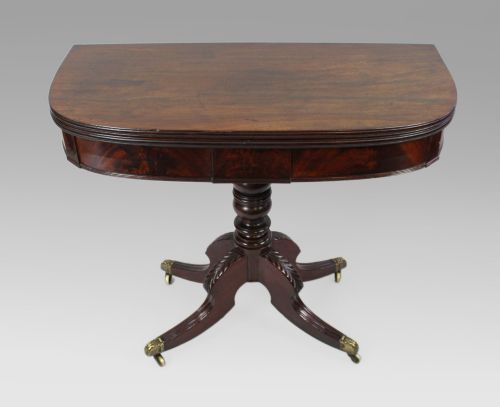
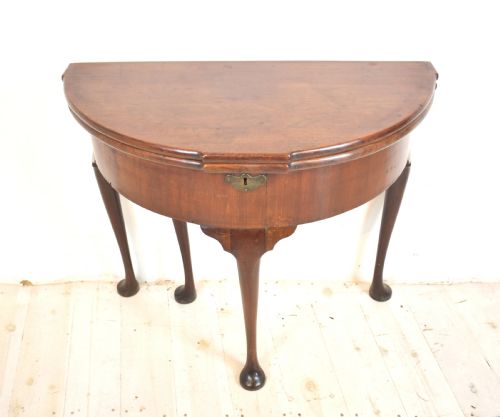
Many console and side tables incorporated fold-over or turn-over leaves to double their surface area for card playing or tea drinking. Fixed-top variations served primarily for display or serving purposes.
The presence of a fold-over mechanism indicates a dual-purpose piece intended for social entertaining in period drawing rooms.
How do I care for antique timber surfaces?
Maintain the wood by applying natural beeswax sparingly and buffing with a soft cloth to preserve the historic patina. Avoid placing tables in direct sunlight or near heat sources to prevent timber splitting.
Routine dusting with a dry cloth protects the finish without stripping the historical surface accumulated over generations.