



Early English Dresser
An early english dresser brings centuries of craftsmanship into a room, offering practical storage with deep historical character.
Early English Dresser
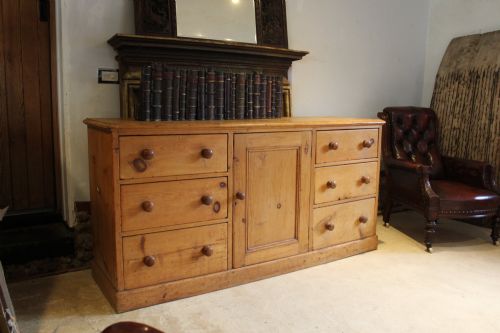
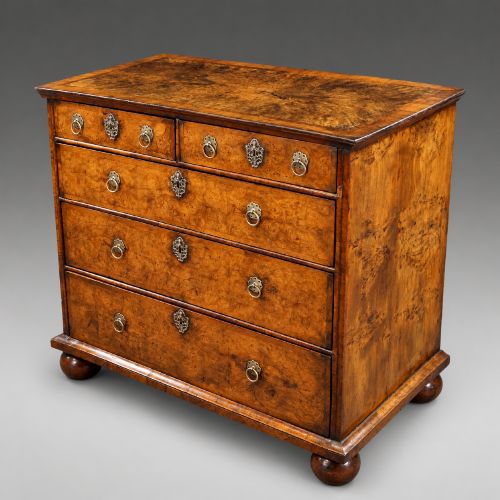
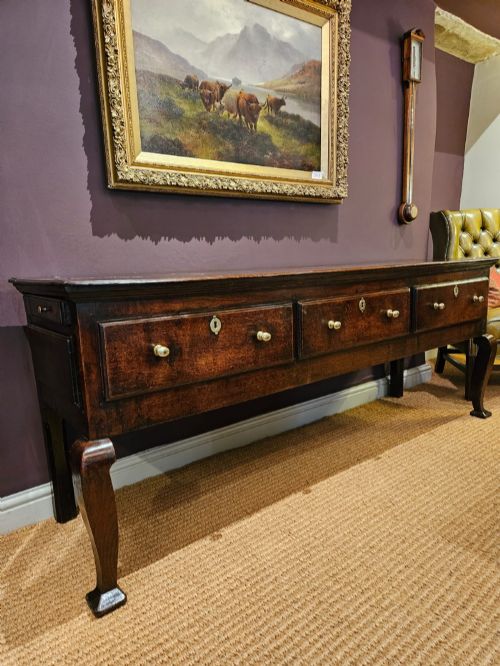
When you search for an early english dresser, you encounter substantial furniture pieces built primarily from oak and walnut during the seventeenth and eighteenth centuries. These items encompass vernacular furniture such as dresser bases, chests of drawers, and pieces featuring racks.
The selection on this page demonstrates forms originating from periods including the Jacobean, William and Mary, and Georgian eras. Buyers most frequently meet oak and walnut chests of drawers alongside specific dresser bases and cabinets from these foundational centuries.
Materials and construction
Carpenters constructed these early english dresser examples and related storage furniture using solid timber boards of oak and walnut, joined with traditional framing methods. Hardware components utilised cast brass for drop handles and key escutcheons.
Surface ornamentation relied on timber selection, such as feather-banded borders on walnut surfaces and geometric panel mouldings on seventeenth-century oak drawers. Iron hardware also appeared on functional storage pieces from these periods.
Early English Dresser Retail Price Guide 2026
Typical asking prices for early english dresser among the pieces listed under this phrase on Sellingantiques today, from the lower quarter to the upper quarter. They describe what is for sale here now, not the wider market.
The listings span the 17th century through the Georgian era, utilising oak, walnut, brass, and iron across various chests and dressers.
Assessing quality
Quality in an early english dresser rests upon the integrity of the timber and the subtlety of period details like geometric mouldings or feather-banding. Pieces retaining their original brass handles and unmodified surface patination demonstrate superior historical preservation.
Proportion and timber figure dictate the visual strength of the object, distinguishing simpler vernacular pieces from more formally styled Queen Anne and Georgian examples. The crispness of early joinery remains a primary indicator of workshop skill.
The Early English Dresser Glossary
- Feather-banding
- A decorative inlay technique using veneer slices laid at alternating angles to create a herringbone pattern around drawer perimeters. This border work is typical on fine walnut furniture.
- Geometric moulding
- Raised ornamentation applied to drawer fronts in rectilinear patterns, characteristic of seventeenth-century joinery. It adds depth and architectural severity to oak surfaces.
- Dresser base
- The lower cabinet or sideboard portion of a kitchen or dining room dresser, often fitted with drawers and cupboards. These pieces provide surface workspace and storage.
- Cabriole leg
- A furniture leg that curves outward at the knee and tapers inward toward the foot, popular during the early eighteenth century. This form reflects continental design influences introduced under Queen Anne and George I.
- Chest on stand
- A tall storage chest raised upon a separate base with legs, emerging as a distinct form around the turn of the eighteenth century. This construction elevates the main drawers for easier access.
Early English Dresser: Frequently Asked Questions
How do I date an early english dresser?
Dating relies on identifying specific construction methods, timber choices, and stylistic markers such as geometric mouldings or cabriole legs. Seventeenth-century pieces typically feature heavy oak construction, while eighteenth-century examples frequently showcase walnut veneers.
Hardware styles, including brass drop handles and escutcheons, also provide chronological clues. Comparing joinery techniques helps narrow down the decade of manufacture.
Where were these dressers used?
Original owners placed these furnishings in the principal rooms of country houses, farmhouses, and town dwellings for everyday storage and display. Dresser bases and chests held household textiles, tableware, and documents.
Today, buyers place them in living rooms, hallways, and dining spaces to anchor contemporary interiors with historical texture. Their robust construction ensures they continue to function as practical storage units.
What is the difference between oak and walnut pieces?
Oak pieces generally date from the seventeenth and early eighteenth centuries, displaying a robust vernacular character with pegged joints and geometric panel work. Walnut pieces often emerge from the late seventeenth century onward, utilising fine veneers and decorative borders.
Walnut furniture frequently aligns with more formal stylistic movements like the Queen Anne and Georgian periods. Oak examples tend to embody sturdy English country traditions.