






Early Century Persian Rug
An early century persian rug brings centuries of woven heritage into a room, offering rich tribal patterns and enduring wool foundations.
Early Century Persian Rug
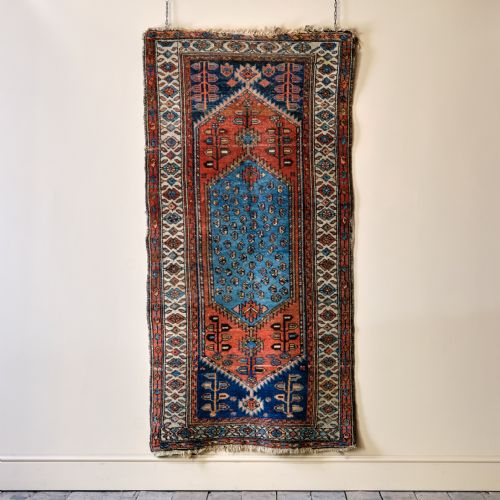
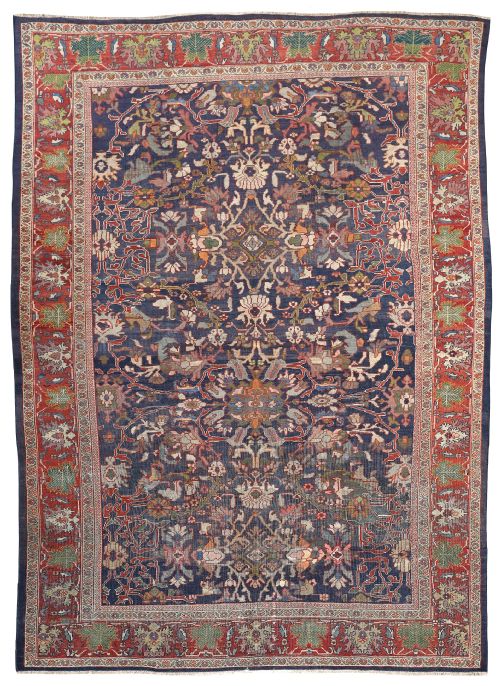
When you search for an early century persian rug, you encounter hand-knotted and hand-woven floor coverings spanning from the nineteenth century into the early decades of the twentieth century. These pieces encompass large carpets, area rugs, narrow runners, cushion covers, and saddle bag faces originating from various tribal and regional traditions.
The selections available here frequently showcase regional styles such as Saroukh, Heriz, Kashan, Sultanabad, Kirman, Khorasan, and Khamseh alongside nomadic Turkmen, Baluch, Afghan, Qashqai, and Kurdish works. Most examples date from the eighteen-eighties through the nineteen-twenties, presenting traditional oriental and tribal designs in diverse formats.
Materials and construction
These textiles rely on wool for their substantial pile and cotton foundations for structural stability, utilising natural dyes to achieve deep and enduring colour palettes. Artisans employed hand-knotting and hand-weaving techniques to construct durable surfaces intended for daily use.
Nomadic and village pieces incorporate thick pile constructions alongside flatwoven kilim structures and repurposed bag faces. The integration of traditional dying methods ensures the retention of distinct hues across different tribal workshops.
The listings span the nineteenth century through the nineteen-twenties, featuring wool, cotton, and natural dyes across diverse tribal and regional forms.
Assessing quality in antique carpets
Quality rests upon the fineness of the knotting, the complexity of the repeat floral or geometric design, and the integrity of the wool foundation. Finer structural density allows intricate motifs like boteh and gul patterns to maintain precise definition across the field.
The depth of the pile and the condition of the edges and ends influence the overall resilience of the textile. Early examples with intact borders and rich, even pile demonstrate superior preservation.
The Early Century Persian Rug Glossary
- Boteh
- A traditional almond-shaped motif with a curved upper end, frequently repeated across field designs in regional carpets.
- Gul
- An octagonal medallion or floral motif characteristic of Turkmen and related tribal weaving traditions.
- Kilim
- A flatwoven textile created without a pile, often utilised for runners and two-part floor coverings.
- Kelleh
- A large, elongated format of carpet traditionally suited for specific room dimensions.
- Pile
- The upright yarn loops or cut ends forming the soft surface of a rug above the foundation.
Early Century Persian Rug: Frequently Asked Questions
How do I care for an antique rug?
Vacuum gently without a rotating brush roll to remove dust from the wool pile while protecting the delicate antique foundation.
Keep the textile out of direct sunlight to prevent natural dye fading and rotate the carpet periodically for even wear.
Where were these tribal rugs made?
The pieces originate from various regions including northwest and southwest Persia, alongside areas associated with Afghan, Baluch, and Kurdish nomadic groups.
Specific workshops and tribal affiliations define the distinct geometric and floral layouts seen across the various carpets and runners.
What is the difference between a carpet and a runner?
Carpets typically offer large or palace dimensions designed to anchor expansive living spaces or central room areas.
Runners provide a narrow, elongated format well suited for hallways, corridors, or gallery installations.
How do I date an older textile?
Dating relies on stylistic markers, structural analysis of the wool and cotton materials, and the types of natural dyes employed in the weave.
Comparison with documented nineteenth and early twentieth-century examples helps establish the approximate period of origin.