


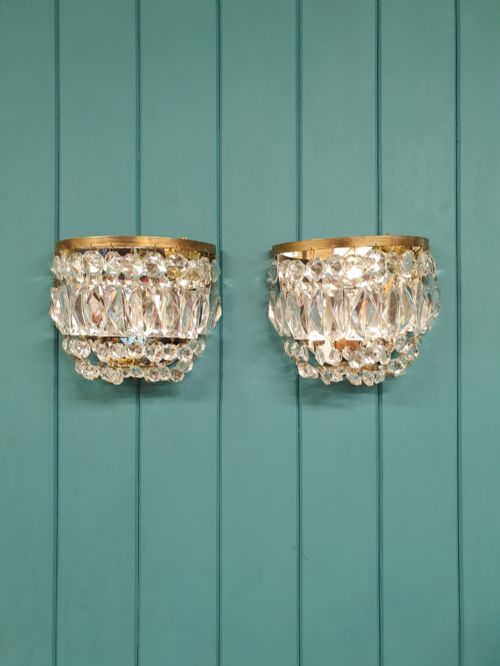


Early 20th Century Wall Lights
These early 20th century wall lights bring period illumination and decorative weight to domestic interiors through brass, glass and giltwood forms.
Early 20th Century Wall Lights
Early 20th century wall lights encompass sconces, lanterns and mirror-backed fixtures designed to mount directly onto interior or exterior walls. Buyers seeking these pieces encounter diverse configurations spanning Edwardian domestic lighting and bolder continental designs.
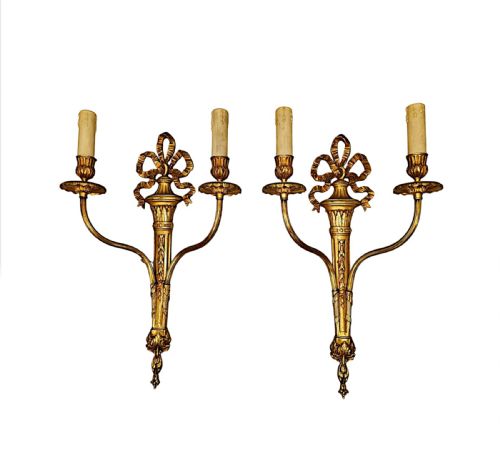
The selection ranges from simple brass fixtures to elaborate giltwood, crystal and bronze sconces adorned with cherubs or leaf motifs. Many examples appear in pairs or matched sets, reflecting the symmetrical demands of period interior decoration.
How they were made
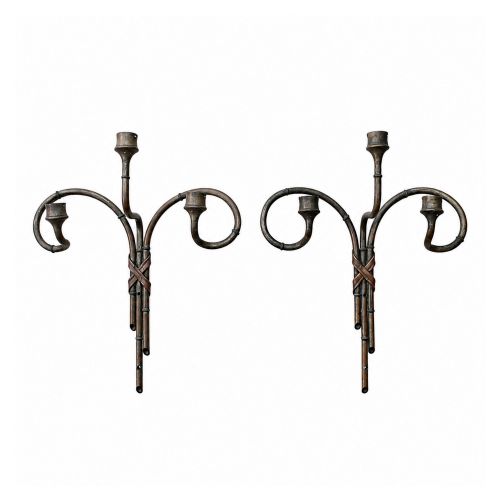
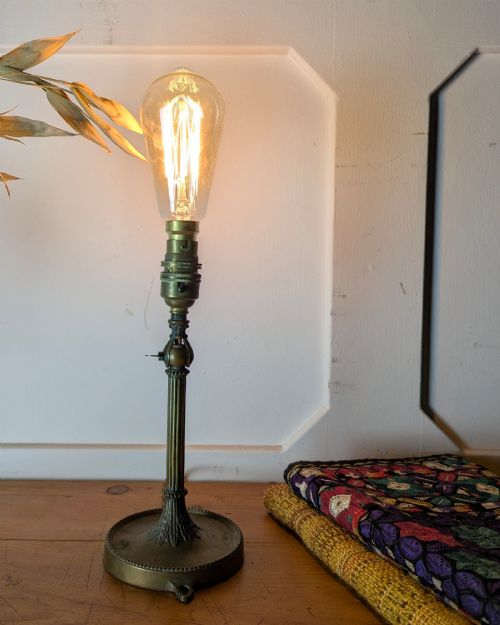
Makers utilised cast and spun brass, patinated metal, steel, nickel silver and bronze to form the primary structural arms and backplates. Giltwood and carved wood elements received hand-applied gilt or painted finishes to achieve rich decorative surfaces.
Glass components include cut crystals, lustres, murano glass drops and moulded shades that refract light from the internal bulbs or candles. Assembly often involved mechanical joints, screws and pinned mountings to secure glass prisms and decorative metal swags.
Several wall lights come accompanied by cheerful porcelain cherubs and hanging glass lustres designed to catch the afternoon sun.
What varies in quality
The refinement of the casting and carving work dictates the distinction between standard production pieces and finer decorative examples. Crisp details on brass mounts, cherubs and leaf scrollwork indicate superior craftsmanship.
The completeness and quality of the glass elements, such as cut crystal lustres and original mirror plates, influence the overall character of the fixture. Substantial metal gauges and well-preserved surface patination separate the more accomplished pieces from simpler utilitarian wall lights.
Harry Kluge
The Early 20th Century Wall Lights Glossary
- Sconce
- A wall-mounted lighting fixture designed to hold candles or electric lamps. These fixtures often feature decorative backplates to reflect light into the room.
- Lustre
- A glass pendant or drop hung from a light fitting to refract illumination. They are frequently paired with crystal arrangements on period chandeliers and wall sconces.
- Giltwood
- Timber that has been coated with a thin layer of gold leaf or gilt powder. This technique provides a durable, reflective golden surface on carved wall lights and frames.
- Toleware
- Painted or lacquered metalware used in decorative arts and lighting fixtures. It offers vibrant colour and surface detail on wall sconces and shades.
- Girandole
- An ornamental bracket wall light featuring a mirrored back to multiply the reflected light. These pieces often incorporate elaborate carved wood or gilt metal frames.
Early 20th Century Wall Lights: Frequently Asked Questions
Where should wall lights be placed?
These fixtures fit well in hallways, flanking living room fireplaces, or positioned beside bedroom mirrors to provide balanced ambient illumination. Their varied projections suit both narrow corridors and principal reception rooms.
Matching pairs create symmetry when mounted at eye level or slightly above, aligning with traditional Edwardian and continental placement schemes.
Are these wired for electricity?
Many surviving pieces originate from eras transitioning between gas and electric lighting, while others housed early electrical configurations. Fittings may require rewiring by a qualified electrician to meet modern safety standards.
Buyers should inspect the internal channels and backplates to understand how wiring integrates with the specific metal or wooden structure.
How do I identify Edwardian styles?
Edwardian pieces often display cleaner lines influenced by late Victorian traditions, alongside revived neoclassical or rococo decorative motifs. Common indicators include brass construction, leaf designs, and symmetrical arm arrangements.
Matching sets from this period frequently incorporate subdued patination on the metal surfaces rather than heavy nineteenth-century ornamentation.
Can exterior wall lights be used outside?
Certain designs, such as octagonal wall lanterns, were originally constructed for exterior use on porches or garden walls. Checking the housing materials helps determine weather resistance.
Protected outdoor placement preserves the patinated metal, brass and glass components against harsh environmental moisture.