


Ornate Brass Wall Brackets
These ornate brass wall brackets bring sculptural weight and warm metal tones to an interior, channelling historical European revival styles.
Ornate Brass Wall Brackets
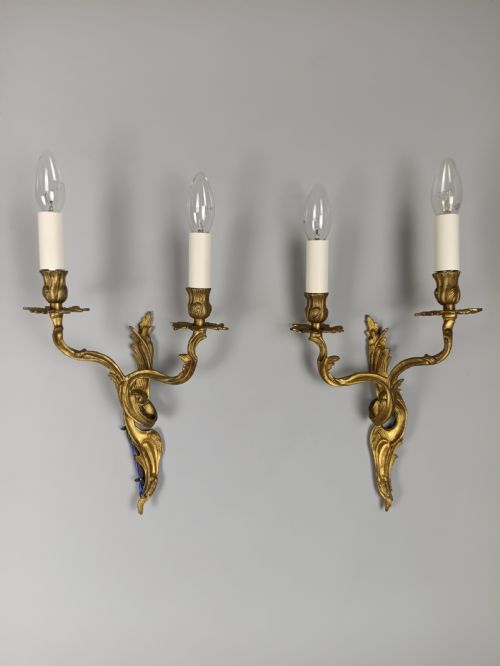
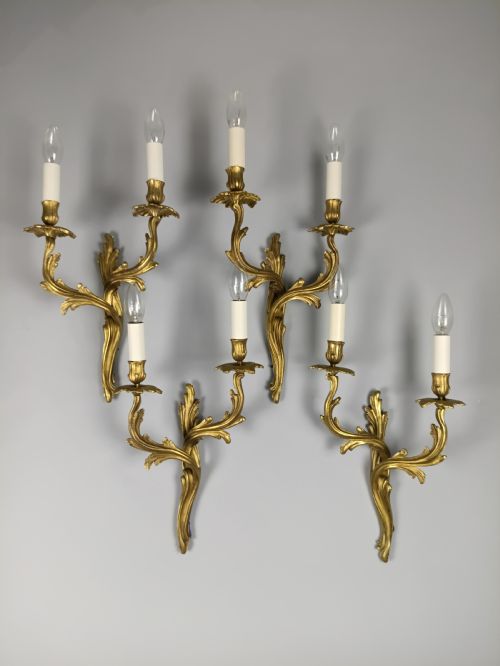
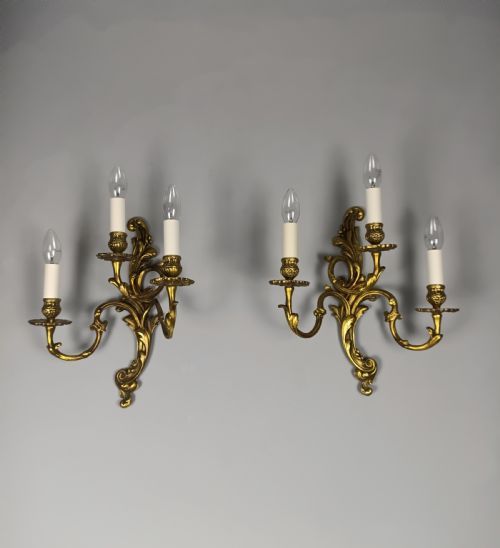
When you search for ornate brass wall brackets, you encounter functional wall lights, sconces, and occasional decorative hardware designed to project illumination or hold objects away from a vertical surface. The listings on this page consist predominantly of pairs and sets of multi-armed wall lights originating from French and British interiors.
The objects span from the Victorian and Edwardian eras into the early twentieth century, showing strong ties to nineteenth-century revival aesthetics. You will frequently find twin-arm and triple-arm configurations alongside single sconces, often wired or adapted for modern electrical installation while retaining their historic metalwork.
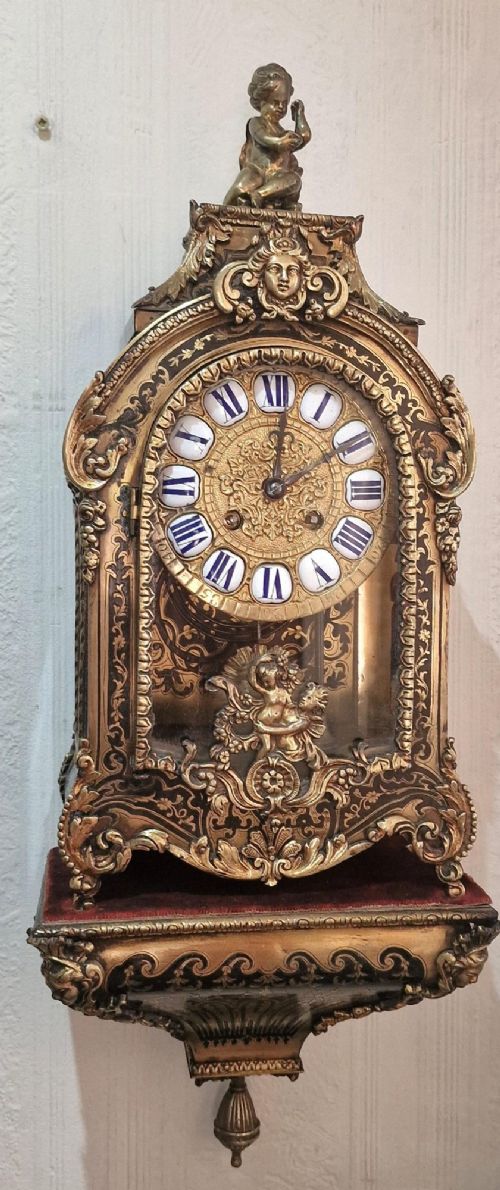
Alongside standard wall lights, the category accommodates specialised forms such as a mantel clock paired with a wall bracket and a gilt brass tapestry banner hanger. These varied objects share a heavy reliance on cast metal construction and decorative flourishes drawn from classical and rococo vocabularies.
How they were made
The primary material foundation of these pieces rests on brass, bronze, and gilt metal, often enhanced through mercury gilding or surface ormolu to create a lustrous golden finish. Makers utilised sand casting and lost-wax methods to achieve deep relief work, intricate scrollings, and figural details like cherubs.
Surface embellishment extends beyond simple metal casting, incorporating applied elements and contrasting materials such as tortoiseshell found in specific clock bracket assemblies. Fabrication combined heavy metal chassis with screwed or pinned structural joints, allowing complex multi-arm sconces to support their own weight securely against a wall.
Materials across these listings concentrate heavily on brass, bronze, and gilt metal, frequently accompanied by tortoiseshell in specialised clock assemblies.
What varies in quality
Quality in these brackets is determined by the crispness of the casting and the depth of the chased detail across the brass or bronze surfaces. Superior examples display sharp, hand-finished acanthus leaves and scrolls without the softening typical of secondary mass production.
The integrity of the original gilding or the richness of the patination separates standard production from finer workshop output. Weight and structural substance also dictate grade, with high-tier pieces utilising heavy gauge bronze or thick brass plates that resist flex under the load of multiple candle arms.
The Ornate Brass Wall Brackets Glossary
- Ormolu
- Finely ground high-carat gold applied to a bronze object using a mercury amalgamation technique. This historic process produces a durable, deep golden matte surface that distinguishes high-status French metalwork.
- Rococo Revival
- A nineteenth-century design movement mimicking the asymmetrical scrolls, shell motifs, and naturalistic curves of the eighteenth-century French court. Pieces in this style prioritize fluid, organic movement over rigid symmetry.
- Wall Sconce
- A decorative bracket fixed to a wall to hold one or more lamps or candles. In historic interiors, these fixtures were positioned to reflect candlelight off mirrors and gilded surfaces.
- Gilt Bronze
- Bronze metal that has received a gold wash or mercury gilt finish. It combines the structural strength of bronze with the brilliant appearance of solid gold.
- Boulle
- A style of ornate marquetry utilising brass and tortoiseshell inlaid in contrasting patterns. Named after the famed cabinetmaker André-Charles Boulle, it appears on associated clock brackets from the period.
Ornate Brass Wall Brackets: Frequently Asked Questions
How do I install antique wall sconces safely?
Many historic wall lights arrive rewired for contemporary electrical standards, allowing direct mounting to standard wall junction boxes by a qualified electrician.
Because these fixtures often feature heavy cast brass or bronze bodies, ensure the mounting wall possesses adequate structural backing to support the total weight.
Are these brackets meant for candles or electricity?
While originally manufactured for wax candles or early gas lighting, the majority of surviving examples have been converted to electricity for modern domestic use.
Some retain sockets styled to resemble drip candles, bridging the gap between their original illumination method and present-day requirements.
How do I tell Victorian pieces from Edwardian ones?
Victorian brass wall brackets tend to feature heavier, more exuberant ornamentation with dense casting and darker patination. They often lean heavily into revivalist themes like French Rococo or Gothic revival.
Edwardian pieces generally lighten in scale and adopt cleaner Louis XVI or neoclassical restraint, reflecting changing interior tastes at the turn of the century.
What is the difference between brass and gilt bronze?
Brass is an alloy of copper and zinc, possessing a naturally bright yellow metal tone that darkens gracefully over time into a warm brown patina. Gilt bronze uses a copper and tin alloy base covered with a microscopic layer of real gold.
Bronze offers greater tensile strength for intricate, fine-detailed casting, while brass was frequently utilised for larger structural components and everyday hardware.