




Early 20th Century Chinoiserie
Early 20th century chinoiserie brings striking lacquered surfaces and intricate decorative motifs into contemporary interiors, offering bold colour and historic character.
Early 20th Century Chinoiserie
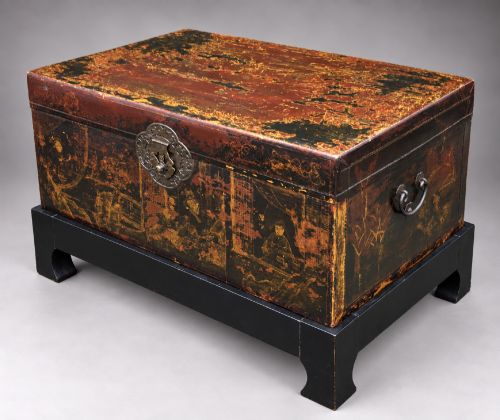
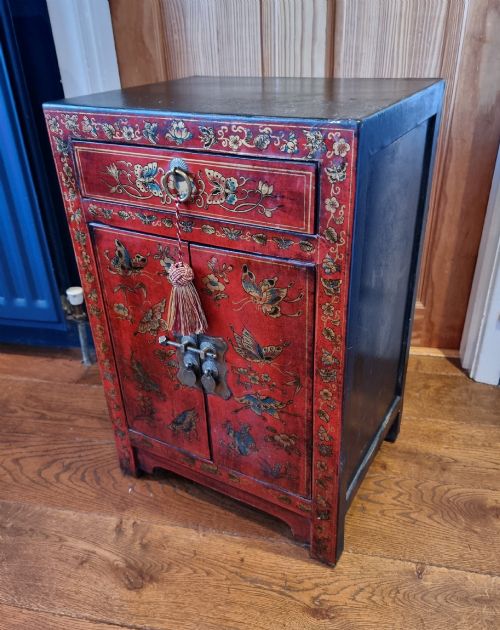
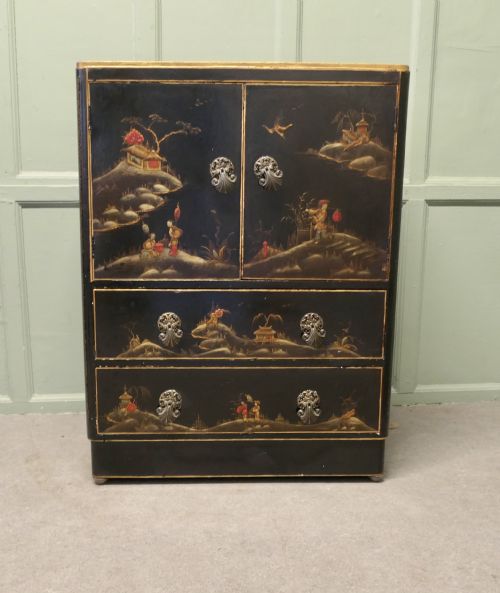
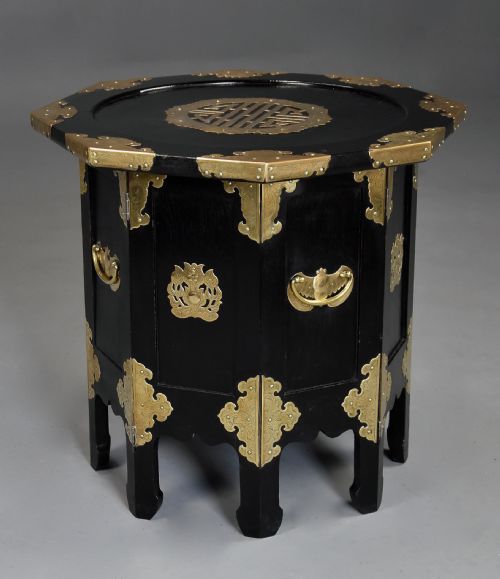
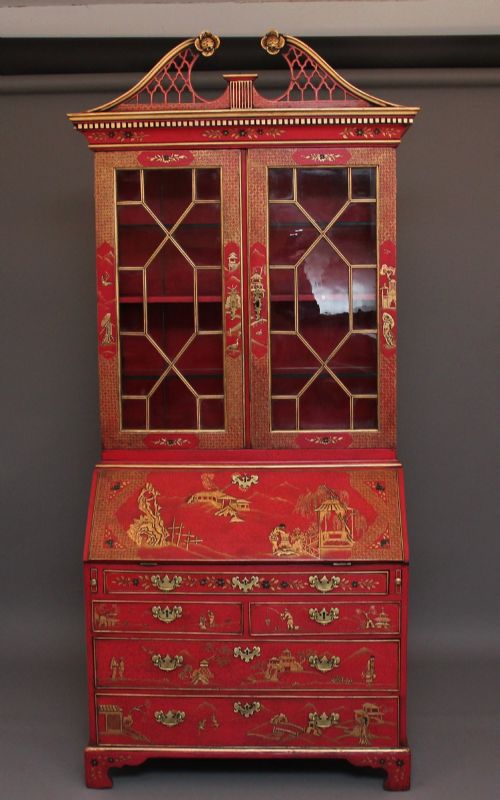
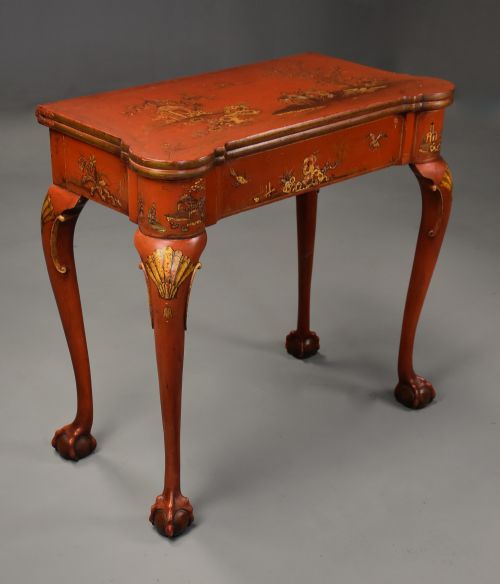
Early 20th century chinoiserie encompasses a wide variety of furniture and decorative objects influenced by traditional Chinese aesthetics and European interpretation. Items range from large storage pieces like blanket boxes, cupboards, and bureau bookcases to smaller occasional tables, mirrors, and lamps.
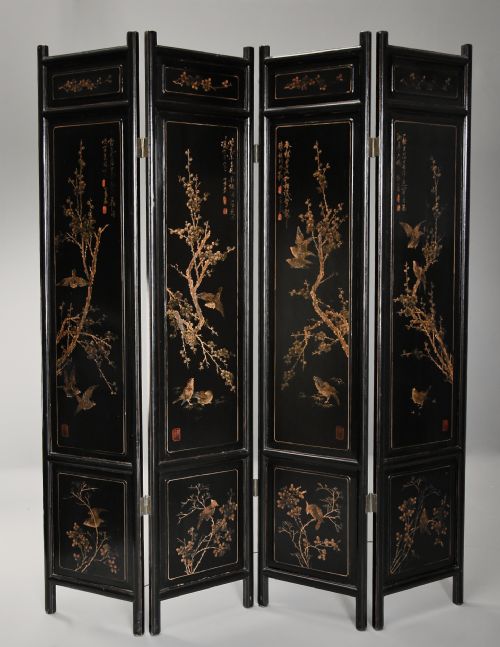
Lacquered wood in bold shades of red and black dominates the selection, frequently paired with gilt decoration. Buyers also encounter items constructed from brass, porcelain, and rootwood, alongside seating such as side chairs, armchairs, and stools.
The objects stem from several decades within the period, including the Edwardian era and the 1910s, 1920s, and 1930s. Styles span from pure chinoiserie to Chinese Chippendale, Queen Anne style, and Orientalist designs.
How they were made
Makers utilised wood as the primary foundation for furniture, applying layered lacquer finishes in black and red to achieve smooth, glossy surfaces. Skilled artisans then added gilt and painted details depicting traditional motifs and landscapes.
Metalwork relies heavily on brass, seen in pressed table lamps, occasional tables, and decorative mounts. Porcelain and cloisonne enamel provide alternative textures, often repurposed into lamps or displayed as standalone boxes and vases.
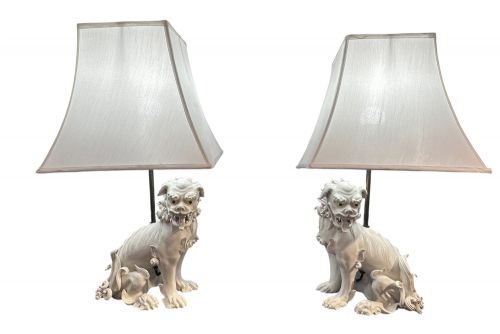
Several fierce guardian lions double as domestic lighting solutions, illuminating rooms from the backs of blanc de chine figures.
What varies in quality
Depth and execution of the decorative surface determine the distinction between average items and the finest examples. Hand-applied lacquer and intricate gilding require immense patience, separating mass-produced decorative pieces from superior works of craftsmanship.
The integrity of the underlying structure and materials also dictates overall standard. Solid woods, substantial brass components, and well-preserved porcelain maintain their structural stability and visual appeal far better over time.
Asprey·Burgess Brothers
The Early 20th Century Chinoiserie Glossary
- Chinoiserie
- European decorative style reflecting Chinese artistic influences. This aesthetic employs whimsical scenes, motifs, and lacquered finishes.
- Lacquer
- Durable resin finish applied to wooden furniture in multiple layers. It creates a smooth, glossy surface often decorated with gold or contrasting paint.
- Cloisonne
- Enamel work technique using metal wires to create compartments. These areas are filled with coloured paste and fired to produce vivid decorative patterns.
- Blanc de Chine
- White porcelain produced in China. This material appears frequently in figural lamp bases and decorative objects from the period.
- Rootwood
- Natural timber featuring gnarled and twisted root formations. Artisans carve these organic shapes into distinctive figural lamps and stands.
- Girandole
- Ornamental bracket or wall sconce designed to hold candles. They often incorporate mirrors to reflect and amplify the candlelight.
Early 20th Century Chinoiserie: Frequently Asked Questions
How do I clean lacquered chinoiserie?
Dust surfaces gently with a soft, dry cloth to protect the delicate finish. Avoid using chemical cleaners, water, or abrasive materials that could damage the lacquer or gilt decoration.
Keep pieces away from direct sunlight and extreme temperature fluctuations to prevent the wood underneath from expanding and cracking the lacquer.
Where does chinoiserie fit in rooms?
These decorative items add a focal point to neutral or minimalist spaces through their bold colours and patterns. Use occasional tables and cabinets to introduce texture and historic contrast.
Smaller pieces like mantel clocks and boxes sit comfortably on shelves, sideboards, or desks.
How are different decades identified?
Edwardian and 1910s items often lean towards heavier ebonised woods and pressed brass, while 1920s and 1930s pieces frequently showcase brighter red lacquers and simpler silhouettes.
Construction methods and hardware also offer clues to the approximate age of the object.