



Oriental Red Cupboard
An oriental red cupboard brings intense colour and structural presence into a room, grounded in centuries of traditional craftsmanship.
Oriental Red Cupboard
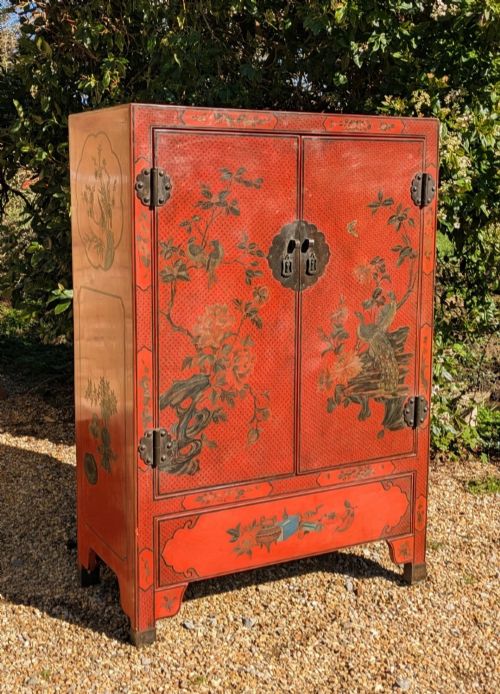
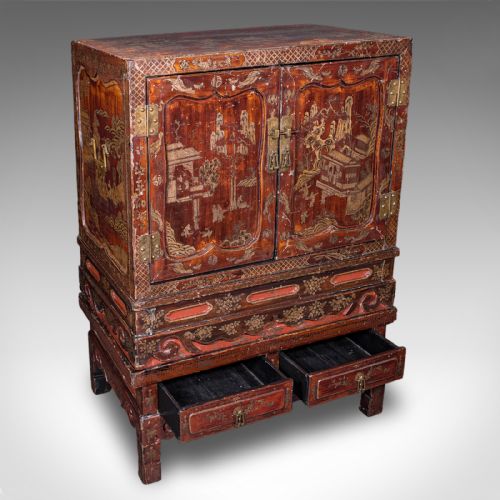
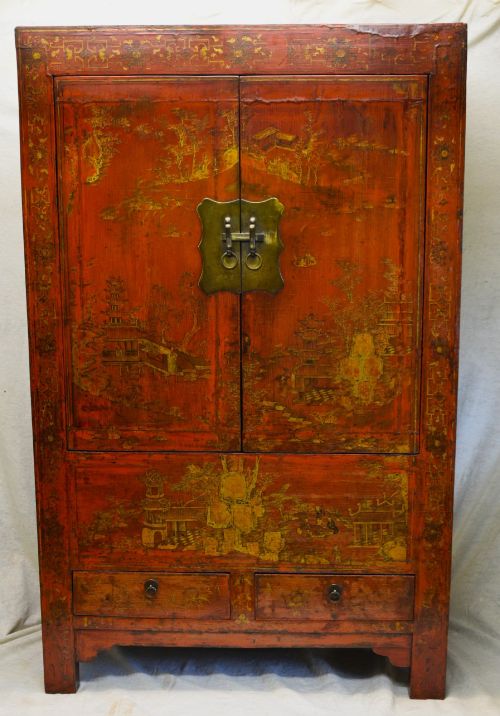
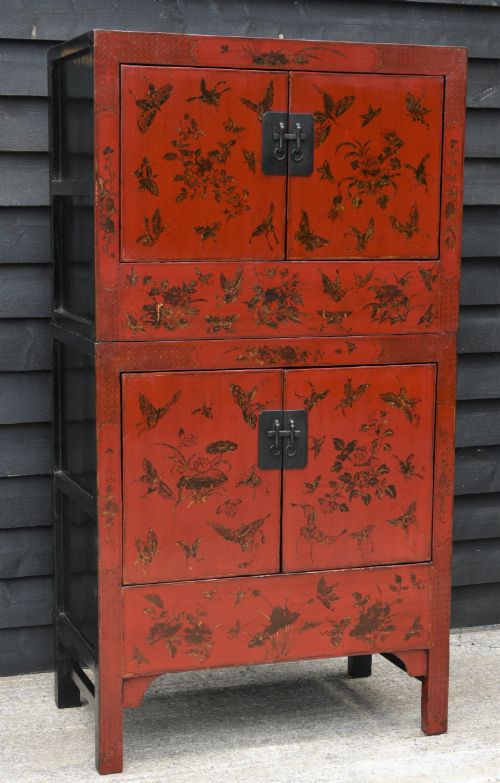
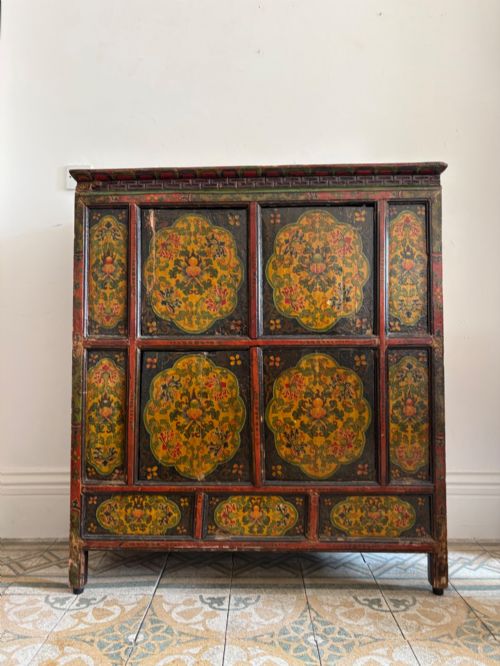
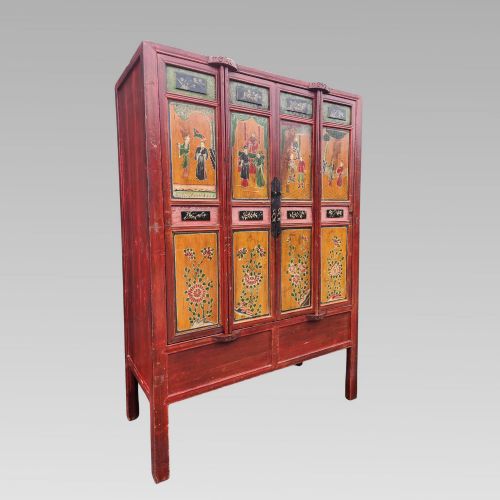
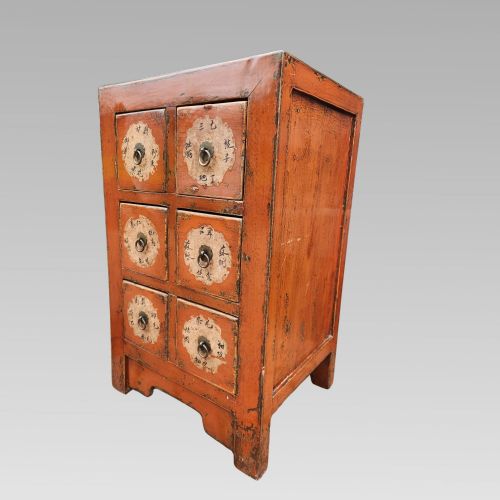
When you search for an oriental red cupboard, you find substantial storage pieces spanning the nineteenth and early twentieth centuries, including marriage cabinets, side cabinets, and apothecary chests. These items originate from diverse traditions such as Chinese Qing Dynasty workshops, Tibetan studios, and Japanese cabinet-makers, reflecting distinct regional forms.
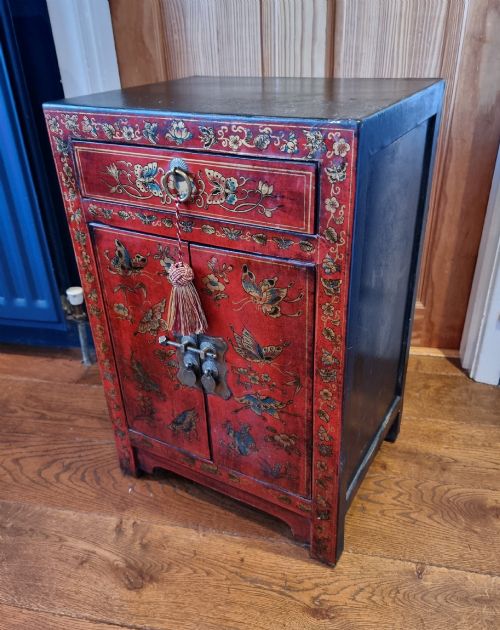
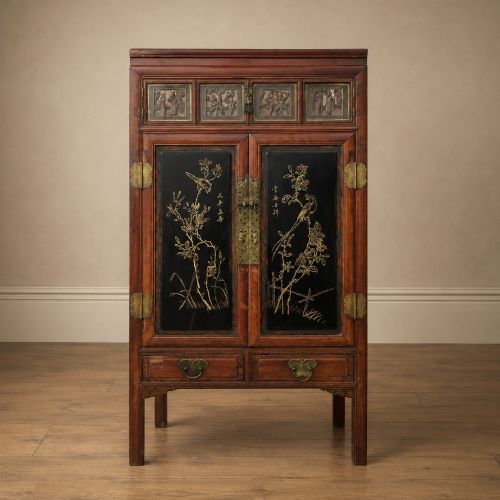
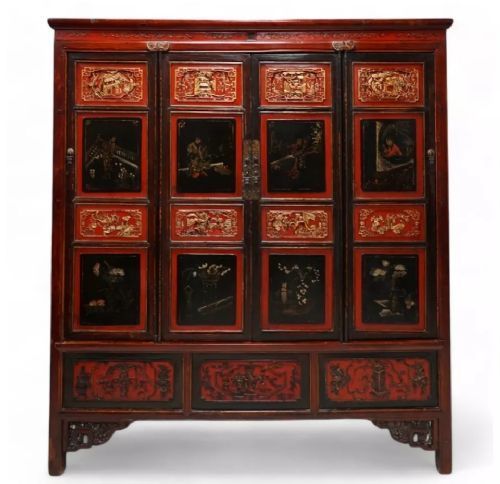
The most common examples on this page are nineteenth-century Chinese marriage cabinets and side cabinets finished in red lacquer. These pieces range from monumental freestanding wardrobes to smaller bedside and table cabinets, often incorporating brass or iron hardware.
Makers utilised native timbers like elm and various hardwoods as structural foundations before applying layers of lacquer, sometimes enhanced with gold leaf, hand-painted floral motifs, or carved relief work. Stylistic influences span Chinoiserie, provincial Chinese designs, and Meiji period Japanese tansu aesthetics.
Materials and construction methods
Makers built the structural carcases using solid timbers such as elm and general hardwood, chosen for stability and strength. Joinery typically relied on traditional interlocking joints rather than modern metal fixings, allowing the wood to accommodate environmental shifts.
Surfaces received multiple coats of lacquer to build a durable, lustrous finish that protects the underlying timber. Artisans frequently integrated brass or iron hardware, including decorative hinges and circular lock plates, alongside hand-painted or carved details.
Several apothecary chests retain numerous tiny drawers once destined for dried roots and herbs, now ideal for storing modern odds and ends.
Distinctions in craftsmanship and condition
Quality separates pieces through the integrity of the timber framing and the depth of the lacquer finish. Superior examples display refined joinery that maintains structural alignment over generations, alongside meticulously applied layers of red lacquer that have aged with a stable, even craquelure.
Artisanal execution dictates the distinction between standard provincial items and finer works. Hand-painted floral decorations, intricate carvings, and the inclusion of original brass or iron hardware elevate the visual and historical weight of a piece.
The Oriental Red Cupboard Glossary
- Lacquer
- A natural resin applied in successive coats to wood surfaces to create a hard, glossy, and protective finish. Historic pieces often display characteristic surface wear and subtle cracking over time.
- Chinoiserie
- European decorative style reflecting Chinese artistic influences, frequently seen in British-made side cabinets and corner cupboards from the Victorian and Edwardian eras. It employs painted motifs on lacquered grounds.
- Marriage cabinet
- A traditional large storage cupboard given to a bride in China, typically featuring prominent brass lock plates and red lacquer symbolising prosperity. These form a major category of surviving antique storage.
- Apothecary chest
- A multi-drawer cabinet originally utilised in traditional medicine shops for sorting herbs and remedies. Smaller tabletop versions and floor cabinets appear frequently in red lacquer.
- Tansu
- Traditional Japanese mobile cabinetry constructed from wood with iron fittings. Examples from the Meiji period utilise distinct regional joinery and compartmentalised storage layouts.
Oriental Red Cupboard: Frequently Asked Questions
What is an oriental red cupboard?
An oriental red cupboard is a wooden storage piece finished in red lacquer, originating primarily from nineteenth and early twentieth-century China, Tibet, or Japan. Forms include marriage cabinets, side cupboards, and apothecary chests.
These items were constructed from timbers like elm and hardwood, often decorated with hand-painted floral motifs, carvings, or contrasting black lacquer and gold leaf.
How were marriage cabinets used?
Marriage cabinets served as prominent storage furniture in traditional Chinese households, often presented as part of a bride's dowry. They stored clothing, textiles, and valuables.
Their substantial scale and vibrant red lacquer symbolised good fortune and joy, making them central functional pieces in domestic living spaces.
How do I style a red lacquer cabinet at home?
A red lacquer cabinet works effectively as a focal point in neutral rooms, contrasting against stone, plaster, or muted wall colours. Use side cabinets or bedside lamp cabinets to introduce saturated colour without overwhelming the floor plan.
Allow sufficient clearance around taller marriage cabinets to showcase their proportions and distinct brass or iron hardware.
How can I tell the period of these cabinets?
Dating relies on examining construction materials, joinery techniques, and the wear patterns within the lacquer. Nineteenth-century examples often display hand-forged iron or brass hardware and dense Elm or hardwood frames.
Later pieces from the early twentieth century or Edwardian Chinoiserie adaptations exhibit different framing methods and distinct decorative applications compared to Qing Dynasty originals.