



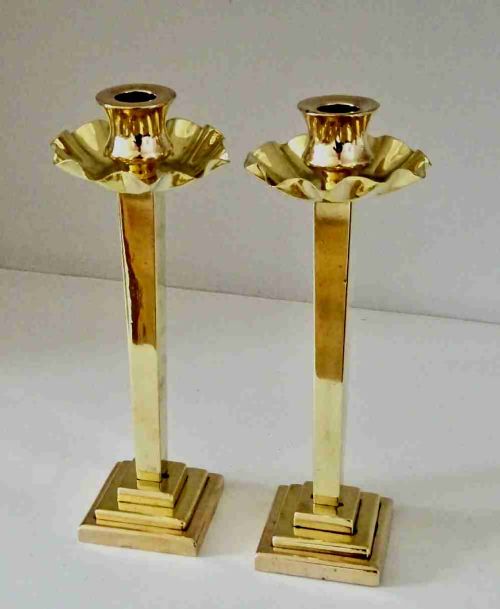
Early 20th Century Candlesticks
These early 20th century candlesticks span diverse revivals and utility forms, offering substantial metalwork and glass to anchor any room.
Early 20th Century Candlesticks
Early 20th century candlesticks encompass a broad range of domestic lighting accessories, spanning straightforward brass household pieces to elaborate revival forms. When exploring early 20th century candlesticks, buyers encounter utilitarian metal designs alongside decorative lamps converted from candleholders.
How they were made
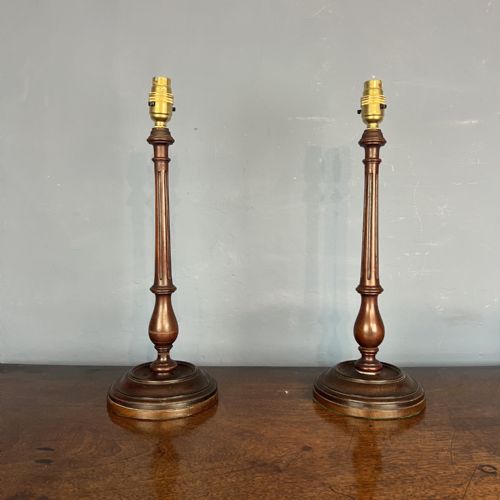
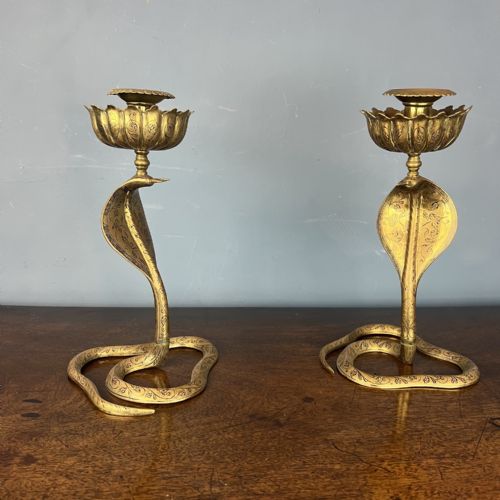
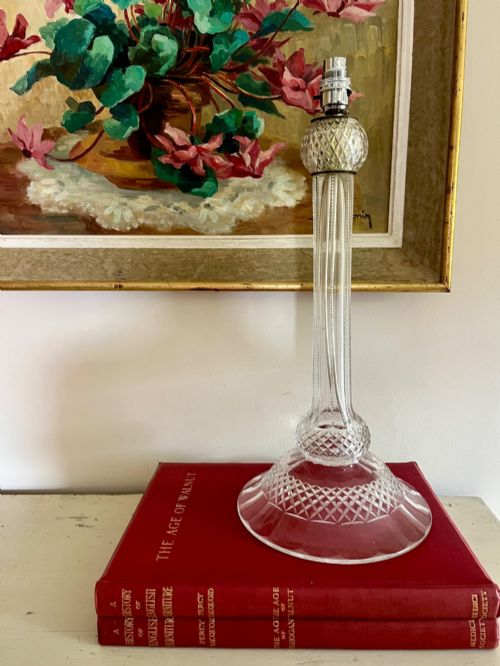
Makers utilised durable metals such as brass, bronze, ormolu, and silver plate, often combining cast components with turned wooden elements like mahogany. Crystal glass and rock crystal appear frequently in more formal designs, offering reflective qualities alongside metal structures.
Surface treatments vary from hand-applied paint and parcel gilding to traditional dark patination on brass and iron. Construction methods rely on heavy casting and secure mechanical fitting, particularly when pieces function as table lamps or multi-branch candelabra.
Listings demonstrate a strong presence of brass and crystal materials, spanning Edwardian, Baroque Revival, and Amsterdam School styles.
What varies in quality
The distinction between standard domestic production and finer pieces lies in the crispness of casting and the weight of the materials used. Superior examples display sharply defined ornament, whether in baroque scrollwork or Amsterdam School geometry, without the soft edges typical of mass-produced items.
Material integrity and matching pairs dictate desirability, particularly in crystal glass and Ormolu assemblies where symmetry and original patination remain intact. The sophistication of regional or revival styling also separates common utilitarian items from bespoke decorative commissions.
The Early 20th Century Candlesticks Glossary
- Ormolu
- A gold-coloured bronze alloy used for decorative mounts and candleholders. This technique provides a rich, lustrous finish that mimics solid gold.
- Bidri ware
- A metal handicraft from India utilising blackened zinc alloy inlaid with contrasting sheet metal. This technique creates striking silver patterns against a dark surface.
- Pricket candlestick
- A candleholder featuring a sharp metal spike upon which the candle is impaled rather than sitting inside a socket. This form appears frequently in ecclesiastical and heavy revival designs.
- Amsterdam School
- An architectural and design movement characterised by expressive, rounded brickwork and dynamic metalcraft. Pieces from this tradition favour robust forms and organic silhouettes.
Early 20th Century Candlesticks: Frequently Asked Questions
How do I safely clean old brass candlesticks?
Dust the metal gently with a dry, soft cloth to remove surface particles without disturbing the underlying surface. Avoid harsh chemical polishes that strip historical patination and reduce the character of the metal.
For stubborn grime, use mild soapy water on a damp cloth, drying immediately to prevent spotting. Preserve the aged appearance that accumulates over decades of handling.
Were these candlesticks converted to lamps later?
Many items listed as table lamps began life as standard candlesticks before receiving electrical fittings during subsequent decades. Conversions often utilise existing central channels or require subtle bracket additions.
Examine the wiring path and base fixings to understand how the conversion was achieved. Retaining the original metal body ensures the piece holds its decorative integrity.
How can I tell Edwardian pieces apart from later ones?
Edwardian items tend to lean toward refined classical revivals and polished mahogany or brass utility. They reflect the formal domestic interiors typical of the decade leading up to the First World War.
Later pieces from the 1920s and 1930s introduce bolder folk art expressions and Amsterdam School geometry. Look at the weight and overall silhouette to gauge the shift in design priorities.
Can I still burn real candles in these?
Most surviving holders accommodate standard taper candles, though variations in socket width are common. Check the inner diameter carefully before placing a candle to ensure a stable fit.
Protect surrounding surfaces from dripping wax by using appropriate bobeches or placing the holder on a tray. Keep burning candles away from drafts and fabric shades.