





Yellow Brass Candle Sticks
Yellow brass candle sticks are enduring metal luminaires that bring a warm, historic glow to any mantel or table.
Yellow Brass Candle Sticks
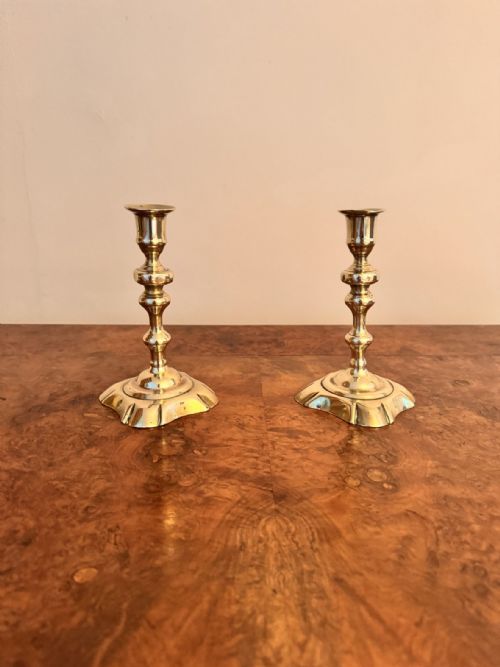
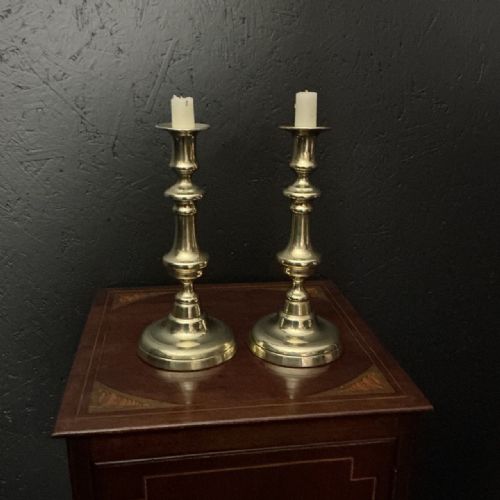
When buyers search for yellow brass candle sticks, they look at functional lighting pieces spanning the eighteenth, nineteenth, and early twentieth centuries. The examples seen here include Georgian, Victorian, and Campaign styles, alongside specialised forms like tavern sticks and travelling chamber sticks.
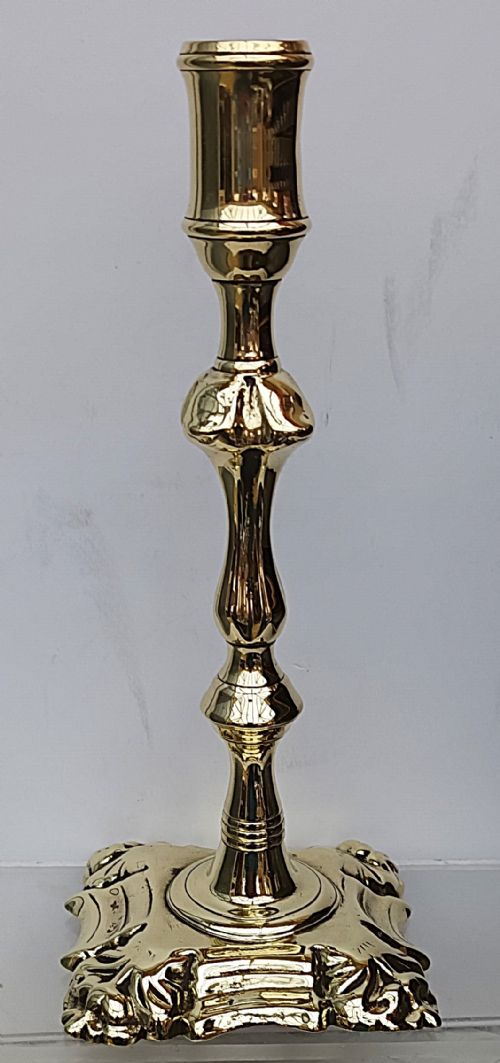
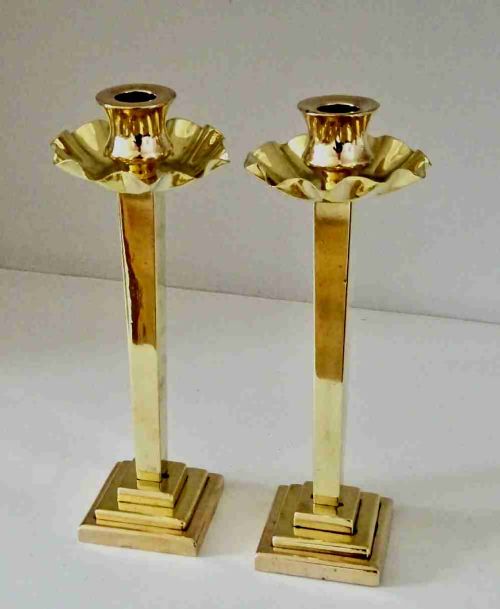
Most items on this page date from the nineteenth century or the Victorian era, offering traditional socket and stem designs in cast and sheet brass. Buyers encounter single items as well as matched pairs, featuring bases ranging from simple circles to petal designs and fitted trays.
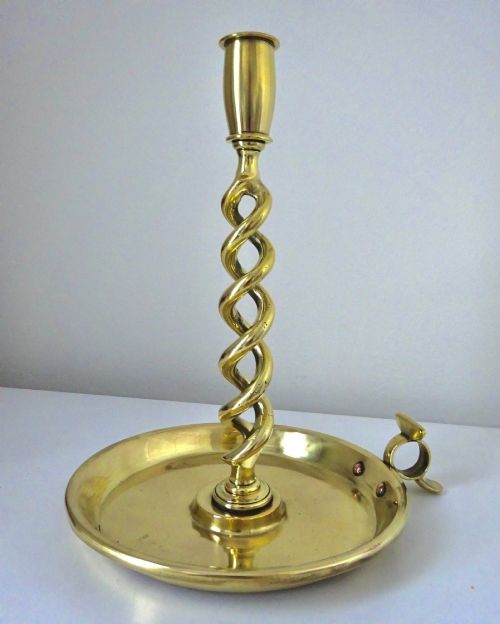
Origins represented in the evidence lean towards English and Swedish workshops, spanning domestic parlour pieces to robust tavern lighting. The forms vary from straightforward domestic items to intricate twisted stems and Brighton buns.
Materials and construction
The objects on this page rely entirely on brass and cast brass, reflecting the dominant metalworking techniques of the Georgian and Victorian periods. Molten alloy was poured into sand or loam moulds to create solid components, which were then turned on lathes or finished by hand.
Components such as stems, sockets, and bases were frequently cast separately and then joined by threading, brazing, or pegging. Details like twisted stems and petal bases required skilled hand-finishing, filing, and polishing to achieve their final geometry.
Brighton buns ensured travellers could navigate dark inn corridors without setting fire to their luggage.
Judging quality in yellow brass candle sticks
Superior examples demonstrate crisp casting detail, particularly in complex mouldings like petal bases or decorative twists, where lesser pieces appear soft and blurred. The weight and thickness of the metal also distinguish finer work, as substantial casting provides stability and a more satisfying heft in the hand.
The integrity of assembly matters significantly, separating utilitarian items from those of finer design. Pieces that retain original components without clumsy repairs or replacement parts hold greater appeal for those seeking period authenticity.
T Thomason & Co
The Yellow Brass Candle Sticks Glossary
- Brass
- An alloy of copper and zinc, highly favoured for its golden colour and durability in household objects. It takes a bright polish and develops a rich patina over centuries of handling.
- Cast brass
- Metal poured in a molten state into a mould to form solid shapes and intricate details. This technique allows for heavier, more robust candle holders than sheet metal construction.
- Chamber candlestick
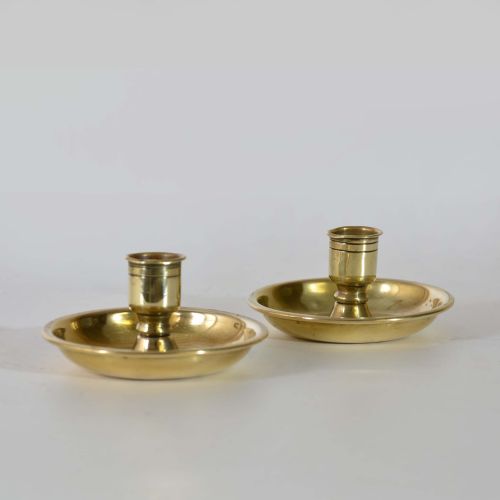
- A low-profile candle holder fitted with a pan or tray and a handle, designed for carrying safely through a house at night. Travellers and household staff used these portable luminaires before electric lighting.
- Georgian
- A design period spanning the reigns of the first four Georges, characterised by classical proportion and refined ornamentation. Items from this era often feature elegant, balanced silhouettes.
- Victorian
- The period covering the reign of Queen Victoria, known for eclectic revivals of historical styles and robust domestic manufacturing. Pieces from this era range from austere utility items to ornate decorative works.
Yellow Brass Candle Sticks: Frequently Asked Questions
How do I date yellow brass candle sticks?
Dating relies on observing manufacturing techniques, base shapes, and stylistic markers recorded in the evidence. Eighteenth-century pieces often feature push-ejectors and simpler petal bases, while Victorian examples show greater variety in twisted stems and cast decoration.
Examining the construction methods, such as how the socket joins the stem, provides further clues to the period. Comparing known styles like Georgian proportions against later Victorian output helps narrow the timeline.
Were these used for dining tables?
Yes, many of these brass luminaires served as primary table lighting during the Georgian and Victorian eras before the invention of gas and electric illumination. Pairs were typically placed on dining tables, sideboards, and mantelpieces to provide ambient or task lighting.
Specialist forms like tavern candlesticks and chamber sticks were designed for specific functional contexts rather than formal dining rooms. Tavern sticks offered sturdy utility for public houses, while chamber sticks moved safely between rooms.
What is a Brighton bun?
A Brighton bun is a compact travelling chamber candlestick featuring a low, rounded base that resembles a baked bun. The design protected surfaces from dripping wax and provided a stable footprint for use on the move.
These portable items were easily packed for journeys, reflecting the travel habits of the nineteenth century. Their small scale and enclosed tray design make them distinct from standard table candlesticks.
How should I clean antique brass?
Most collectors prefer to leave a natural, aged patina on antique brass rather than polishing it to a bright shine. Gentle dusting with a soft cloth is usually sufficient for routine maintenance.
Avoid harsh chemical cleaners or abrasive scouring pads that strip away centuries of oxidation and historical character. Preserving the surface finish maintains the visual depth that comes with age.