

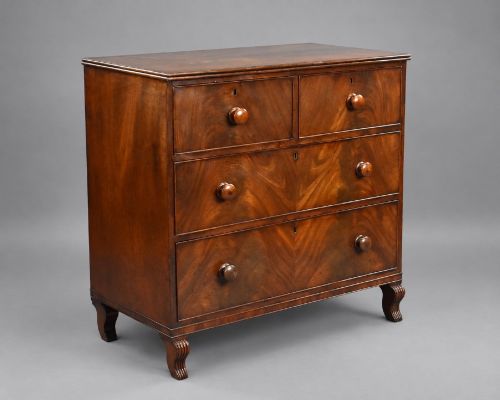
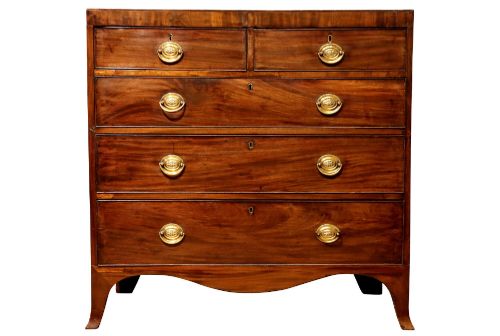
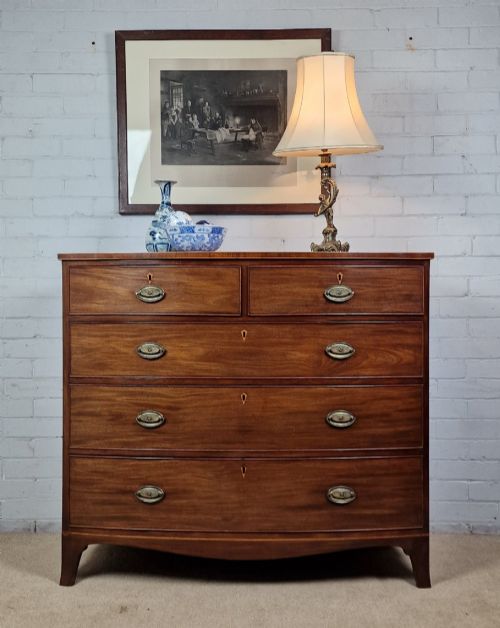
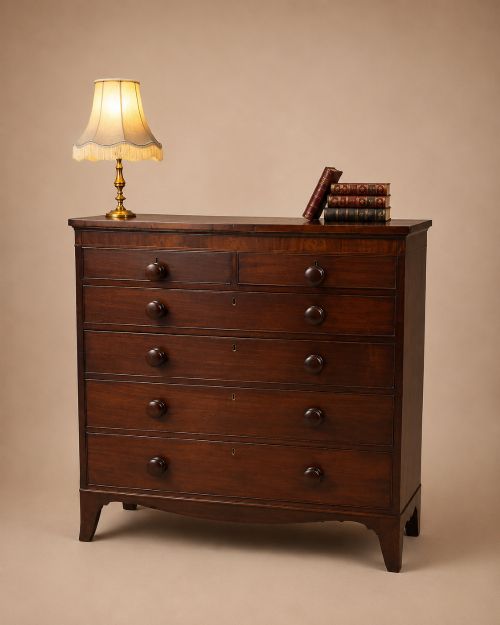
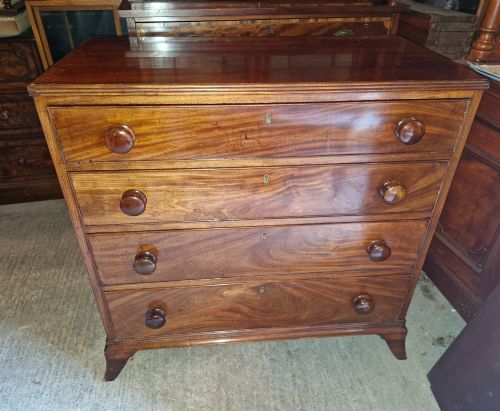
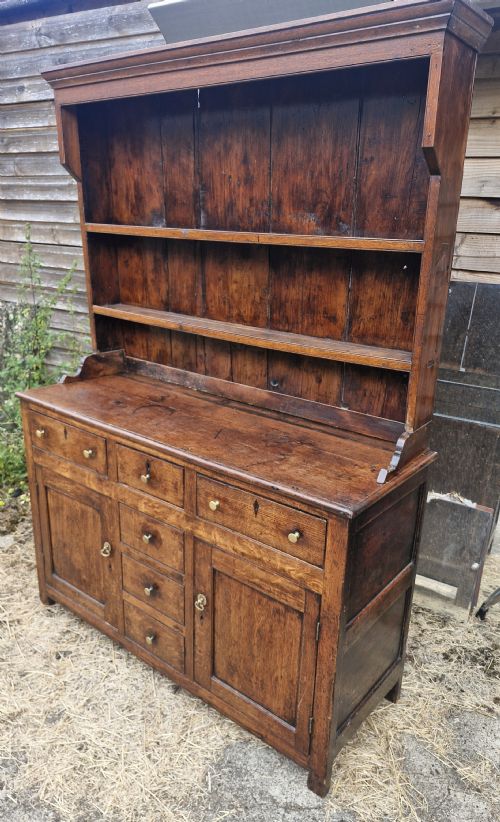
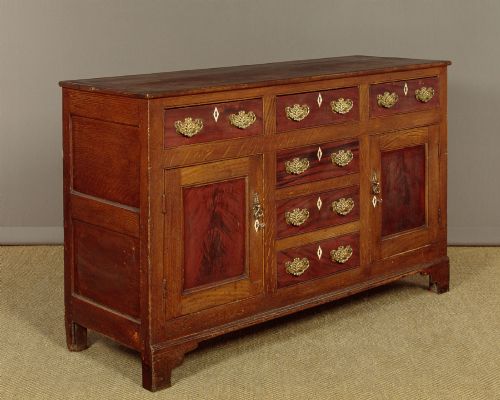
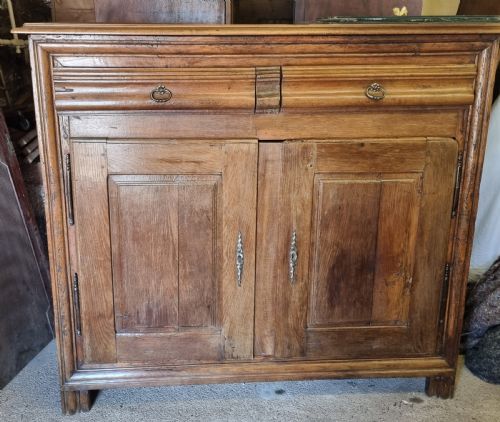

Early 19th Century Dresser
An early 19th century dresser brings substantial timber construction and utilitarian character to domestic interiors, combining deep storage with display space.
Early 19th Century Dresser
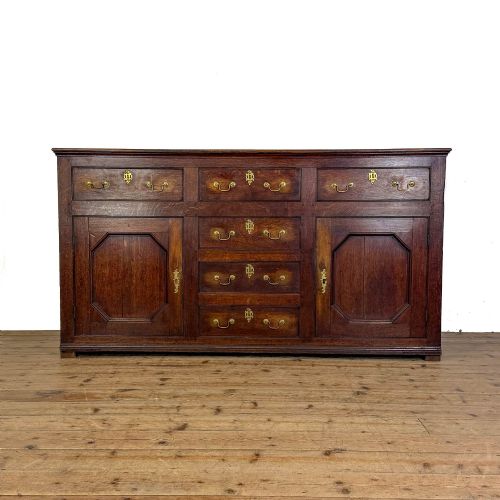
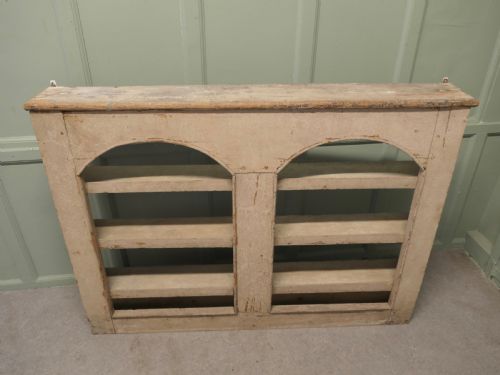
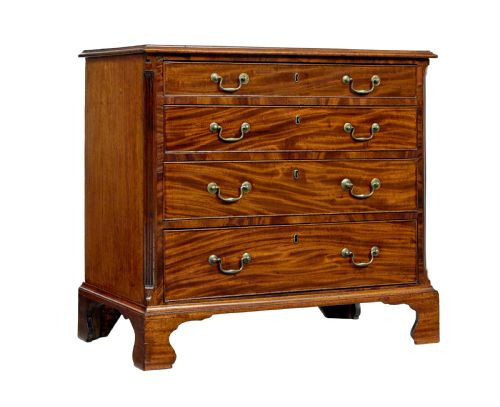
An early 19th century dresser encompasses robust oak Welsh and provincial designs alongside mahogany and pine servers, combining lower drawer or cupboard storage with upper shelving racks.
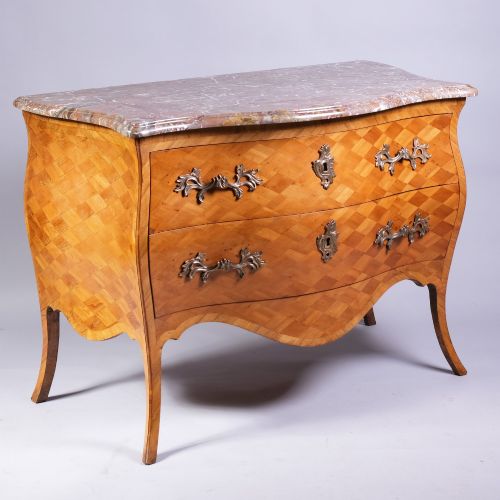
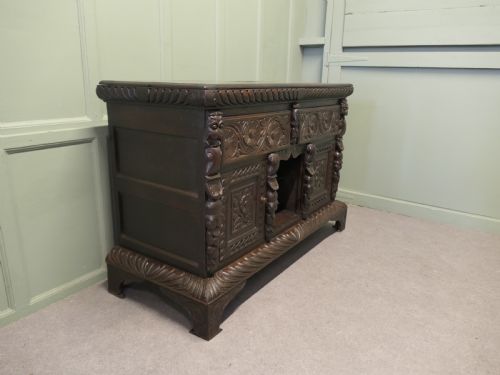
The selections span regional British examples featuring pot boards and timber racks, alongside continental European pine cupboards, commodes, and fruitwood sideboard bases.
Buyers encounter distinct forms ranging from multi-height drawer chests to open top cabinets and painted kitchen bases originating across Georgian, Regency, and Victorian periods.
How they were made
Cabinet makers utilised dense native hardwoods like oak, walnut, and mahogany, frequently pairing them with secondary pine or fruitwood internals.
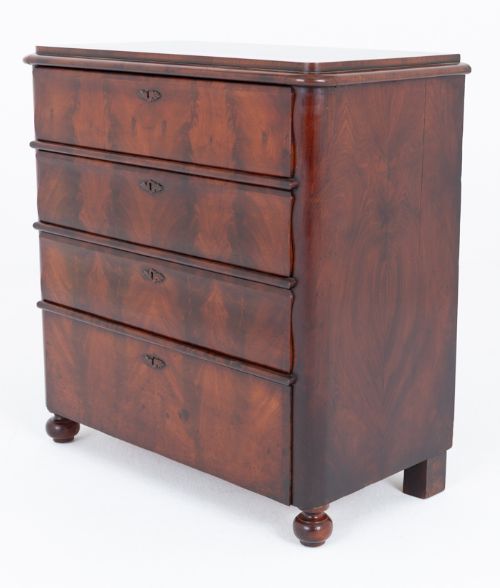
Construction methods incorporated hand-cut dovetail joints for drawers, applied decorative veneers such as flame mahogany, and detailed marquetry inlay.
Surfaces received various treatments including natural wax finishes, original paint layers, and polished marble tops.
Listings feature oak, mahogany, pine, walnut, and fruitwood spanning Georgian and Regency periods.
What varies in quality
The standard of timber selection heavily influences the piece, with figured grain patterns, burr elm highlights, and uniform mahogany veneers marking out superior examples.
Structural integrity depends on the preservation of original backboards, brass hardware, and the stability of pot boards or plate racks.
The retention of original paint surfaces or untouched patination elevates the historical integrity of provincial pine and scrubbed oak variants.
The Early 19th Century Dresser Glossary
- Dresser base
- A lower sideboard or cabinet section without the upper plate rack, used for surface serving and enclosed storage.
- Pot board
- An open lower shelf built between the legs of a Welsh dresser to hold heavy kitchen pottery and pots.
- Bow front
- A convex curved cabinet or drawer front that projects outward in a smooth arc, typical of Regency and Georgian furniture.
- Commode
- A low cabinet or chest of drawers of continental European origin, frequently fitted with a marble top.
Early 19th Century Dresser: Frequently Asked Questions
What is a Welsh dresser?
A Welsh dresser is a traditional kitchen or dining furniture piece featuring a base of drawers and cupboards surmounted by an open wooden rack for displaying plates.
These regional pieces often incorporate pot boards below and are predominantly constructed from solid oak.
How do I care for antique pine?
Antique pine furniture requires gentle cleaning with a soft cloth and occasional waxing using traditional beeswax to maintain the timber finish.
Keep these pieces away from direct heat sources and extreme humidity changes to prevent wood splitting.
Where were these dressers made?
These items originated across various British regions, including Wales and Shropshire, as well as continental workshops in France, Sweden, and Italy.
Local timber availability and domestic traditions dictated the specific construction and decorative styles used.
What is a dresser base?
A dresser base is the lower portion of a two-part dresser that functions independently as a sideboard, server, or low chest.
These units provide surface workspace and storage drawers without the corresponding upper plate rack.