



Early 19th Century Bureau
An early 19th century bureau brings serious architectural presence and ingenious concealed storage to a room.
Early 19th Century Bureau
When searching for an early 19th century bureau, buyers encounter various practical writing forms that span several distinct regional styles. Mahogany dominates the selection, alongside oak, rosewood, and fruitwood instances.
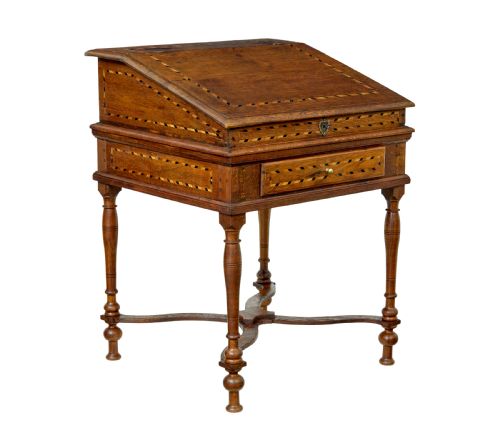
The category incorporates fall front bureaus, fall front bureau bookcases, and fitted secretaire chests. These pieces originate from Georgian, Regency, and early Victorian periods, including continental Dutch marquetry and Biedermeier examples.
How they were made
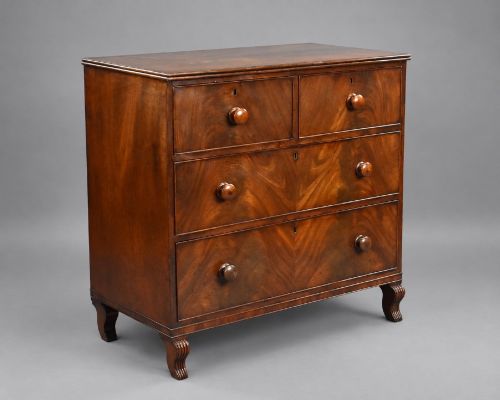
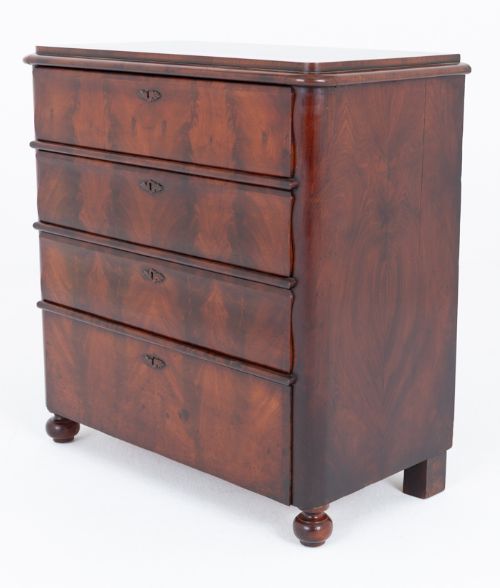
Cabinet makers utilised solid timber alongside flame mahogany veneer over secondary woods. Construction often involved hand cut dovetail joints for drawer carcases and internal pigeonhole compartments.
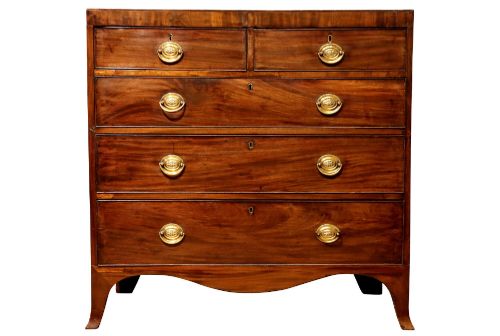
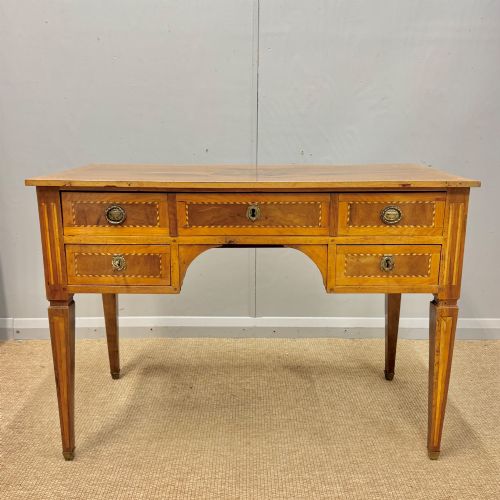
Surface ornamentation relied on brass hardware, inlaid marquetry, and parquetry work. Selected pieces incorporated glass panelling, leather writing inserts, and ebonised detailing.
Listings feature mahogany, oak, rosewood, and fruitwood pieces spanning Georgian, Regency, and Victorian periods.
What varies in quality
The standard of an early 19th century bureau rests upon the selection of timber figures and the precision of the internal stationery compartments. Grain matching across drawer fronts and fall fronts separates standard utilitarian items from master cabinet work.
Proportion and decorative restraint dictate the desirability of the piece. Fine examples maintain structural integrity in their primary falls and secretaire drawers without heavy restoration to the underlying carcase.
The Early 19th Century Bureau Glossary
- Secretaire
- A cabinet or chest of drawers containing a fitted writing drawer with a drop-down front. This mechanical element conceals small drawers and pigeonholes.
- Bureau bookcase
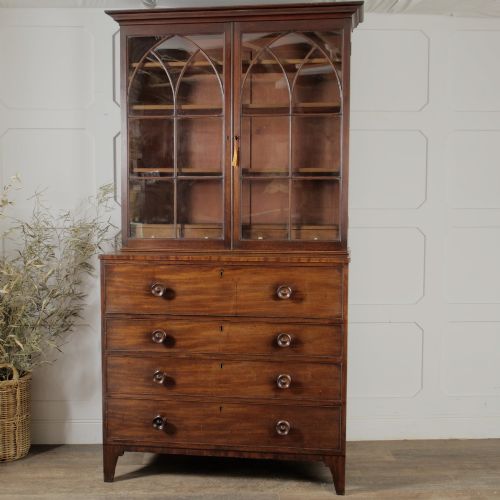
- A writing cabinet featuring shelving enclosed by glazed or solid doors above the main writing section. These tall pieces combine library storage with a fold-down desk surface.
- Marquetry
- Decorative veneer work formed by fitting together contrasting pieces of wood or other materials to create pictorial patterns. It appears frequently on continental European cabinetry.
- Tambour
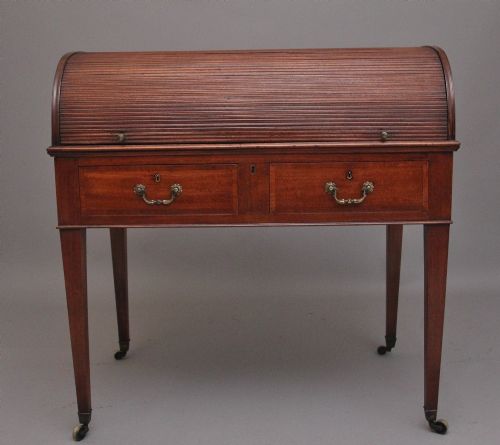
- A flexible shutter door constructed from narrow strips of wood glued to canvas backing. This mechanism slides horizontally to enclose desk compartments.
- Brushing slide
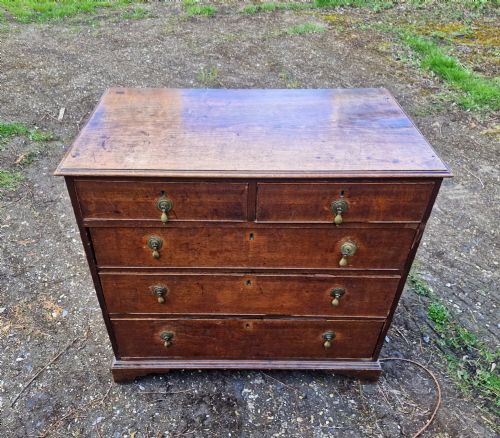
- A pull-out shelf positioned above the top drawers of a chest to provide a temporary writing surface. It offers functionality without a dedicated fall front.
Early 19th Century Bureau: Frequently Asked Questions
What is a secretaire chest?
A secretaire chest resembles a standard set of drawers from the exterior, but the top drawer pulls down to reveal a fitted writing desk.
This design provides a functional workspace while maintaining the compact footprint of a chest of drawers.
How do I maintain the leather writing surface?
Leather inserts benefit from occasional light dusting and conditioning with specialised balms formulated for antique leather.
Keeping moisture and direct sunlight away from the hide preserves its suppleness and colour over time.
Where were these bureaus made?
These pieces originate from British workshops as well as continental centres including the Netherlands, Sweden, and German-speaking regions.
Regional preferences dictate the choice of woods, such as oak in country pieces and exotic veneers in urban centres.
How do I date an early 19th century bureau?
Dating relies on examining construction techniques, timber choices, and hardware styles associated with the Georgian, Regency, and early Victorian eras.
Secondary woods and dovetail crispness offer reliable clues to the exact manufacturing decade.