


Dutch Winter Scene
A dutch winter scene captures the frost and quiet light of northern Europe, bringing centuries of frozen canals and bustling ice landscapes straight to your wall.
Dutch Winter Scene
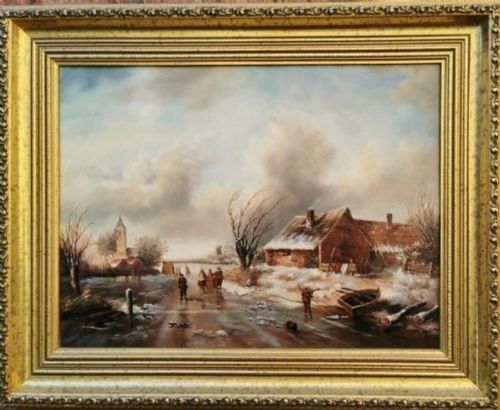
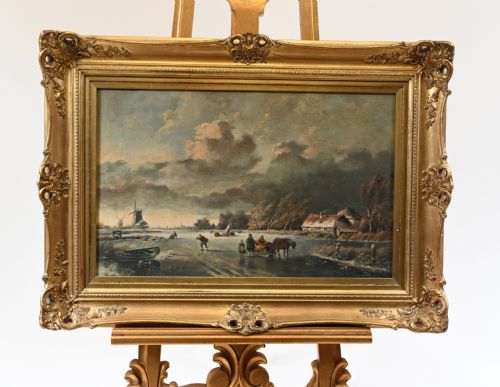
When you search for a dutch winter scene, you encounter oil paintings, pastels, and gouache works that depict frozen waterways, snow-laden villages, and figures skating under pale skies. These works range from small panels to substantial canvases created across the nineteenth and twentieth centuries.
The examples on this page draw heavily upon the traditions of the Dutch School, Hague School, and nineteenth-century romanticism. You will frequently find pieces attributed to specific periods such as the eighteen-seventies or nineteen-twenties, alongside works by listed artists.
Subject matter typically centres on frozen rivers, quays, and snowy country lanes populated by skaters, travellers, or shepherds near barns. These compositions rely on muted winter palettes that convey the distinct chill and atmosphere of the Low Countries.
Materials and methods
The works recorded here are executed primarily in oil paint applied to canvas, wood panels, or paper supports. Painters utilised traditional brushwork and layering techniques to build up thick textures of snow and ice, often framed in gilt or giltwood surrounds.
Pastel and gouache on paper also appear amongst the selections, offering a more immediate execution for smaller cityscapes and atmospheric sketches. These diverse media reflect the standard studio practices of European painters working from the nineteenth century onward.
Framing materials across these selections frequently incorporate traditional gilt and giltwood moulding.
Markers of quality
Quality in these works rests upon the handling of light and the atmospheric depth of the frozen landscape. Finer pieces demonstrate a confident command of tone, capturing the specific quality of low winter sunlight reflecting off ice and snow.
The strength of the composition and the vitality of the figures animate the best examples, distinguishing masterly observations from formulaic productions. Original framing in period giltwood further enhances the presentation and historical integrity of the piece.
T. Bergman·Pieter Cornelis Steenhouwer·Ludwig Hermann·Louis Smets·Anthonij Anton Mauve
The Dutch Winter Scene Glossary
- Dutch School
- A term describing painters originating from or working within the artistic traditions of the Netherlands. This classification encompasses generations of artists focused on landscape and domestic subjects.
- Hague School
- A group of artists working in The Hague during the late nineteenth century who were influenced by French realism and naturalism. They favoured moody grey tones and atmospheric depictions of rural life.
- Giltwood
- Wood that has been coated with a thin layer of gold leaf or gilt paint. Period frames utilise this finish to complement the warm highlights within oil paintings.
- Panel
- A rigid wooden support used by artists instead of canvas. Panels provide a smooth, stable surface that was particularly favoured for detailed nineteenth-century works.
Dutch Winter Scene: Frequently Asked Questions
What periods do these paintings span?
The works listed across this category primarily date from the nineteenth and twentieth centuries, capturing evolving artistic interpretations of cold weather landscapes.
You will encounter nineteenth-century romantic pieces alongside twentieth-century modernist expressions, all united by their wintry subject matter.
How should I hang an oil painting?
Oil paintings on canvas or wood should be placed away from direct sunlight and sudden fluctuations in temperature or humidity. This protects both the paint layer and the wooden support from warping or cracking.
Ensure the wall has adequate structural support, particularly for heavier framed works featuring ornate giltwood surrounds.
What is the Hague School style?
The Hague School refers to a nineteenth-century movement known for moody, atmospheric landscapes often rendered in sombre grey and brown tones. Artists in this tradition sought to capture the true, unidealised conditions of rural Dutch life.
Works from this circle often depict figures labouring or travelling through damp, cold environments with loose, expressive brushwork.
Are these works signed by the artists?
Several pieces in this selection bear visible signatures or attributions to recorded European painters and listed artists. Signatures provide key clues for provenance and dating.
Unsigned works also appear, often attributed to broader regional movements such as the Dutch School based on their style and technique.