


Dutch Canal Painting
A Dutch canal painting brings the quiet water, distant windmills and historic waterways of the Low Countries straight into a room.
Dutch Canal Painting
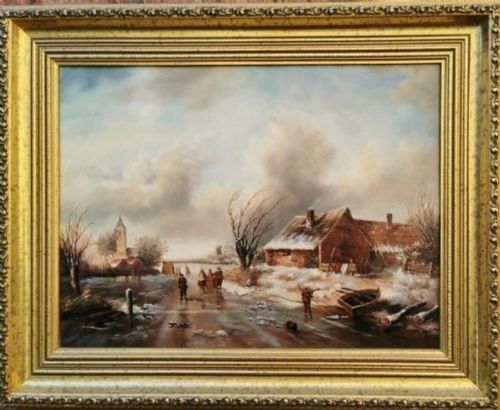
A dutch canal painting captures the distinctive waterways, maritime traffic and atmospheric skies of the Netherlands through traditional oil on canvas. Buyers searching for this phrase seek works that evoke the flat horizons, winter landscapes and bustling urban canals found in European art.
The pieces on this page span from the nineteenth century through the mid-twentieth century, encompassing Victorian interpretations and mid-century impressionist approaches. Common subjects include frozen canals with skaters, rural waterways with windmills, and specific city views such as Rotterdam.
Different stylistic schools appear across the collection, ranging from nineteenth century Dutch realism to post-impressionist experimentation. Works may be attributed to specific historical painters or emerge from anonymous nineteenth century Dutch school workshops.
Materials and Technique
Artists traditionally applied oil paint onto stretched canvas or wooden boards, building up layers to create depth in the water and sky. The application of pigment ranges from smooth realist detail to the visible, textured brushstrokes typical of mid-century impressionist canvases.
Many historical examples retain their original frames, often constructed from wood and finished with gesso and gilt or giltwood. These ornate or simple period frames complement the muted palettes and atmospheric light characteristic of the genre.
Listings feature works created using oil paint on canvas and wood, frequently housed within period giltwood frames.
Assessing Quality and Execution
Quality rests on the artist's handling of light reflecting off water and the subtle gradations used to depict expansive Dutch skies. Stronger works demonstrate confident brushwork and balanced composition that draw the viewer into the perspective of the canal.
The integrity of the canvas and the preservation of the original oil paint layer influence the desirability of a piece. Finer examples retain their structural stability and display minimal overpainting, allowing the original artist's hand to remain clear.
William Raymond Dommersen·William Dommersen·Jan van Couver·Willem Maris
The Dutch Canal Painting Glossary
- Oil on Canvas
- A traditional painting technique where oil-based pigments are applied to a woven fabric surface stretched across a wooden frame. This medium allows for rich colour blending and long-term durability.
- Giltwood
- Wood carved and covered with a thin layer of gold leaf or a gold-coloured metallic finish. It frequently appears on nineteenth-century frames designed to showcase maritime and landscape scenes.
- Dutch School
- A term used to describe artists working in the Netherlands or following the stylistic traditions established by Dutch painters. It encompasses various periods from realist depictions to later impressionist movements.
- Impressionism
- An art movement focusing on transient effects of light and everyday subjects using small, visible brushstrokes. Mid-century examples apply this approach to traditional canal and river views.
Dutch Canal Painting: Frequently Asked Questions
How do I date a Dutch canal painting?
Dating relies on stylistic clues, the type of canvas or board, and framing materials. Nineteenth-century works often feature tighter realism, whereas twentieth-century pieces adopt looser impressionist brushwork.
Signatures, inscriptions on the reverse, and historical artist records provide further confirmation of the period. Comparing the palette and subject matter to known regional schools helps narrow down the decade of creation.
Where should I hang a canal painting?
These works suit spaces with good natural light that complements the atmospheric skies and water reflections depicted in the scene. Placing them away from direct sunlight protects the oil paint and giltwood frames.
They pair well with traditional period interiors or balanced mid-century modern rooms. Standard picture hanging wire secured to wall studs supports the weight of framed canvases.
What subjects appear in these paintings?
Common subjects include urban canals flanked by historic townhouses, rural waterways with windmills, and frozen winter scenes with figures. Depictions range from specific locations like Rotterdam to generalised pastoral compositions.
Barges and maritime craft frequently populate the water, reflecting the commercial and domestic history of Dutch waterways. Winter landscapes often highlight snowy banks and muted grey-blue palettes.