






Dutch Walnut Chest
A dutch walnut chest brings rich timber figure and sculptural bombe curves into a room, offering deep drawers and historic character.
Dutch Walnut Chest
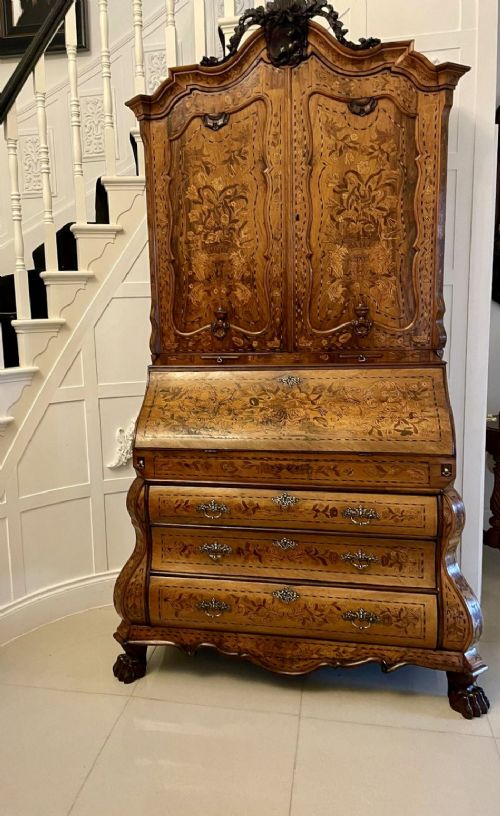
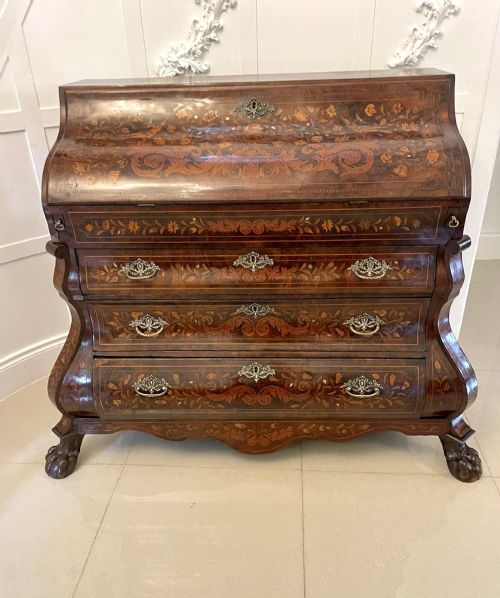
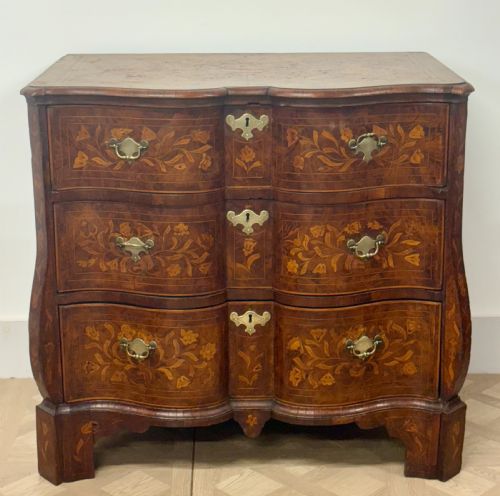
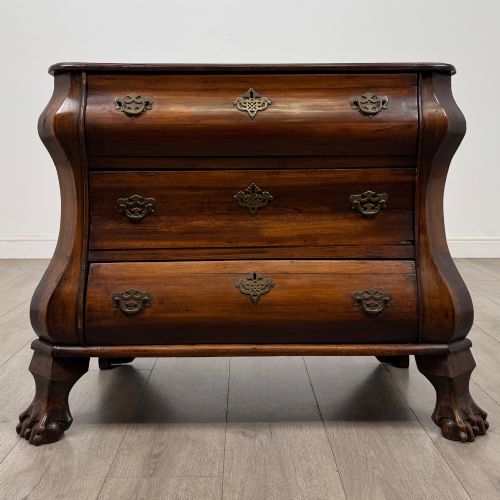
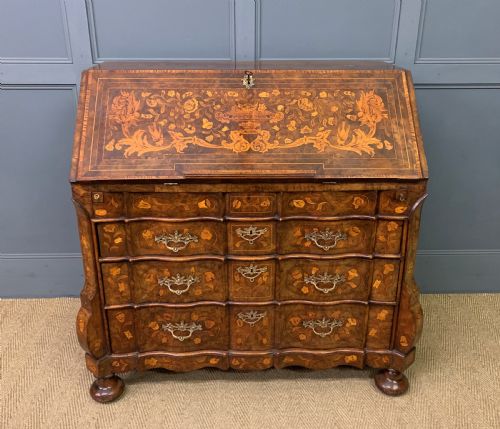
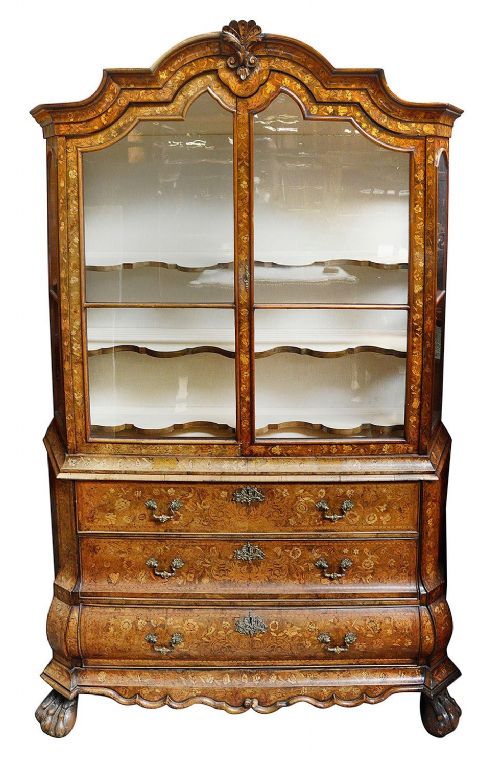
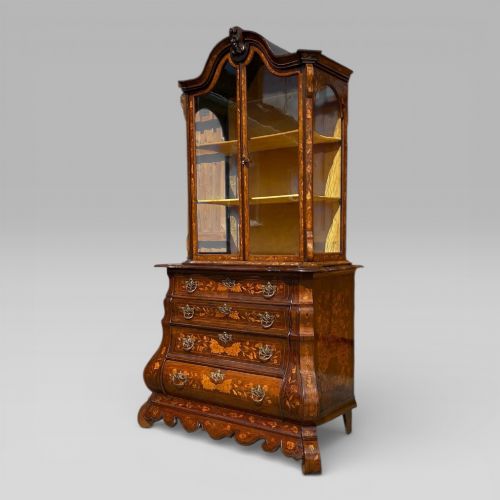
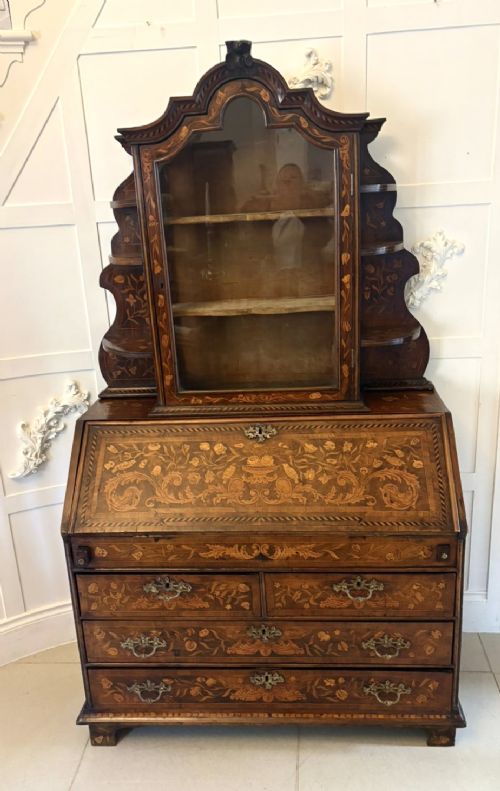
A dutch walnut chest primarily comprises sturdy drawer units built during the eighteenth and nineteenth centuries, often showing the distinct swelling profile known as bombe form. Many examples feature elaborate floral marquetry laid across the front and sides, utilising contrasting fruitwoods to create intricate floral patterns.
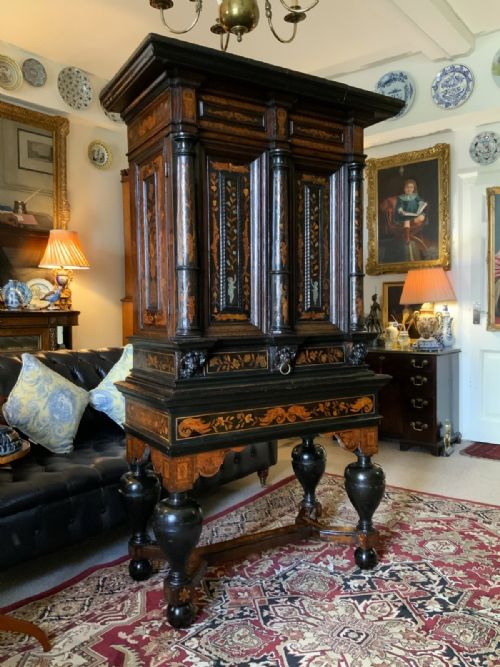
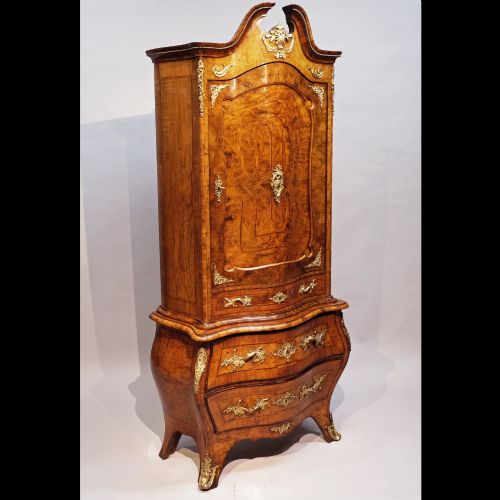
Beyond standard drawer units, the selection frequently includes complex forms such as bureaus, tallboys, and towering cabinet-on-chest structures. These pieces serve as functional storage furniture with historic continental origins, ranging from formal baroque iterations down to later nineteenth-century revival interpretations.
How they were made
Cabinetmakers constructed carcass frames primarily from oak and softwoods, applying figured walnut and burr walnut veneers to display dramatic grain patterns. Marquetry designs involved hand-cutting thin veneers of walnut and lighter fruitwoods, which were then fitted tightly together into floral and scroll motifs before being glued to the surface.
Makers shaped the characteristic swelling drawer fronts and sides by building up curved wooden cores or bending structural timbers. Brass hardware, including drop handles and escutcheons, was fitted to secure the drawers and doors, occasionally accompanied by pewter inlay within baroque examples.
An apprentice miniature piece from around 1800 proves that small-scale practice work occasionally survives alongside grand cabinets.
What varies in quality
The sophistication of the timber selection dictates much of the visual merit, with dense burr walnut veneers commanding greater presence than straight-grained boards. Finer marquetry demonstrates precise cutting and tight joints between contrasting fruitwoods, whereas lesser work shows wider gaps and simpler floral layouts.
Structural complexity also defines the tier of a piece, particularly the execution of the bombe contour. Smooth, swelling curves that maintain structural integrity require advanced joinery compared to straight-sided chests.
Edwards and Roberts·King Willem I of the Netherlands
The Dutch Walnut Chest Glossary
- Bombe
- A swelling, outward-curved profile found on the front and sides of certain chests and bureaus. This bulging shape requires skilled carpentry to execute successfully.
- Marquetry
- Decorative veneer work forming pictures or patterns using various woods. Craftsmen inlay different timbers like fruitwood into a walnut ground.
- Burr Walnut
- Timber taken from the growth excrescence of a walnut tree, yielding highly swirled grain patterns. Cabinetmakers prize this wood for its decorative value on drawer fronts.
- Cabinet on Chest
- A tall storage unit featuring an upper display cabinet or bureau section resting upon a lower chest of drawers. These dual-part pieces provide extensive vertical storage.
- Vitrine
- A glass-fronted cabinet designed for displaying objects. These items often incorporate marquetry inlay across the lower frame and wooden framing.
Dutch Walnut Chest: Frequently Asked Questions
How do I care for walnut furniture?
Walnut and burr walnut surfaces benefit from stable indoor environments away from direct sunlight and rapid temperature shifts. Consistent humidity prevents the underlying timber and delicate veneer from drying out.
Applying occasional appropriate wax polish helps nourish the grain and maintain a soft sheen. Avoid placing damp items or excessive heat directly onto the wooden top.
Are these chests eighteenth century?
Many examples date from the eighteenth century, showing baroque and rococo influences through floral marquetry and shaped fronts. Later pieces from the nineteenth and early twentieth centuries revive these earlier styles.
Examination of the secondary woods inside the drawers, such as oak or pine, helps determine the age of the construction. Regional continental techniques also assist in separating original period items from later revivals.
What is floral marquetry?
Floral marquetry is an ornamental technique where thin veneers of fruitwood and walnut are cut into flower and foliage shapes. These pieces fit together like a puzzle before being applied to the chest facade.
The resulting designs display subtle tonal contrasts between the light and dark woods. This ornamentation covers the entire front and sides of high-status pieces.