


Dutch Tin Glaze Urn
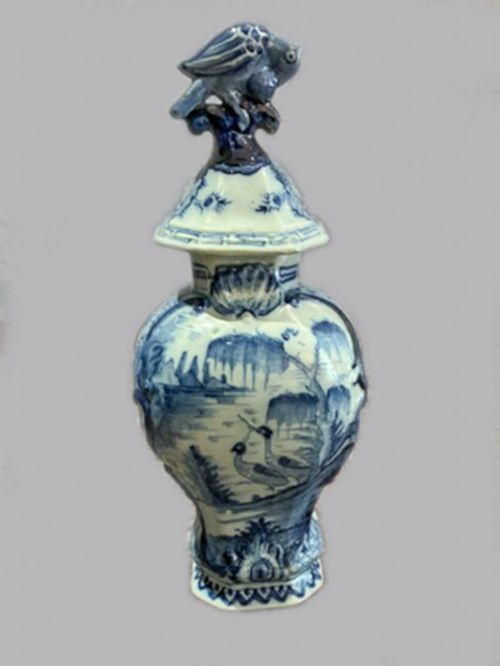
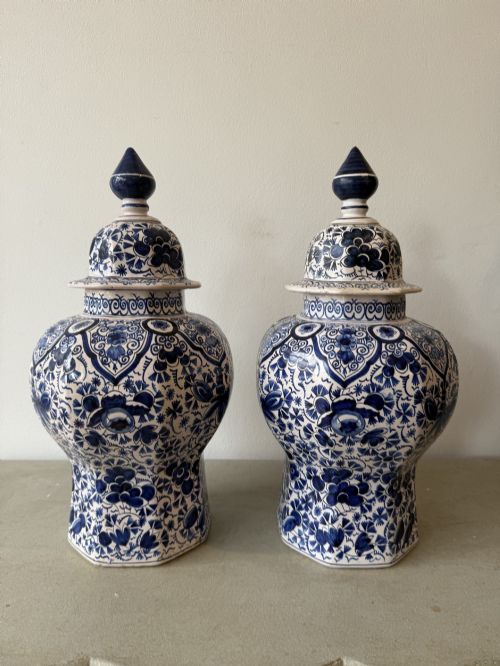
A dutch tin glaze urn brings vibrant blue and white earthenware into a room, offering the bold floral and botanical patterns collectors prize.
Dutch Tin Glaze Urn
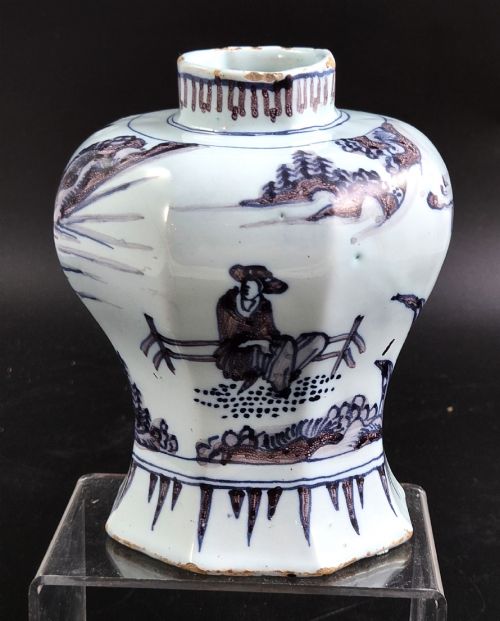
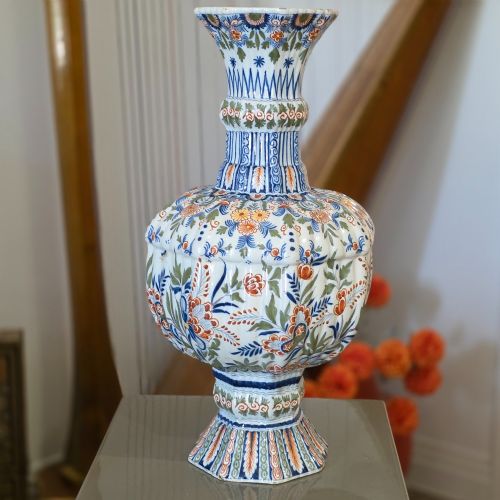
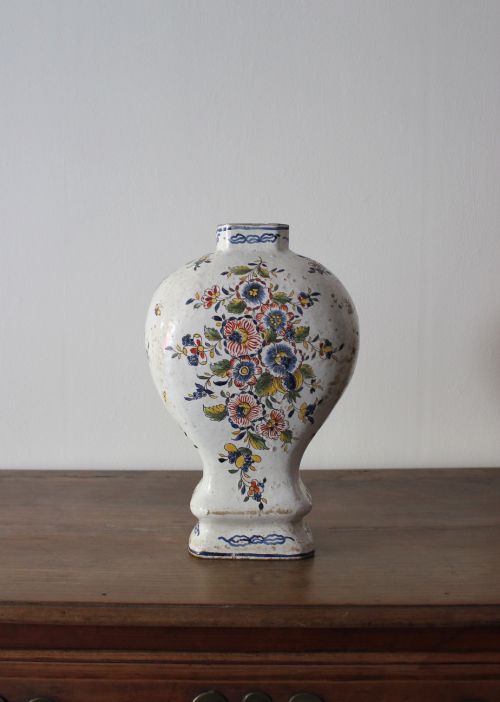
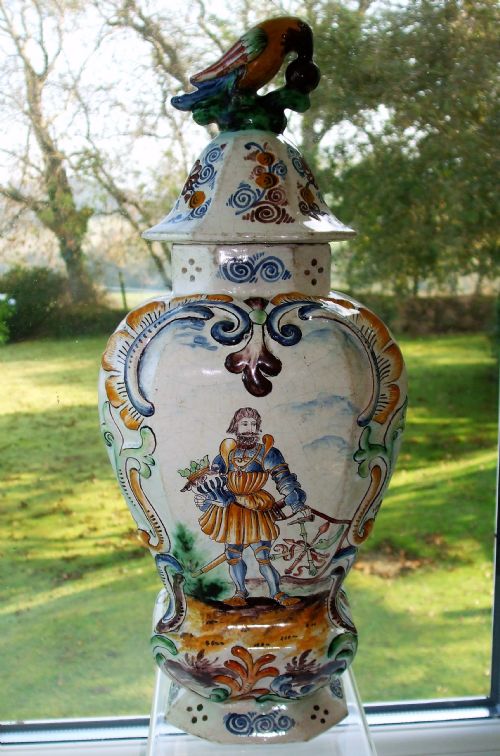
A dutch tin glaze urn encompasses lidded vessels, garden planters, baluster vases, and tobacco jars originating across several centuries. The pieces available span the seventeenth, eighteenth, and nineteenth centuries, with eighteenth-century examples appearing frequently in blue and white or polychrome palettes.
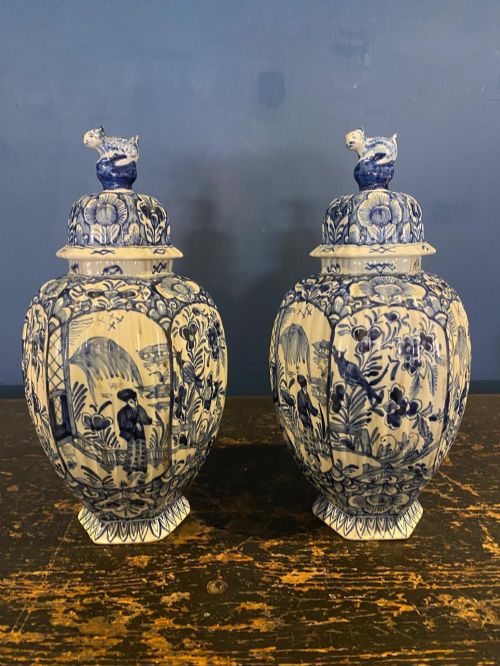
Buyers encounter grand lidded vases and pairs of jars designed for display on mantelpieces or architectural ledges. Forms range from ribbed beaker shapes to handled garden vessels, occasionally adapted later into electrified table lamps or combined with brass elements.
Materials and construction
Potters shaped earthenware bodies and coated them in an opaque tin glaze that provided a smooth white ground for painting. Cobalt pigment was then applied by hand beneath or over the glaze before firing, creating the characteristic blue and white designs.
Manganese pigment also appears alongside cobalt, especially in polychrome pieces or pieces influenced by Chinoiserie and Rococo styles. Artisans formed these vessels as single display jars or paired mantle garnitures, frequently creating fitted covers for the larger baluster shapes.
Several eighteenth-century jars originally stored tobacco before finding a second life as decorative lamps.
Evaluating the pieces
Quality rests upon the crispness of the hand-painted cobalt and manganese details, particularly where birds, flowers, and Chinoiserie motifs are rendered with precision. Earlier seventeenth and eighteenth-century pieces often display finer brushwork and more complex layering of glazes than later revival iterations.
The survival of original matching covers on lidded vases and jars elevates the integrity of a piece. Condition also depends on how evenly the tin glaze covers the earthenware body without extensive loss or intrusive restoration.
The Dutch Tin Glaze Urn Glossary
- Tin-glazed earthenware
- Pottery coated in a white glaze containing tin oxide to create an opaque surface for painting. This technique formed the basis of traditional Delft production.
- Baluster vase
- A vessel featuring a curved, swelling body that tapers toward the base and neck. This silhouette frequently appears among large lidded storage jars.
- Cobalt pigment
- A metallic colourant used to produce deep blue tones under the glaze. It remains the dominant pigment on these earthenware vessels.
- Chinoiserie
- European decorative motifs inspired by Chinese art and porcelain. These designs commonly feature stylised landscapes, figures, birds, and flowers.
Dutch Tin Glaze Urn: Frequently Asked Questions
What is a dutch tin glaze urn?
These pieces are earthenware vessels coated in a white tin glaze and decorated with hand-painted cobalt or manganese pigments. They include lidded jars, baluster vases, and garden urns.
Most examples date from the seventeenth through to the nineteenth centuries. They were originally used for display or dry storage in prosperous European homes.
How do I date an antique delft vase?
Dating relies on stylistic shifts, painting quality, and the composition of the earthenware body. Seventeenth and eighteenth-century examples often display looser, more direct brushwork and distinct potting techniques.
Later nineteenth-century pieces and revival items sometimes incorporate heavier bodies or different glaze consistencies. Comparing the floral or Chinoiserie motifs helps place the piece within its historical period.
Were these urns made with lids?
Many large jars and baluster vases were produced as lidded vessels to protect dry contents or complete a balanced decorative silhouette. Pairs of lidded vases were standard components of mantel garnitures.
Finding a piece with its original matching cover significantly enhances its completeness. Some vessels were also made as open vases or beaker shapes without lids.
How should I display an antique delft jar?
These substantial earthenware vessels suit prominent placement on sturdy tables, cabinets, or mantels where their blue and white patterns are visible. Pairs look effective arranged symmetrically as garniture sets.
Keep them away from areas with heavy foot traffic or moisture to protect the tin glaze surface. Some pieces adapted as lamps require careful positioning near suitable power sources.