




Dutch Tallboy Chest
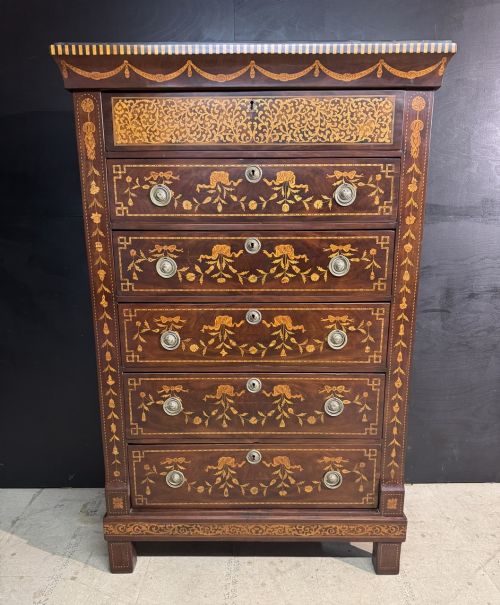
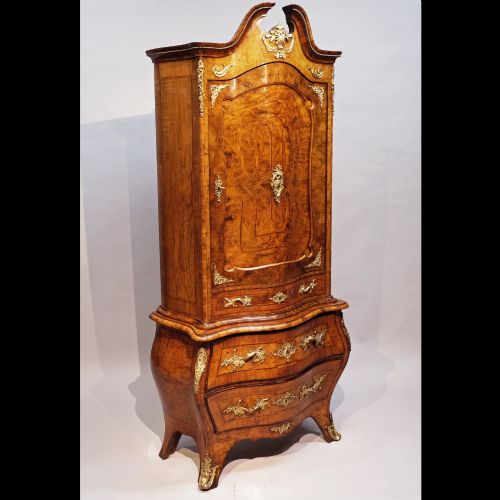
A dutch tallboy chest is a commanding storage piece built with elaborate floral inlay, offering profound depth and historic character.
Dutch Tallboy Chest
When you search for a dutch tallboy chest, you are looking at substantial case furniture designed for elevated domestic storage, originating mainly across the eighteenth and nineteenth centuries. These pieces combine commanding vertical presence with deep drawers or linen press cupboards, serving as both functional furniture and grand decorative statements.
The versions you are most likely to meet on this page feature rich walnut or mahogany foundations heavily blanketed in intricate floral marquetry. Styles range from restrained Dutch Neoclassical and Baroque forms to elaborate Rococo Revival movements, demonstrating the varied craftsmanship of continental cabinetmakers.
How They Were Made
Master cabinetmakers constructed these carcases using solid timbers such as mahogany and walnut, often applying burr walnut or fruitwood veneers to large flat surfaces. The structural frames support heavy loaded drawers while providing a stable canvas for decorative surface treatments.
Surface decoration relies heavily on meticulous marquetry and inlay work utilising boxwood and diverse fruitwoods to render floral and pictorial motifs. Metal hardware such as brass handles and ormolu mounts complement the rich timber tones and secure the structural integrity of doors and drawers.
Dutch Tallboy Chest Retail Price Guide 2026
Typical asking prices for dutch tallboy chest among the pieces listed under this phrase on Sellingantiques today, from the lower quarter to the upper quarter. They describe what is for sale here now, not the wider market.
Some floral marquetry panels hide remarkably secret compartments designed for safeguarding domestic currency and love letters.
What Varies in Quality
The distinction between average and exceptional pieces rests upon the precision and complexity of the marquetry inlay. Superior examples display seamless floral compositions with crisp shading in the fruitwood, whereas lesser pieces show simpler, repetitive patterns with less artistic ambition.
Structural harmony also dictates value, seen in the proportion of the cornice and the alignment of drawer linings. Finishes that retain warm, natural timber patination rather than heavy modern restoration elevate the standing of the piece significantly.
The Dutch Tallboy Chest Glossary
- Marquetry
- Decorative veneer work arranged in pictorial or floral patterns across the surface of the wood. This technique requires exceptional skill in cutting and fitting thin slices of contrasting timber.
- Tallboy
- A tall chest of drawers traditionally formed by stacking one chest upon another or building a single tall vertical carcass. It maximises storage capacity while occupying a relatively compact floor footprint.
- Linen Press
- A large cabinet designed specifically to store sheets and garments, usually featuring upper cupboard doors housing sliding trays above lower drawers. They form a substantial portion of larger domestic case furniture.
- Ormolu
- Gilded bronze mounts applied to furniture for decorative effect and corner protection. The material adds metallic contrast and stylistic definition to the wooden structure.
- Burr Walnut
- Timber taken from a tree growth featuring swirling, knotted grain patterns that create highly decorative surfaces. Cabinetmakers prized this wood for high-status drawer fronts and panel inserts.
Dutch Tallboy Chest: Frequently Asked Questions
What is a dutch tallboy chest used for?
These tall cabinets provide expansive vertical storage for clothing, linens, and domestic goods through multiple deep drawers or upper cupboard shelving.
Beyond pure utility, they functioned historically as status objects in grand homes, displaying the wealth and taste of the household through ornate marquetry.
How do I date a dutch tallboy chest?
Dating relies on examining construction methods, timber choices, and stylistic cues such as Baroque flourishes or Neoclassical symmetry. Eighteenth-century pieces typically exhibit heavier carcase construction and distinct floral marquetry.
Nineteenth-century examples often incorporate mahogany alongside walnut, sometimes showing transitional revival influences in their overall proportions and hardware.
Where were these pieces made?
Cabinetmakers working within Dutch regional workshops produced these case pieces for wealthy merchants and domestic households. The distinct design vocabulary reflects prevailing continental European artistic movements adapted by local artisans.
Materials reflect both native European hardwoods and imported colonial timbers available through extensive maritime trade routes.
How do I care for a marquetry surface?
Maintain the timber by keeping the piece away from direct sunlight and sudden temperature fluctuations that can dry out old veneers. Apply appropriate wax polishes sparingly to nourish the wood and protect the delicate fruitwood inlay.
Avoid placing excessive moisture directly on the surface to preserve the historical finish and prevent lifting in the marquetry panels.