



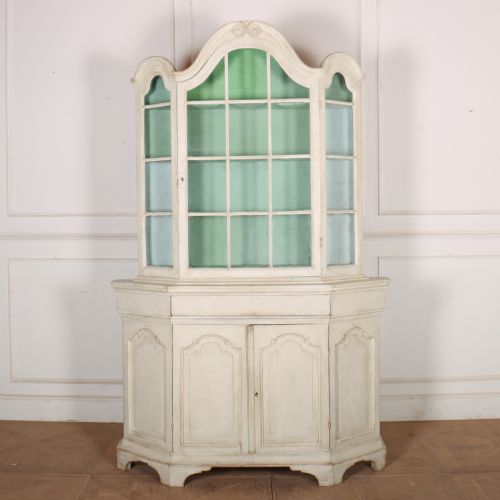
Dutch Rococo Display Cupboard
These dutch rococo display cupboard pieces bring architectural presence and rich timber grain to a room, offering both display space and historic character.
Dutch Rococo Display Cupboard
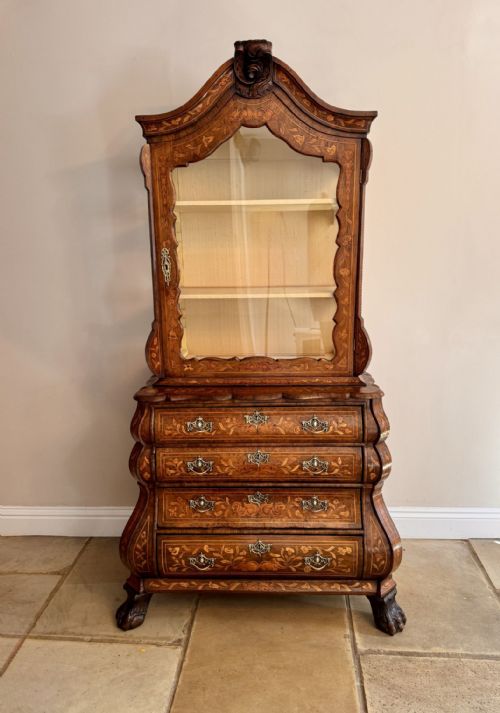
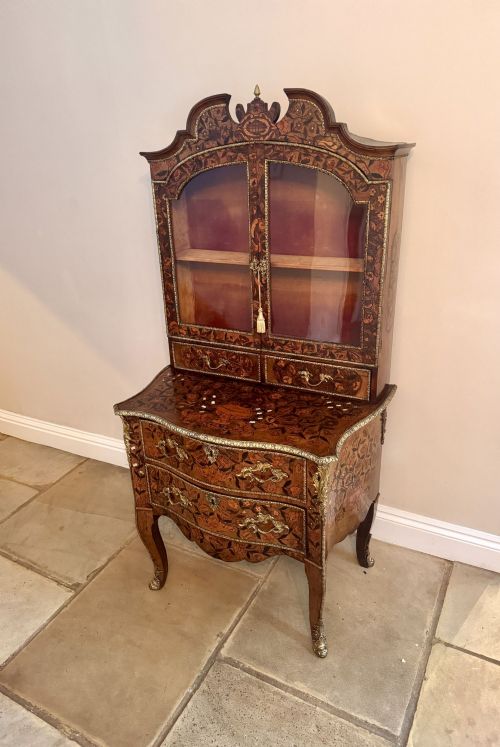
A dutch rococo display cupboard brings grand 18th century presence into a room, combining architectural timber forms with glazed upper sections for showing valued objects. You will encounter genuine 18th century examples alongside later 19th century revival pieces that emulate the sweeping lines and rich woods of the original period.
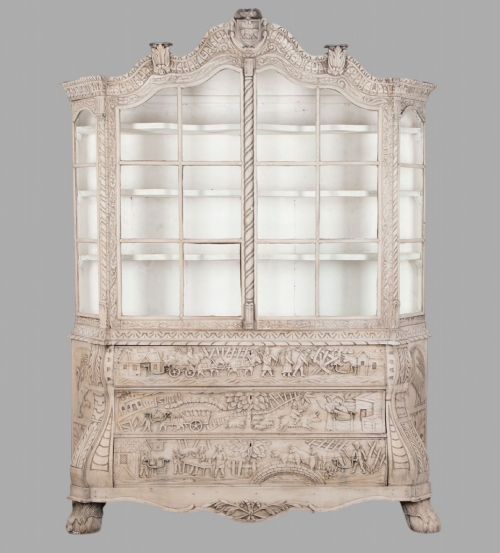
The form often appears as a substantial cabinet on chest or a glazed vitrine, housing shelves behind glass doors. Makers from the 18th Century and the 1860 revival period utilised oak, walnut, burr walnut and painted wood to construct these striking storage pieces.
How they were made
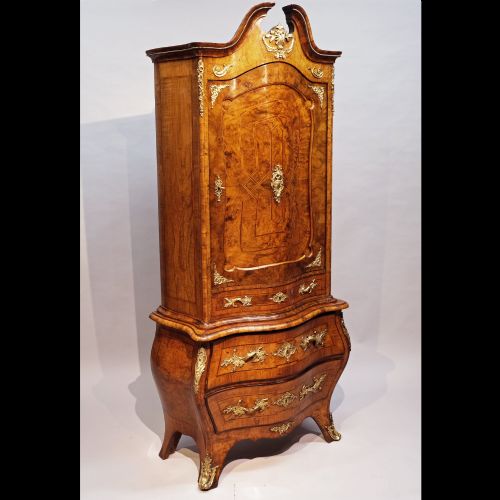
Cabinetmakers constructed these pieces using solid oak and walnut, frequently applying highly figured burr walnut veneers to large surfaces to create dramatic patterns. Glazed panels were fitted into the upper doors to showcase contents, while brass hardware and ormolu mounts added metallic contrast to the timber.
Carving formed an integral part of the construction, shaping the wood into the characteristic undulating outlines of the style. Painted wood finishes also appear on certain examples, providing a smooth decorative surface over the structural woodwork.
Dutch Rococo Display Cupboard Retail Price Guide 2026
Typical asking prices for dutch rococo display cupboard among the pieces listed under this phrase on Sellingantiques today, from the lower quarter to the upper quarter. They describe what is for sale here now, not the wider market.
What varies in quality
The standard of a dutch rococo display cupboard rests upon the choice of timber and the dexterity of the carving. Finely figured burr walnut veneer laid with precision creates a richer surface texture than plain planks, while deeply carved wooden ornamentation displays greater sculptural control than flat or mechanical profiling.
Proportion and the integration of glazing bars dictate the visual balance of the cabinet. Examples that retain original glass panes and unblemished brass or ormolu fittings demonstrate a higher degree of preservation and original craftsmanship.
The Dutch Rococo Display Cupboard Glossary
- Bombé
- A swelling, convex outward curve on the lower portion of a cabinet or chest. This bulging silhouette is characteristic of Dutch furniture design from the period.
- Vitrine
- A glass-fronted cabinet designed specifically for the display of fine porcelain, glassware or curiosities. The term highlights the glazed upper section meant for viewing objects.
- Burr walnut
- Timber taken from a walnut tree growth, yielding a swirling, highly decorative grain pattern. Cabinetmakers prized this veneer for high-status furniture fronts.
- Ormolu
- Gilded bronze applied as decorative mounts or hardware on fine furniture. It provides a bright metallic accent against dark cabinet timbers.
- Cabinet on chest
- A tall furniture form comprising an upper display cabinet resting upon a lower chest of drawers. This multi-tiered construction maximises storage and vertical presence.
Dutch Rococo Display Cupboard: Frequently Asked Questions
How do I date a Dutch display cabinet?
Dating relies on examining the timber construction, hardware, and stylistic details. 18th Century pieces often show hand-cut joinery and period specific carving, while 19th Century revival pieces from 1860 exhibit the technological markers of later workshop production.
Secondary woods, backboards, and the thickness of the glass panes also provide physical evidence of the era in which the cabinet was built.
Where should I place a heavy walnut cabinet?
These substantial timber pieces require a stable, level floor away from direct heat sources and strong sunlight. Placing them against a secure interior wall protects the heavy oak and walnut structure from environmental stress.
Ensure there is sufficient clearance for the doors to swing open fully without hitting surrounding furniture or architectural mouldings.
What is the difference between Georgian and Dutch Rococo?
Georgian style often follows more restrained, classical proportions derived from English Palladian architecture. Dutch Rococo pieces embrace asymmetric curves, bombé lower sections, and exuberant carving influenced by continental European aesthetics.
While some pieces blend Georgian period dating with Dutch regional styling, the surface ornamentation and silhouette remain the primary indicators of design lineage.
How do I clean burr walnut veneer?
Dust the burr walnut surfaces regularly with a soft, dry cloth to prevent particulate accumulation. Avoid using chemical sprays or general household cleaners that can degrade the traditional polish.
Feed the timber periodically with a quality wax formulated for antique wood to maintain the lustre of the grain pattern without sealing the finish.