

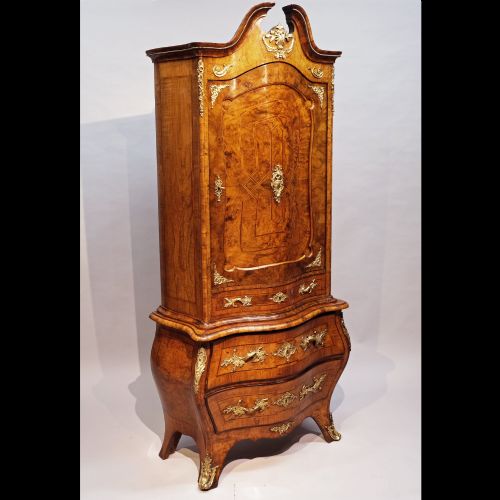


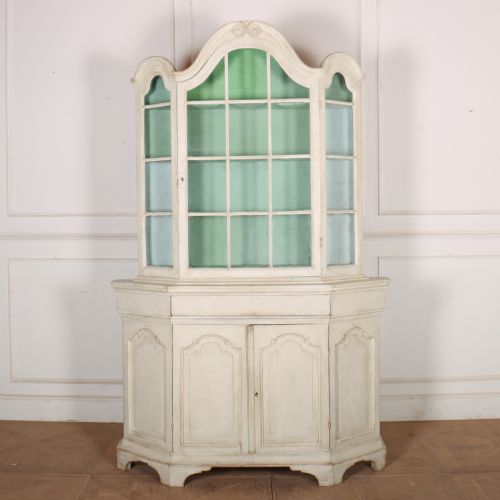


Dutch Rococo Display Cabinet
A dutch rococo display cabinet brings sweeping lines and rich timber to a room, offering a grand stage for treasured porcelain and glassware.
Dutch Rococo Display Cabinet
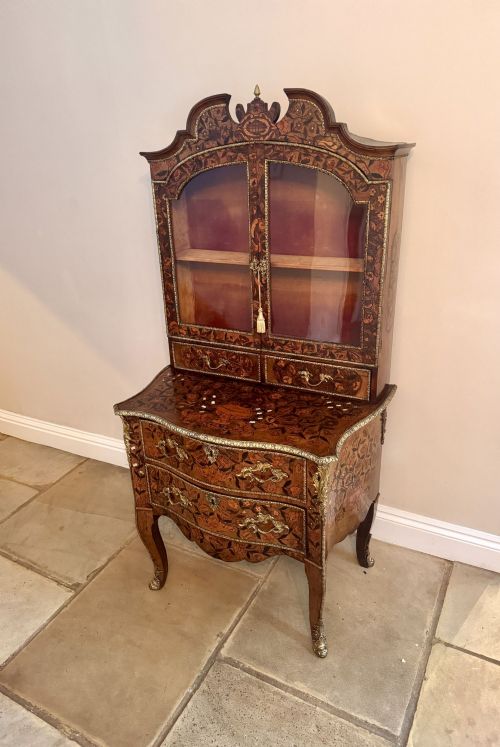
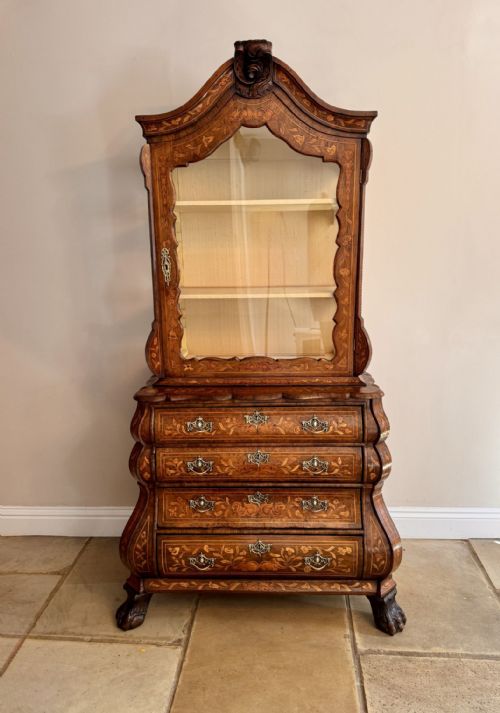
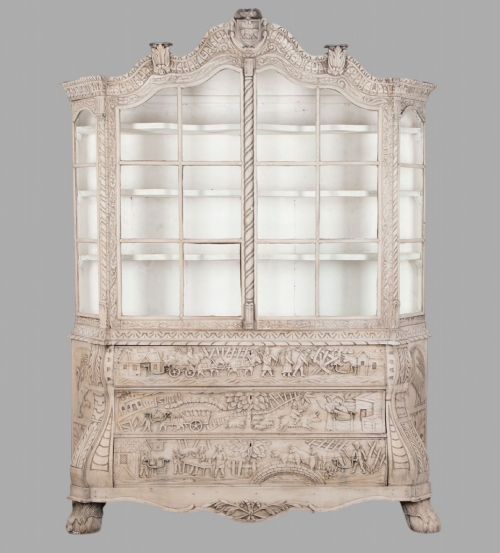
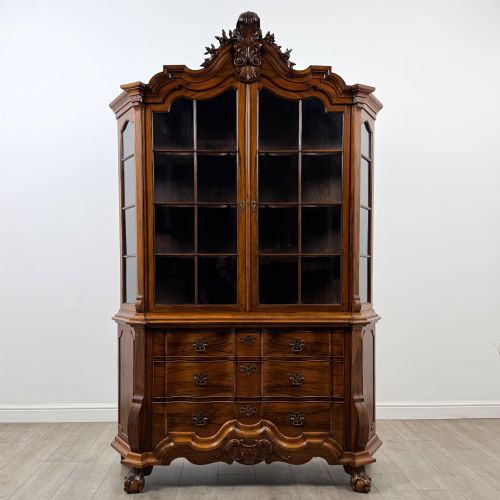
A dutch rococo display cabinet combines serpentine fronts, bombé profiles, and glazed upper sections to showcase collections within a stately domestic setting. These pieces emerge across the eighteenth century and subsequent revival periods up to the twentieth century, presenting varied interpretations of baroque and rococo forms.
The inventory on this page ranges from authentic eighteenth-century examples to later nineteenth-century revivals and twentieth-century interpretations. Buyers frequently encounter formats that couple a glazed cabinet or vitrine with a bombé chest or secretaire base, utilising walnut, burr walnut, oak, and painted wood.
Forms span from freestanding glazed display cabinets and tall vitrines to robust cabinet on chest constructions. Marquetry inlay, brass mounts, and painted surfaces appear across different pieces, reflecting both formal continental tastes and later historicist revivals.
How they were made
Cabinetmakers constructed these forms using solid hardwoods like oak and walnut, often applying burr walnut veneers and intricate marquetry inlay across curved surfaces. The distinctive bombé profile required careful timber shaping and specialised joinery to achieve the characteristic swollen front and sides.
Glazing bars divided the upper cabinet windows while brass hardware, ormolu mounts, and painted wood finishes completed the exterior presentation. Craftspeople built these cabinets in sections, mounting upper display compartments securely onto robust chest or cupboard bases.
Dutch Rococo Display Cabinet Retail Price Guide 2026
Typical asking prices for dutch rococo display cabinet among the pieces listed under this phrase on Sellingantiques today, from the lower quarter to the upper quarter. They describe what is for sale here now, not the wider market.
Materials recorded across current pieces include walnut, burr walnut, oak, brass, glass, ormolu, and marquetry inlay.
What varies in quality
Quality rests upon the fluency of the carved contours and the precision of the marquetry inlay across the bombé surfaces. Superior examples demonstrate seamless timber matching in burr walnut and refined proportions in the scrolling bonnet and cabriole legs.
The handling of glazing bars and the execution of painted decoration also distinguish finer instances from more straightforward revival pieces. Construction depth and structural integrity within the cabinet on chest formats dictate the overall standing of the work.
The Dutch Rococo Display Cabinet Glossary
- Bombé
- A swelling, outward-curving frontage and side profile typical of continental cabinetwork. This technique demands advanced woodworking skill to achieve balanced proportions.
- Vitrine
- A glass-fronted display cabinet designed specifically for the exhibition of porcelain and small objects. These pieces rely on clear glazing and interior visibility.
- Marquetry
- Decorative veneer work arranged in pictorial or geometric patterns using various coloured woods. Artisans cut these delicate elements to fit flush across the cabinet surfaces.
- Ormolu
- Gilded bronze mounts applied as decorative ornaments to furniture corners, feet, and keyplates. This material adds metallic contrast to dark timber frames.
- Cabinet on chest
- A two-part form consisting of an upper display section resting upon a lower storage base or bureau. This vertical arrangement maximises storage capacity while maintaining floor space.
Dutch Rococo Display Cabinet: Frequently Asked Questions
How do I clean the glass?
Use a soft lint-free cloth and a mild glass cleaner sprayed onto the cloth rather than directly onto the cabinet surface. This prevents excess moisture from reaching vulnerable historic timber frames or painted details.
Take care around old glazing putty and delicate muntins when wiping the panes. Gentle handling preserves both the original glass and the surrounding woodwork.
Are these cabinets structurally heavy?
Substantial timbers like oak and walnut, combined with dual-section construction, mean these cabinets possess significant weight. Proper placement requires a level floor to ensure doors and drawers operate correctly.
Securing taller examples to a wall prevents accidental tipping, particularly on uneven historic flooring. Professional placement is recommended due to the sheer mass of the combined sections.
Where should I place my cabinet?
Position the piece away from direct sunlight and strong heat sources to protect sensitive wood veneers and painted finishes. Stable indoor humidity prevents timber movement and veneer separation.
Allow adequate clearance around doors to swing open fully without catching nearby walls. A stable, low-traffic location ensures the cabinet remains undisturbed.
How do I tell periods apart?
Eighteenth-century examples display authentic construction methods, patination, and period-specific carving details suited to their original context. Revival pieces from the nineteenth and twentieth centuries often feature heavier internal framing or machine-cut elements.
Examine the secondary woods inside drawers and backboards for clues regarding manufacturing eras. Comparing timber ageing against known revival styles clarifies the timeline of production.