




Dutch Marquetry Bureau Desk
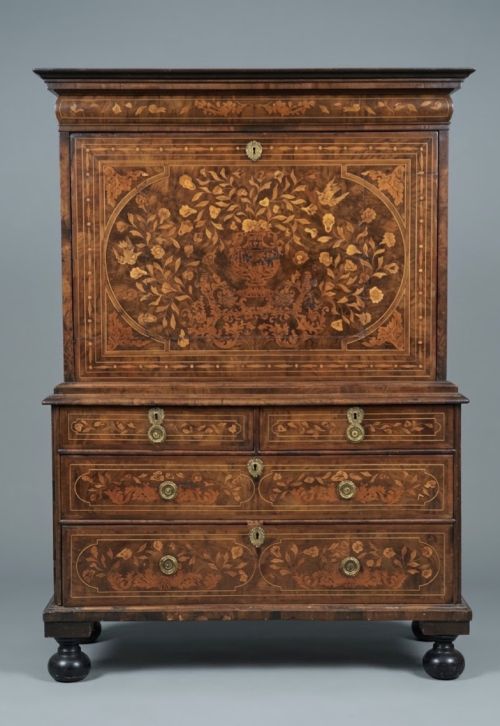
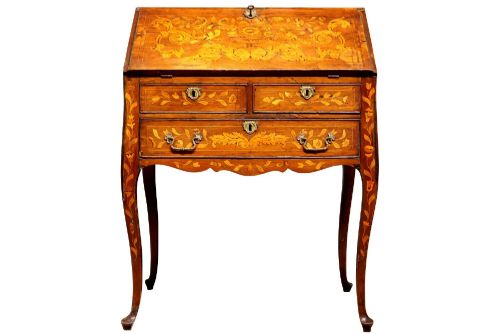
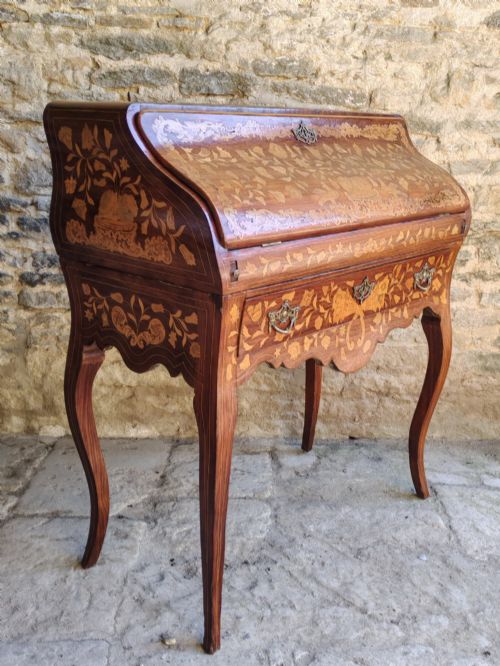
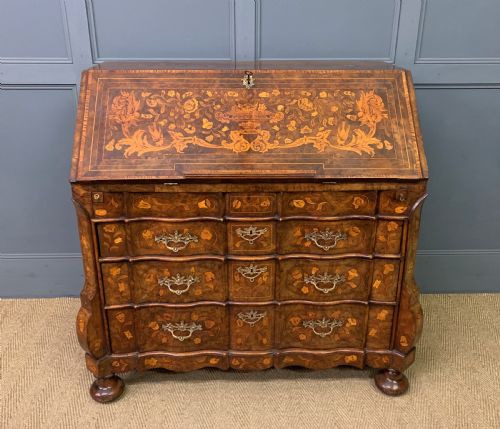
These substantial pieces of furniture defined by floral inlay are known as a dutch marquetry bureau desk.
Dutch Marquetry Bureau Desk
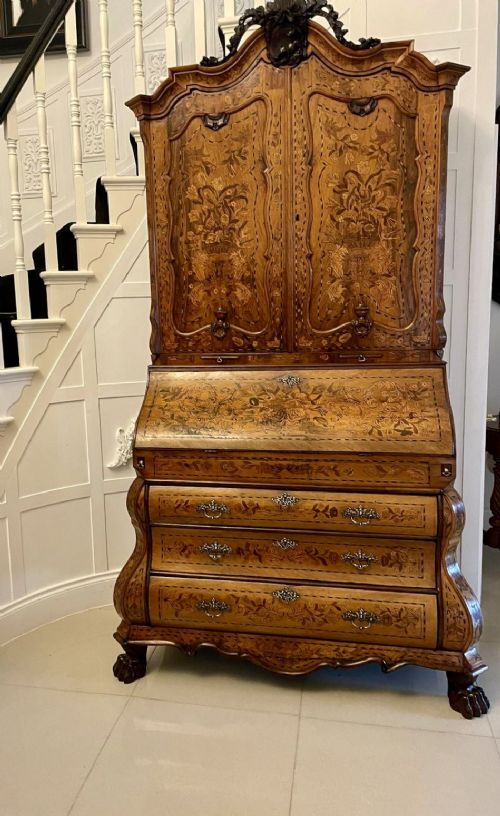
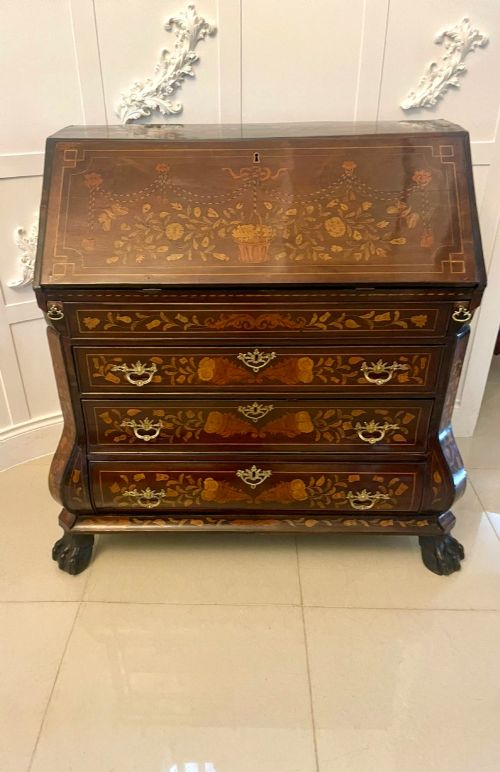
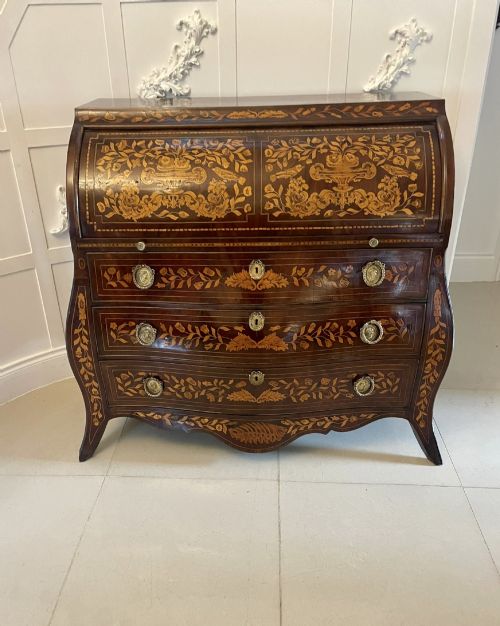
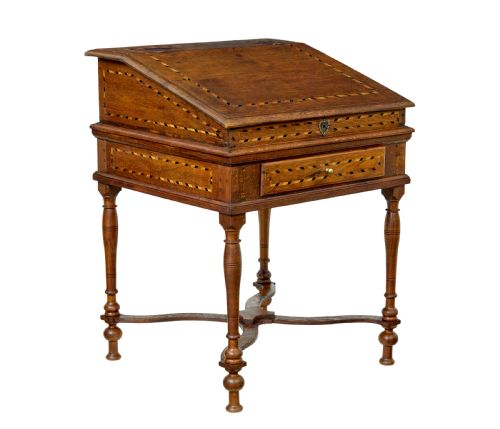
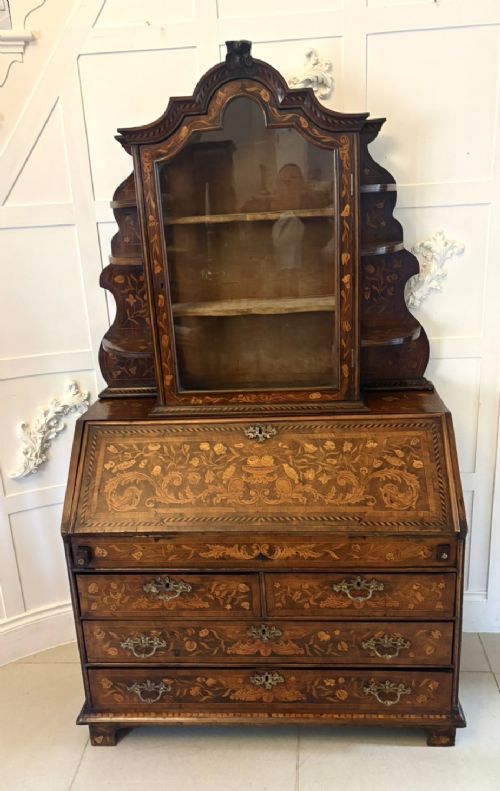
A dutch marquetry bureau desk is a fitted writing cabinet typically constructed during the eighteenth and nineteenth centuries. The form spans various regional iterations including bureau bookcases, cylinder desks, fall front escritoires, and secretaires.
Most examples appearing in trade sit within the eighteenth century and the early nineteenth century, frequently incorporating a sloping fall front or a cylinder action. Bureau bookcases provide taller storage solutions with upper shelving units.
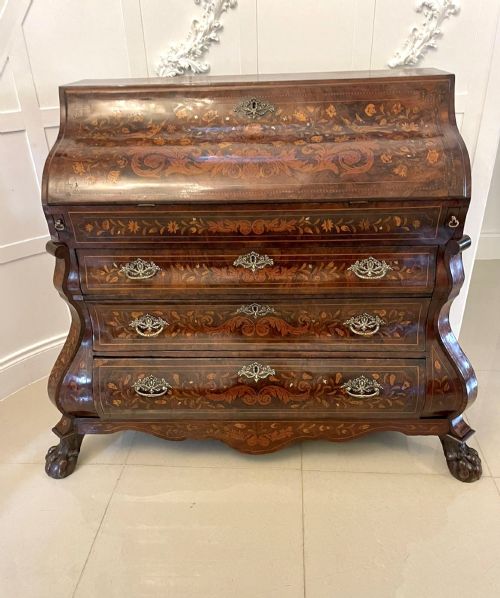
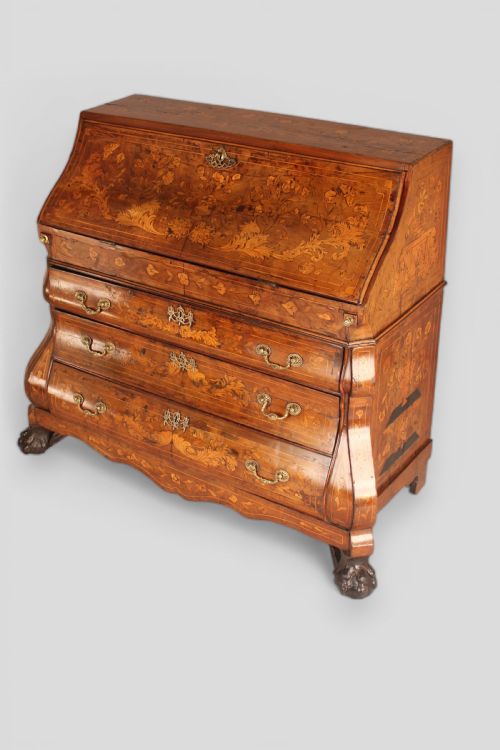
Makers utilised distinct regional silhouettes, notably bombe profiles that curve outward at the base. Walnut, burr walnut, and mahogany serve as the primary foundational timbers for these writing pieces.
How they were made
Cabinet makers constructed carcass frames from solid oak and walnut, applying richly figured burr walnut or mahogany veneers across the exterior surfaces. Fruitwood inlay and marquetry panels were then hand-cut and pieced together to form elaborate floral arrangements.
The decorative schemes rely entirely upon contrasting fruitwood marquetry, embedding lighter and darker botanical motifs directly into the darker primary wood backgrounds. This meticulous parquetry and inlay work covers drawer fronts, fall fronts, and cabinet doors.
Structural engineering involved complex dovetail joinery for internal drawer construction and robust framing to support the heavy bowed bombe profiles characteristic of the period.
Dutch Marquetry Bureau Desk Retail Price Guide 2026
Typical asking prices for dutch marquetry bureau desk among the pieces listed under this phrase on Sellingantiques today, from the lower quarter to the upper quarter. They describe what is for sale here now, not the wider market.
Many bureau desks conceal secret sliding compartments behind their inner pigeonholes, originally designed for hiding love letters and family gold.
What varies in quality
The sophistication of the floral marquetry dictates much of the distinction between standard and superior examples. Finer pieces demonstrate intricate shading within the fruitwood petals and leaves, creating a sense of depth that simpler geometric or sparse floral designs lack.
The choice of primary timber heavily influences the overall calibre of the bureau, with highly figured burr walnut commanding greater visual presence than plain mahogany or oak. The execution of the bombe curve, requiring expert shaping of solid timber and veneer, further separates master cabinet work from simpler straight-fronted variants.
Internal configuration also marks the gradation in quality, where fitted nests of pigeonholes, secret compartments, and serpentine small drawers display superior joinery compared to basic utilitarian interiors.
Morison of Edinburgh
The Dutch Marquetry Bureau Desk Glossary
- Bombe
- A bulging or outward-curving swollen profile seen on the lower sections of case furniture. This curvaceous silhouette requires advanced woodworking skill to veneer successfully.
- Marquetry
- A decorative technique where small pieces of tinted and natural wood veneers are assembled into pictorial designs. Floral patterns dominate this specific category of furniture.
- Cylinder Bureau
- A writing desk featuring a rotating quarter-cylinder lid that retracts to reveal a fitted writing surface and interior pigeonholes. It provides a clean architectural line when closed.
- Bureau Bookcase
- A tall combination piece uniting a sloping-front writing desk at the base with an enclosed shelving cabinet above. These dual-purpose items offer substantial storage capacity.
- Fruitwood
- Dense timber derived from orchard trees such as pear, apple, or cherry, prized for its smooth grain and used extensively for contrasting inlay work.
Dutch Marquetry Bureau Desk: Frequently Asked Questions
What is a dutch marquetry bureau desk?
A dutch marquetry bureau desk is an antique writing cabinet featuring a sloping fall front or cylinder lid, decorated extensively with floral wood inlay. These pieces date predominantly from the eighteenth and nineteenth centuries.
The form combines practical storage with decorative artistry, often incorporating shaped bombe fronts and fitted internal compartments for correspondence.
How do I date a bureau desk?
Dating relies upon examining the underlying construction timbers, such as the transition from oak and walnut in the eighteenth century to later mahogany usage. Stylistic clues like bombe shaping, brass hardware, and the complexity of the marquetry also indicate the period.
Cabinet makers altered structural techniques over time, allowing collectors to distinguish eighteenth-century origins from nineteenth-century revivals.
How were these desks used originally?
Owners utilised these pieces for private correspondence, record keeping, and storing valuable documents behind locked fall fronts. The internal pigeonholes and small drawers kept writing materials organised.
Many examples included pull-out slides or fitted ledges to provide a stable writing surface while concealing the paperwork underneath.
How do I care for burr walnut?
Burr walnut requires stable indoor humidity away from direct sunlight and heat sources to prevent the delicate veneers from lifting or splitting. Regular dusting with a soft, dry cloth preserves the finish.
Applying occasional appropriate wax feeds the timber and maintains the natural lustre of the historical surface without introducing harmful moisture.