


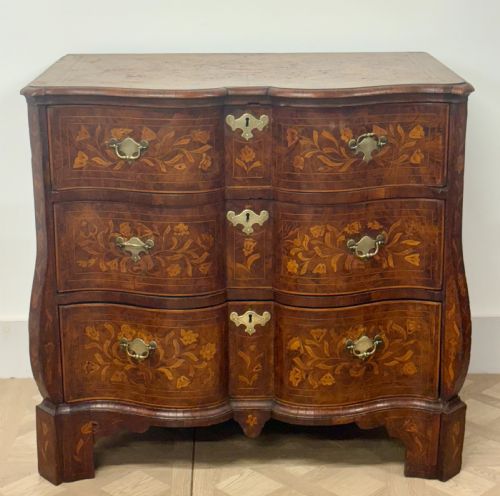
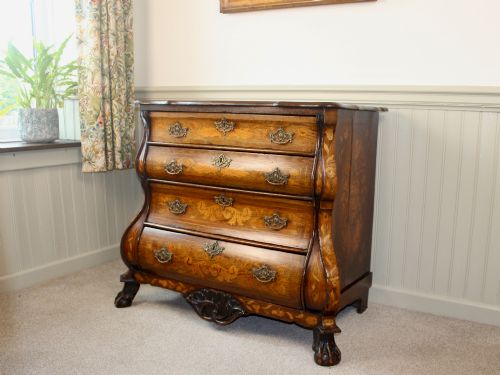
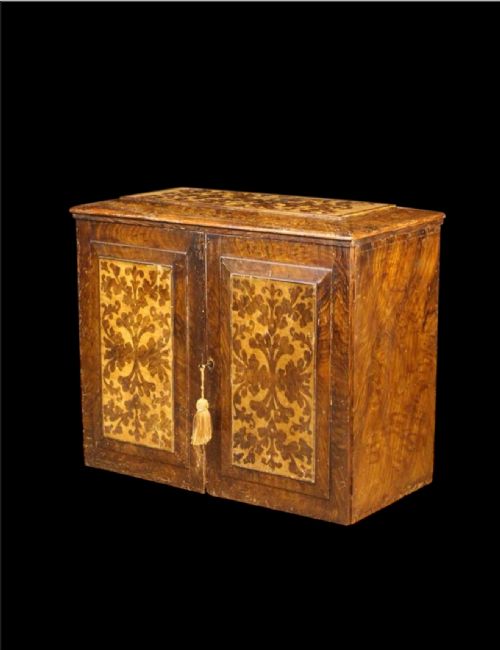


Dutch Inlaid Storage Chest
A dutch inlaid storage chest is a heavy wooden box or cabinet covered in floral marquetry, offering deep drawers and ornate panels for period rooms.
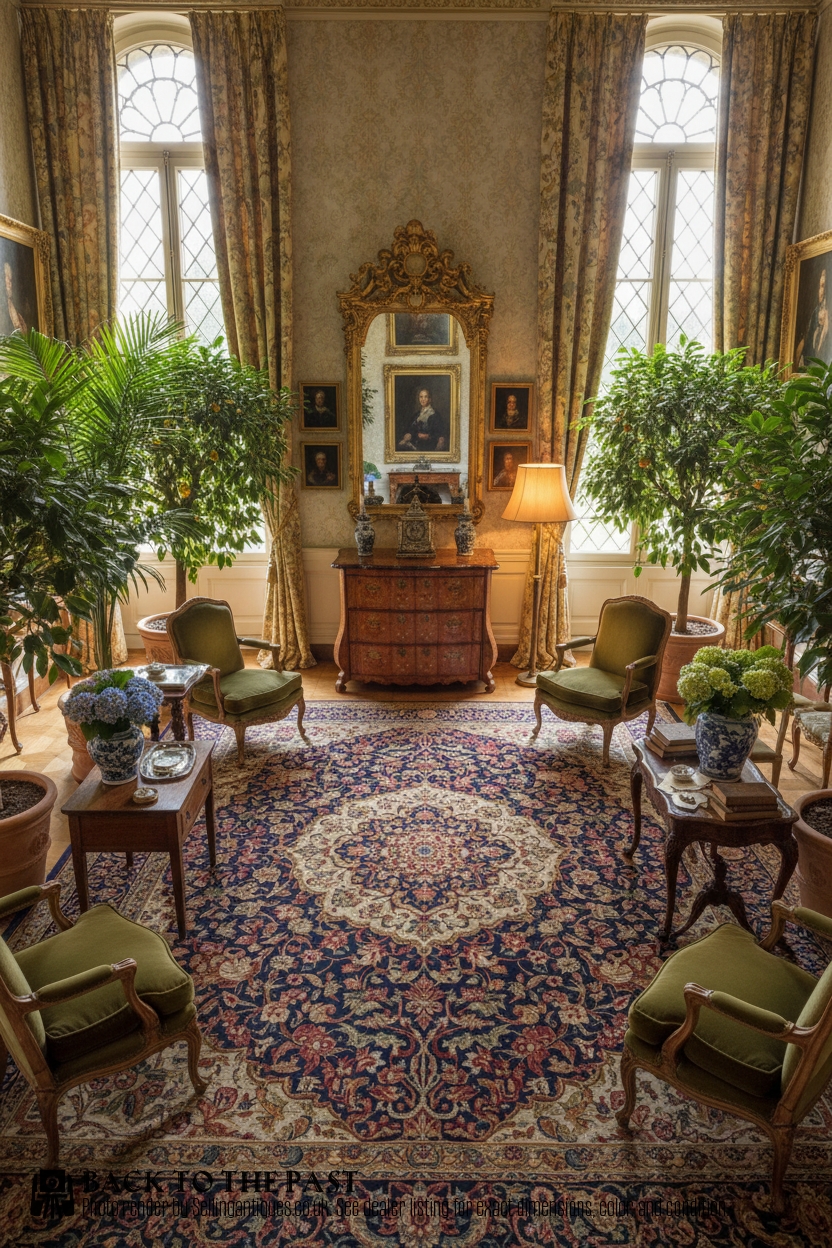
Dutch Inlaid Storage Chest
When searching for a dutch inlaid storage chest, collectors find a variety of forms including chests of drawers, linen presses, cabinets, and trunks dating from the seventeenth, eighteenth, and nineteenth centuries.
The pieces appearing on this page span several distinct eras such as the seventeenth century, eighteenth century, nineteenth century, and the Victorian period.
Makers and craftsmen utilised regional styles including Dutch Baroque, Dutch Rococo, William and Mary, and Dutch Colonial to shape these robust storage items.
How they were made
These items rely on solid timber foundations of oak, walnut, fruitwood, burr elm, teak, and ebony, constructed to house precious belongings.
Surface decoration is achieved through fruitwood inlay, floral marquetry, and wood inlay, creating intricate floral and pictorial patterns across the wood.
Selected examples incorporate brass mounts to strengthen corners and secure handles, blending utility with decorative metalwork.
Dutch Inlaid Storage Chest Retail Price Guide 2026
Typical asking prices for dutch inlaid storage chest among the pieces listed under this phrase on Sellingantiques today, from the lower quarter to the upper quarter. They describe what is for sale here now, not the wider market.
Listings on this site feature eighteenth-century walnut marquetry alongside nineteenth-century colonial teak and ebony trunks.
What varies in quality
The standard of a marquetry surface depends upon the precision of the fruitwood cuts and the complexity of the floral inlay across the panels.
Structural integrity relies on the choice of primary timbers, distinguishing simple oak carcasses from richly figured walnut and burr elm structures.
The Dutch Inlaid Storage Chest Glossary
- Marquetry
- Decorative veneer applied to wood furniture in geometrical or pictorial patterns. Floral marquetry uses contrasting woods to depict flowers and foliage.
- Bombe
- An outward bulging contour found on the front and sides of eighteenth-century case furniture. This curved profile requires high skill to veneer.
- Commode
- A low chest of drawers, often standing on short legs. The term frequently applies to decorative French and Dutch storage pieces.
- Linen Press
- A tall piece of furniture featuring upper doors enclosing sliding trays for textiles, positioned above a chest of drawers base.
Dutch Inlaid Storage Chest: Frequently Asked Questions
What is a dutch inlaid storage chest?
These items are wooden storage vessels featuring elaborate floral marquetry and fruitwood inlay.
They encompass forms like chests of drawers, commodes, and cabinets originating from seventeenth to nineteenth-century workshops.
How were they used historically?
Households utilised these chests and cabinets to store valuable textiles, linen, and personal possessions securely.
The deep drawers and enclosed presses protected delicate items from dust and light.
Where do these chests originate?
The pieces stem from Dutch traditions, reflecting Baroque, Rococo, and colonial influences.
Craftsmen across the Netherlands and its territories produced them using local and imported timbers.
How do I date a piece?
Dating relies on observing structural changes, timber choices, and stylistic shifts from William and Mary to Victorian eras.
Details like brass mounts and specific marquetry motifs help place an item in its correct century.