



Dutch Impressionist Art
Dutch impressionist art brings atmospheric light, bustling canalscapes and quiet domestic interiors into your rooms through oil and watercolour.
Dutch Impressionist Art
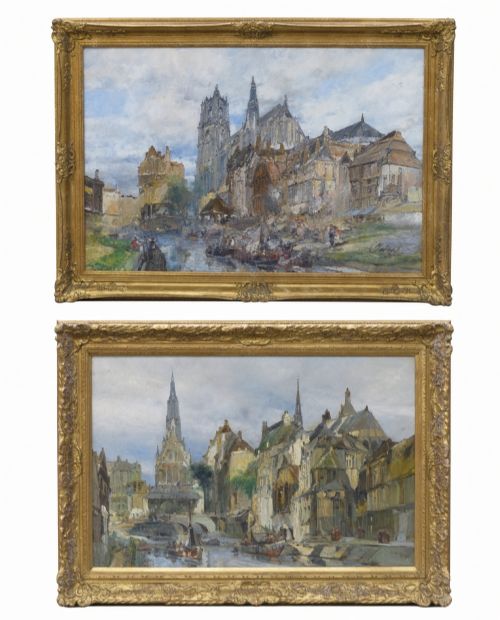
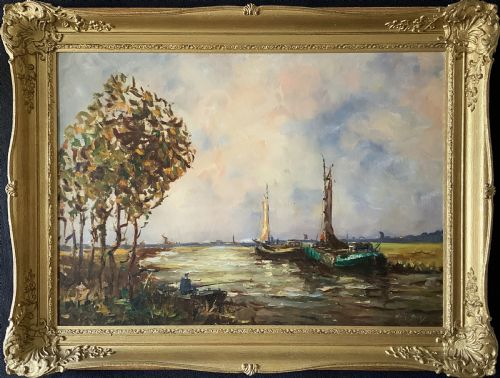
When you search for dutch impressionist art, you encounter oil paintings, watercolours and pastel drawings spanning the nineteenth century through the mid-twentieth century. The selection ranges from Hague School river landscapes and sheep grazing scenes to bustling city streets and still lifes.
You are most likely to meet canvases and panels depicting quiet canals, village scenes and coastal views created by notable artists working within Dutch impressionism and post-impressionism. These works capture the changing light and flat horizons characteristic of the Netherlands.
The pieces on this page also include related works from British, Flemish and American artists who shared the impressionist preoccupation with light and outdoor observation. Works span varied formats from intimate portrait studies to large oil paintings.
How dutch impressionist art was made
Painters applied oil paint directly to canvas, wood panels or paper using confident, visible brushstrokes that record the immediacy of the scene. Artists often built texture with gesso beneath the paint layer to catch the light.
Dutch Impressionist Art Retail Price Guide 2026
Typical asking prices for dutch impressionist art among the pieces listed under this phrase on Sellingantiques today, from the lower quarter to the upper quarter. They describe what is for sale here now, not the wider market.
Object types include oil paintings, watercolour paintings, pastel drawings and wall art.
What varies in quality in dutch impressionist art
The distinction between standard works and exceptional pieces lies in the handling of light and atmospheric depth. Superior works demonstrate a confident economy of brushwork that creates convincing spatial separation and emotional resonance.
Condition and originality of the surface also separate examples. Works retaining their original gilt wood frames and stable, unlined canvases with well-preserved pigment display higher integrity.
Job de Vogel·Willem Bos·Bernard De Hoog·Willem Anton Alexander Knip·Florence Hess·Owen Bowen·Jozef Israëls·John D. Walker·Fred Mayor·Frank Myers Boggs·Anthonij Anton Mauve·Julien Stappers·David Adolph Constant Artz·Kershaw Schofield·Christiaan Pieter Snyders
The Dutch Impressionist Art Glossary
- Hague School
- An influential group of Dutch artists working in the Hague during the late nineteenth century who turned toward realism and impressionism. They are known for sombre tones and atmospheric grey skies.
- Oil on Canvas
- Pigment mixed with drying oil applied to a stretched woven fabric support. This medium allows for rich blending and textured impasto work.
- Pastel on Paper
- Finely ground pigment mixed with gum binder and formed into sticks, applied directly to a paper surface. It offers vibrant, velvety colour transitions.
- Gesso
- A traditional paint mixture consisting of a binder mixed with chalk, gypsum or pigment. It prepares rigid panels and canvases for oil painting.
- Watercolour
- A painting method in which the paints are made of pigments suspended in a water-based solution. Artists use transparent washes to build luminosity on paper.
Dutch Impressionist Art: Frequently Asked Questions
What is dutch impressionist art?
Dutch impressionist art comprises paintings and works on paper created by artists influenced by the impressionist movement in the Netherlands and surrounding regions. These works typically depict landscapes, canals, village scenes and portraits.
Created primarily during the nineteenth and early twentieth centuries, these pieces emphasise natural light, outdoor settings and expressive brushwork over rigid academic detail.
How do I hang and display these paintings?
Display oil paintings and watercolours away from direct sunlight and excessive humidity to protect the canvas, paper and pigments. Adequate wall spacing allows the brushwork and framing to breathe.
Ensure heavy canvases and framed watercolours are secured to wall studs using appropriate hardware suited to the weight of the gilt wood frame.
How do I identify the period of a painting?
Examine the materials, support and stylistic characteristics visible in the work and its framing. Canvas types, wood panels and paper stock often reflect manufacturing techniques of specific decades.
Signatures, dates, artist biographies and exhibition labels on the reverse provide definitive chronological markers for dating the piece accurately.
What subjects are most common?
Canals, river banks and polder landscapes dominate the rural and urban subjects found within this grouping. Artists frequently returned to waterways and flat Dutch horizons.
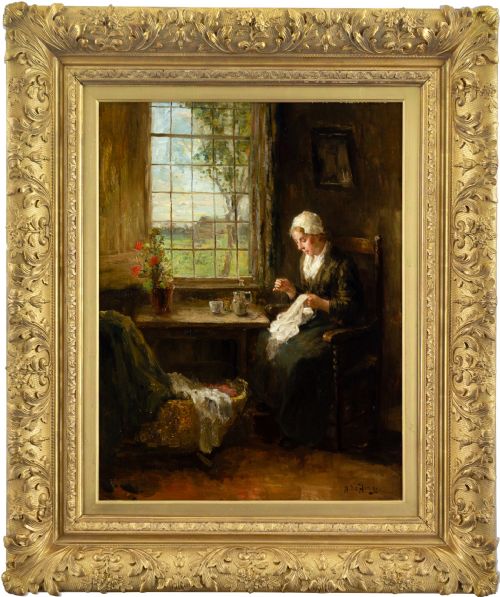
Domestic interiors, portraits of young girls sewing, sheep with shepherds and quiet street scenes also appear frequently across the available works.