




Dutch Floral Table
A dutch floral table brings heavy floral marquetry into everyday rooms through centuries of walnut and mahogany craft.
Dutch Floral Table
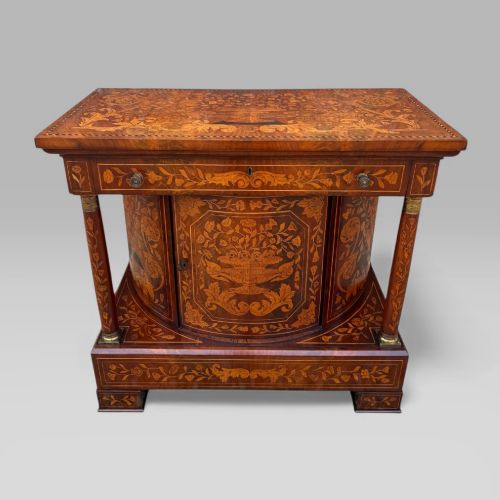
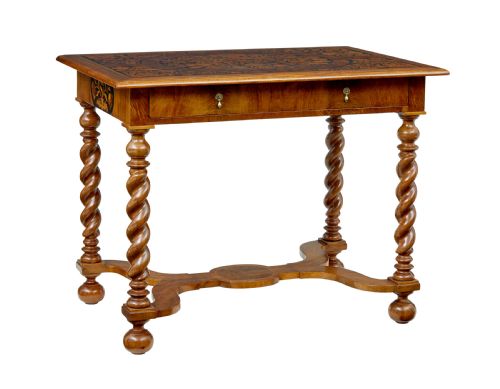
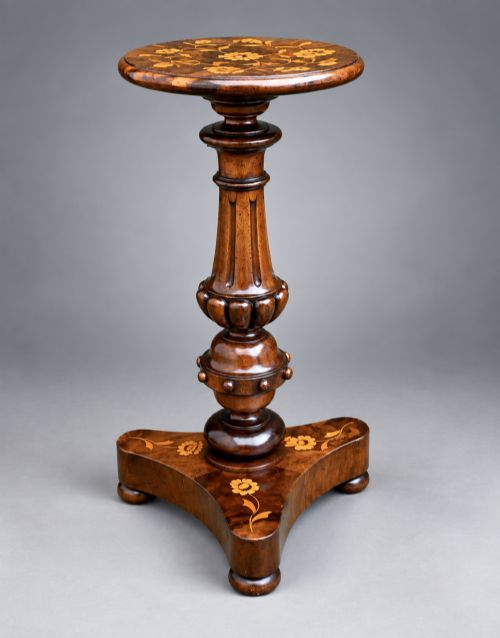
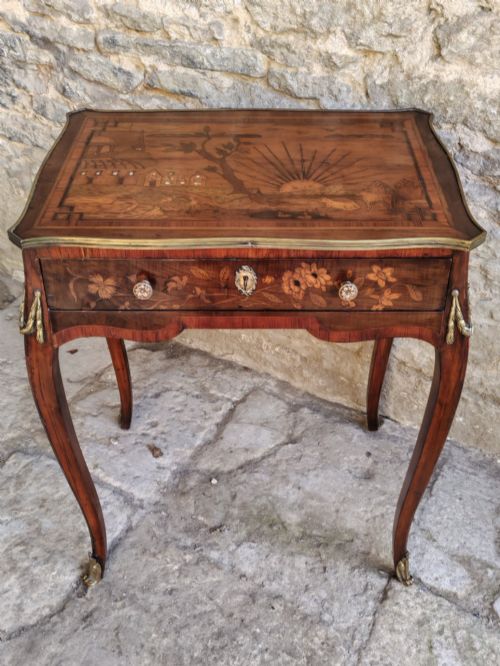
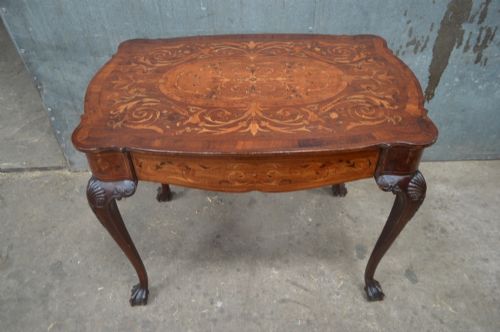
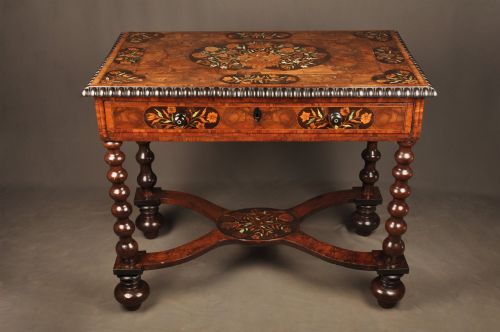
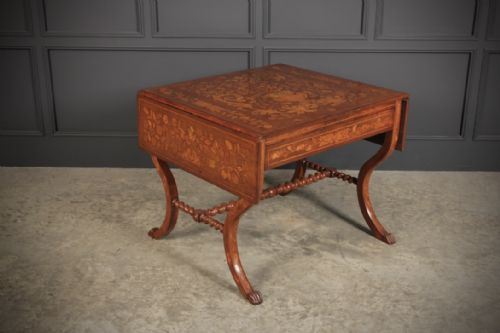
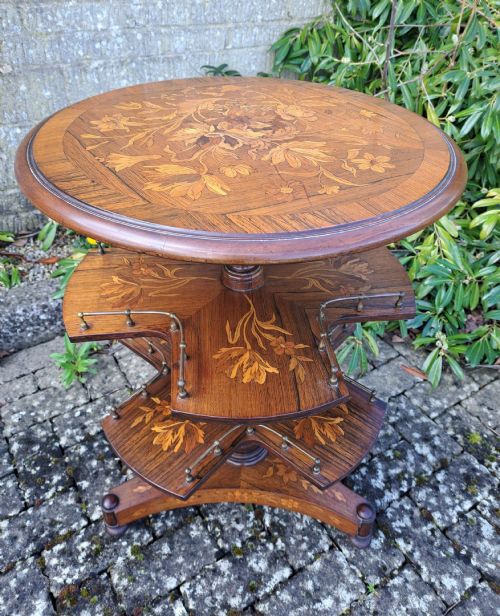
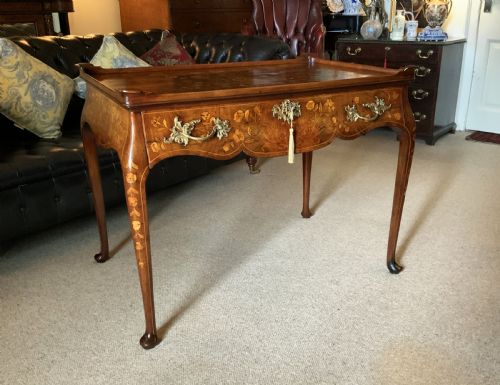
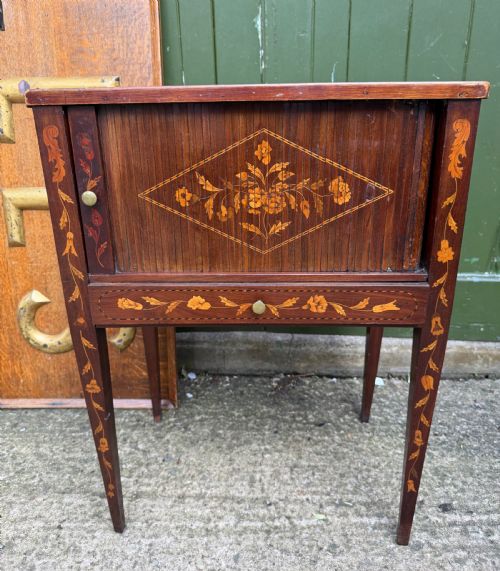
A dutch floral table encompasses various forms designed for domestic interiors, spanning centuries of continental cabinet making. When exploring this selection, side tables, card tables, and dressing table mirrors form the core of what appears.
The pieces emerge primarily from the eighteenth and nineteenth centuries, carrying styles from Dutch baroque and rococo to neoclassical revivals. Walnut and mahogany provide the structural foundation for these ornate surfaces.
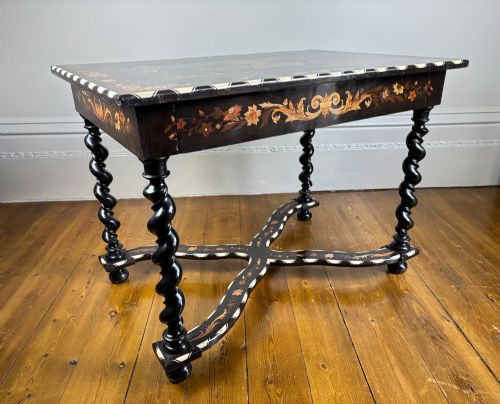
Makers utilised intricate floral marquetry to cover tops and drawers with elaborate botanical displays. Side tables and games tables dominate the current selection, offering functional surfaces covered in detailed wood inlay.
How they were made
Cabinet makers constructed the carcasses using solid timbers like walnut and mahogany, applying fruitwood veneers over the primary structure. Boxwood and bone inlay frequently accent the darker ground woods to create contrast within the floral motifs.
Marquetry cutters hand-sawn delicate petals and stems from various fruitwoods, fitting them together before gluing the complete picture to the table top. Brass hardware and occasional glass elements complete the structural assembly of these decorative items.
Dutch Floral Table Retail Price Guide 2026
Typical asking prices for dutch floral table among the pieces listed under this phrase on Sellingantiques today, from the lower quarter to the upper quarter. They describe what is for sale here now, not the wider market.
Several tables feature hidden compartments beneath their folding tops, originally intended for stabling secret love letters or stray playing cards.
What varies in quality
The precision and depth of the marquetry dictate the visual standard of each piece. Finer examples display subtle shading in the fruitwood petals, achieved by scorching the wood edges in hot sand before placement.
Structural integrity and the retention of original timber affect the desirability of older items. Superior execution shows seamless integration between the inlay work and the underlying walnut or mahogany frame.
The Dutch Floral Table Glossary
- Marquetry
- Decorative veneer applied to a wood structure in patterns and pictures. This technique uses different coloured woods to create pictorial table tops.
- Fruitwood
- Timber sourced from fruit-bearing trees such as pear or apple. Artisans favoured these woods for their fine grain and uniform texture in inlay work.
- Console Table
- A table fixed against a wall, often supported by decorative brackets or legs. These items served ornamental functions in formal reception rooms.
- Serpentine
- A furniture front or table edge that curves inward centrally and outward at the ends. This undulating contour requires skilled woodworking.
- Boxwood
- A dense, pale yellow wood used for fine stringing and inlay details. It provides sharp linear contrast against dark walnut grounds.
Dutch Floral Table: Frequently Asked Questions
What is a dutch floral table used for?
These tables served various practical and decorative roles in historic homes, acting as card tables, side surfaces, or writing desks. Their ornate tops allowed them to function as display pieces while remaining useful for daily household activities.
Today, they suit reception rooms or hallways where their botanical inlay can be appreciated fully. Many owners place them where natural light highlights the subtle shading of the fruitwood marquetry.
How do I identify the period?
Dating relies on examining the timber, structural joinery, and stylistic markers such as cabriole legs or straight neoclassical supports. Eighteenth-century examples often feature rich walnut frames with dense floral marquetry and rococo flourishes.
Nineteenth-century pieces frequently utilise mahogany carcasses and display a broader interpretation of earlier baroque styles. Comparing the secondary woods underneath helps confirm the age of the item.
Are these tables sturdy enough for daily use?
Most examples are robustly built from walnut or mahogany, though their veneered surfaces require careful treatment. Card tables and games tables feature folding tops that need gentle handling when opened for display.
Placing them away from direct heat sources prevents the fruitwood veneers from lifting over time. Regular gentle dusting preserves the delicate marquetry without harming the historical finish.
What distinguishes floral marquetry from inlay?
Marquetry involves assembling an entire picture from thin veneer sheets before gluing it to the carcase surface. Inlay involves cutting recesses directly into solid wood to insert contrasting material.
Both techniques appear on these tables, often working together to outline botanical scenes with boxwood stringing. The floral elements themselves are almost exclusively marquetry constructions.