





Dutch Fall Front Bureau
A dutch fall front bureau brings centuries of fine cabinet-making and intricate marquetry directly into a modern study.
Dutch Fall Front Bureau
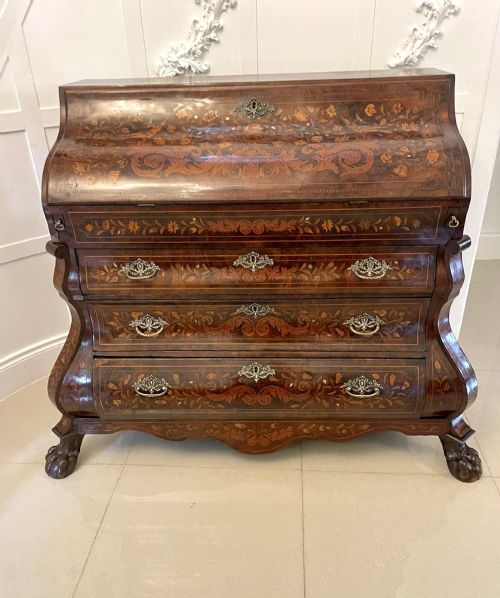
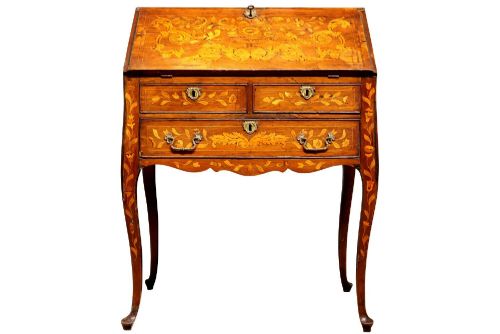
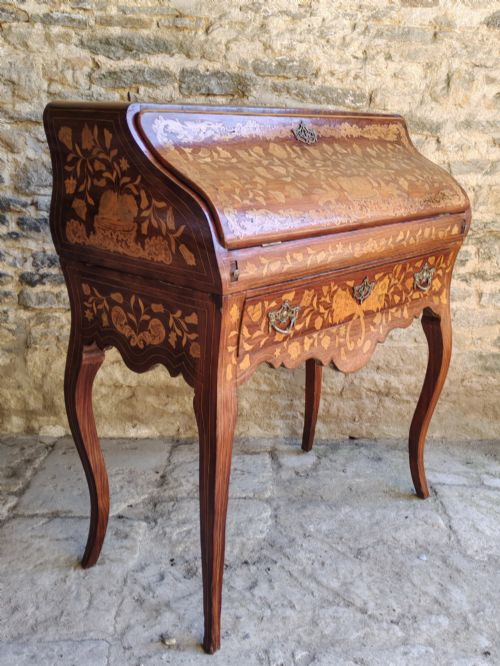
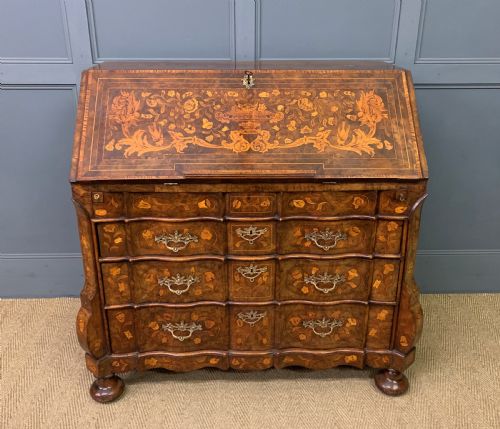
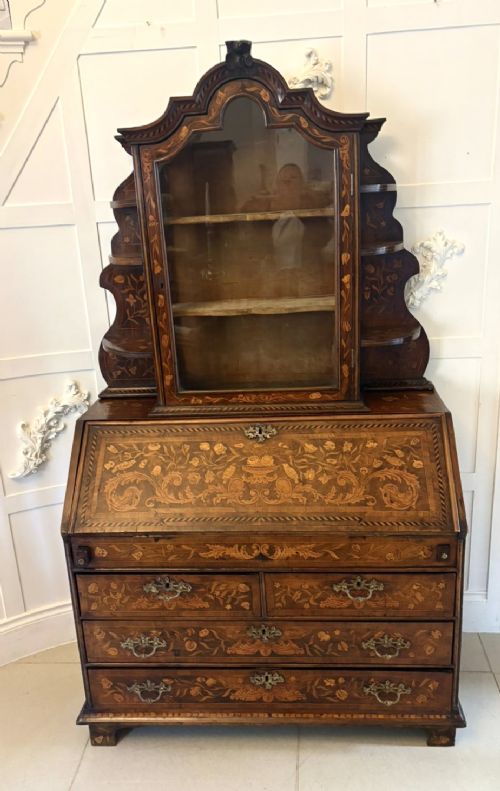
A dutch fall front bureau is a writing cabinet designed with a hinged writing flap that drops down to reveal an interior fitted with pigeonholes and small drawers. When you search for this phrase, you encounter pieces originating from the eighteenth and nineteenth centuries, alongside occasional later interpretations.
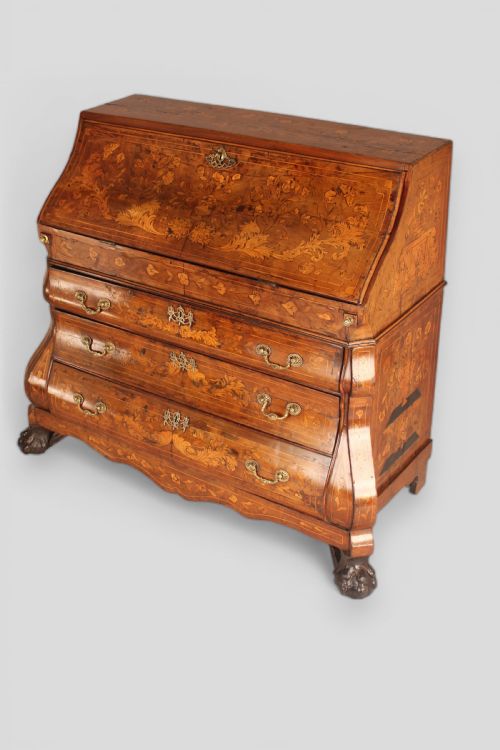
The versions most commonly met on this page showcase elaborate floral marquetry, burr walnut timber, and distinctive bombe shaping. These writing desks span styles from dutch baroque to rococo revival, often incorporating upper bookcase sections or display cabinets.
Makers utilised rich fruitwood inlays and brass hardware to elevate these functional writing desks into centrepieces of domestic interior design. The proportions range from compact writing cabinets to magnificent tall bureau bookcases designed for grand rooms.
What Varies in Quality
The complexity and execution of the floral marquetry set the finer examples apart from simpler iterations. Top-tier pieces display intricate, multi-tonal fruitwood inlay across every visible surface, whilst lesser examples feature restrained or sparse decoration.
The structural ambition of the carcass creates a distinct division in quality, particularly the execution of the bombe or block front silhouette. A skillfully shaped bombe front requires precise carpentry to maintain structural integrity and harmonious curves.
The richness of the chosen burr walnut veneer and the depth of the interior drawer configuration determine the standing of an individual writing cabinet. Superior specimens retain their original brassware and fitted internal compartments with minimal later restoration.
Many bureau interiors contain hidden sliding compartments designed for keeping private correspondence safe from prying eyes.
Morison of Edinburgh
The Dutch Fall Front Bureau Glossary
- Bombe
- An outward-swelling, convex profile found on the lower section of certain drawer units. This curving shape demands considerable joinery skill.
- Marquetry
- Decorative patterns formed by fitting together thin slices of various coloured woods and other materials onto a structural carcass. Floral designs are especially prominent in continental European examples.
- Fall front
- A hinged writing flap that drops down into a horizontal position to serve as a desktop. It conceals internal stationery compartments when closed.
- Burr walnut
- Timber taken from a tree growth or burl, yielding swirling, highly figured grain patterns. Cabinet-makers used veneers of this wood for decorative impact.
- Escritoire
- A writing cabinet or desk equipped with drawers and a writing surface. The term often describes tall, formal pieces with fall-front panels.
- Bureau bookcase
- A composite furniture form featuring a writing desk base combined with an upper shelving or display cabinet. These tall pieces served both storage and writing functions.
Dutch Fall Front Bureau: Frequently Asked Questions
What is a fall front bureau?
A fall front bureau is a writing desk featuring a hinged panel that folds down to create a flat writing surface. This panel conceals an interior arrangement of small drawers, pigeonholes, and secret compartments.
When closed, the drop front presents a tidy, decorative exterior that protects your writing materials from dust and view.
How do I date an antique bureau?
Dating relies on examining the construction methods, timber choices, and decorative styles visible across the piece. Eighteenth-century examples often display rich burr walnut and hand-cut floral marquetry, whilst nineteenth-century revivals adopt heavier proportions.
Secondary woods inside the drawers and the style of the brass hardware provide further clues to the decade of manufacture.
Where should I place a bureau?
These pieces suit studies, living rooms, and large hallways where their decorative fall front can be fully appreciated. Ensure the room has stable humidity and avoid placing the cabinet directly next to heat sources that might dry the walnut veneer.
Allow enough clearance in front of the piece for the fall front to drop down comfortably without blocking pathways.
How do I maintain marquetry surfaces?
Maintain marquetry by dusting regularly with a soft, dry cloth and applying high-quality beeswax periodically to nourish the wood. Avoid modern aerosol polishes that contain silicones or harsh chemicals.
Keep the timber away from direct sunlight to preserve the contrasting colours of the fruitwood inlay over the years.