




Dutch Delftware Pair
A dutch delftware pair brings matching hand-painted tin-glazed earthenware to a mantelpiece or wall, offering centuries of historic character.
Dutch Delftware Pair
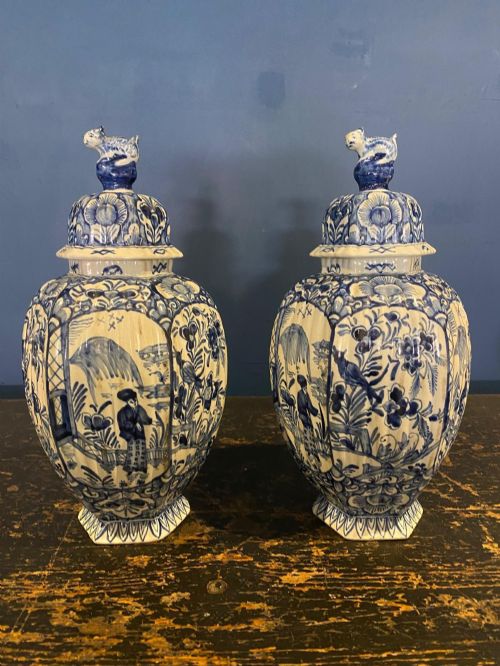
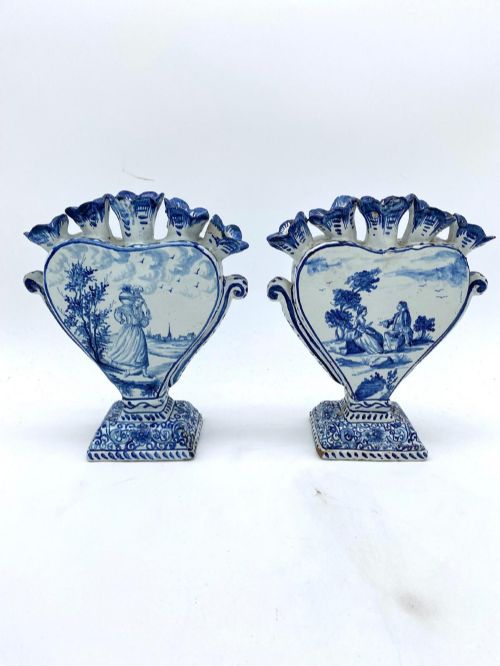
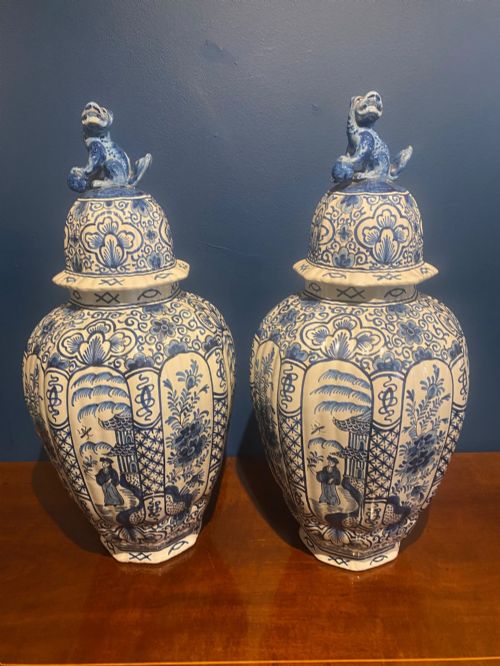
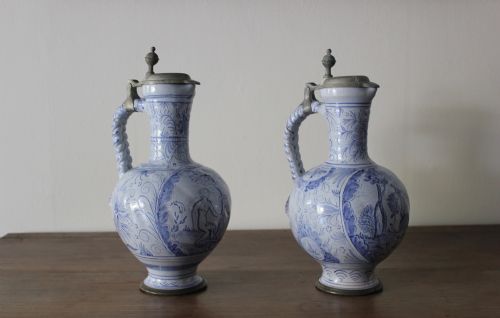
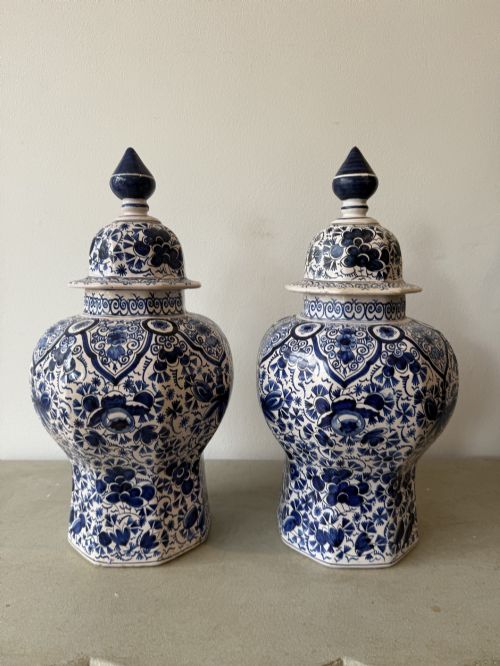
A dutch delftware pair comprises matching vessels, plates, jars, or figures produced in the Netherlands across the eighteenth and nineteenth centuries. These dual groupings frequently appear as decorative plates, lidded vases, jugs, wall pockets, and figurative subjects.
The objects span eighteenth century examples through to nineteenth century interpretations, along with twentieth century items dated around nineteen hundred and nineteen forty. Blue and white decoration dominates the selection, accompanied by polychrome palettes on select plates and chargers.
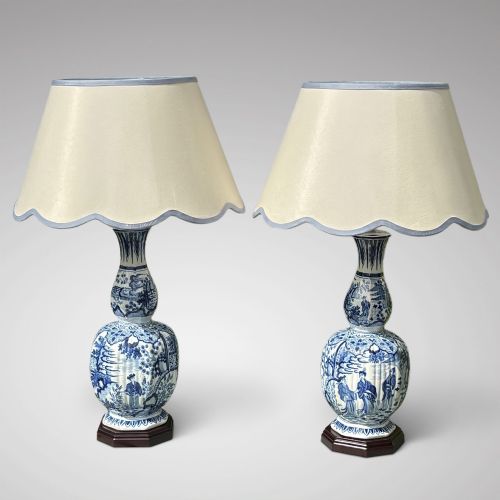
Buyers encounter matching vessels alongside matched pairs assembled later from individual survivors. The forms range from small plates and jars to large beaker vases and table lamps adapted from earlier bodies.
Materials and construction
Potters shaped these objects from earthenware, applying an opaque white tin glaze that provided a smooth surface for painting. Cobalt pigment delivered the classic blue decoration, while various mineral oxides produced polychrome colours.
Painters executed freehand designs directly onto the absorbent unfired glaze before the final kiln firing fixed the colours. Certain items incorporate subsidiary materials such as brass fittings or gilt bases added during later conversion into lamps.
Dutch Delftware Pair Retail Price Guide 2026
Typical asking prices for dutch delftware pair among the pieces listed under this phrase on Sellingantiques today, from the lower quarter to the upper quarter. They describe what is for sale here now, not the wider market.
Listings feature earthenware and tin-glazed earthenware decorated with cobalt pigment, spanning the eighteenth century, nineteenth century, and twentieth century.
Judging quality and execution
The precision and fluidity of the hand-painted brushwork separate ordinary production from superior examples. Crisp cobalt lines and well-composed chinoiserie or floral motifs indicate skilled workshop output.
The integrity of the tin glaze and the uniformity of the fired body influence the overall presence of the pair. Matching symmetry between the two pieces determines whether items function successfully as a unified set.
3 BELLS Drie klokken Factory·APK
The Dutch Delftware Pair Glossary
- Tin glaze
- An opaque white ceramic glaze containing tin oxide, used to coat earthenware bodies before painting. This surface imitates Chinese porcelain.
- Polychrome
- Decoration employing multiple colours rather than a single pigment. Tin-glazed earthenware utilised this technique for floral and figurative designs.
- Chinoiserie
- European decorative motifs imitating Chinese art and aesthetics. These designs frequently appear on eighteenth century vessels and plates.
- Charger
- A large decorative plate intended for display on a wall or dresser rather than dining use. Surviving examples often feature polychrome palettes.
- Earthenware
- Porous pottery fired at lower temperatures than stoneware or porcelain. It forms the structural base for all tin-glazed ceramic pieces.
Dutch Delftware Pair: Frequently Asked Questions
How do I spot a matched pair?
A matched pair consists of two individual pieces created around the same time that share similar dimensions, palette, and decorative motifs rather than originating from a single coordinated throw.
Close inspection of the brushwork and glaze tone reveals whether the two items were painted by the same hand or simply paired together by dealers later.
Are these pieces safe for daily use?
Tin-glazed earthenware is fragile and susceptible to chipping, making these historical objects suitable for display rather than functional dining.
Plates often hang on walls using appropriate wire fixtures, while jars and vases rest safely on stable surfaces away from heavy traffic.
What causes crazing on the glaze?
Crazing appears as a fine network of cracks across the white tin glaze, caused by the natural ageing and contraction of the ceramic body over centuries.
This network is a standard characteristic of antique earthenware and does not diminish the historic integrity of the piece.
How do blue and white differ from polychrome?
Blue and white pieces rely solely on cobalt pigment beneath the glaze, creating crisp monochrome imagery often inspired by imported porcelain.
Polychrome items introduce additional mineral colours, resulting in vibrant multi-hued floral patterns and figurative scenes.