




Blue White Pottery Ornaments
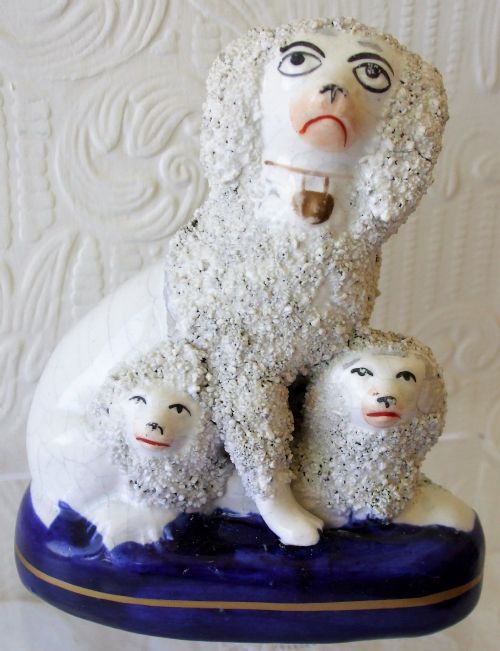
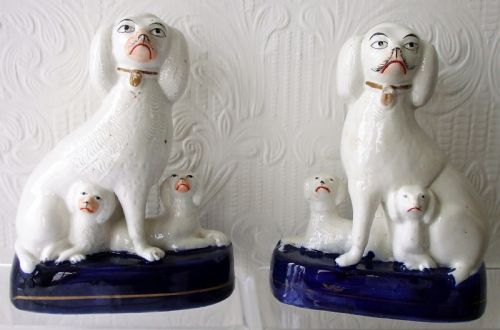
These blue white pottery ornaments bring nineteenth-century Victorian figures, animals and miniature furniture into the room with enduring charm.
Blue White Pottery Ornaments
When you search for blue white pottery ornaments, you encounter nineteenth-century figural ceramics including Staffordshire dogs, portrait groups and Dutch Delftware pieces. The selection on this page centres on Victorian Staffordshire figures, flatbacks, inkwells and miniature furniture items.
The objects span the nineteenth century, featuring domestic animals like poodles, spaniels and dalmatians alongside royal portrait groups and historical figures. Buyers seek these decorative objects for their distinctive colour palette and period character.
How they were made
Potters shaped these earthenware and ceramic bodies by hand or in moulds before applying lead glazes and tin-glazed finishes. Many examples incorporate hand-painted details and enamel highlights over the white ground.
Some pieces feature gilt accents or delicate encrusting applied to the ceramic surface prior to final firing. The combination of earthenware, glaze and enamel defines the construction of these nineteenth-century ornaments.
Blue White Pottery Ornaments Retail Price Guide 2026
Typical asking prices for blue white pottery ornaments among the pieces listed under this phrase on Sellingantiques today, from the lower quarter to the upper quarter. They describe what is for sale here now, not the wider market.
Listings feature nineteenth-century earthenware, tin-glazed earthenware and glazed ceramic objects spanning the Victorian period.
What varies in quality
Quality depends upon the clarity of the modelling and the precision of the hand-painted brushwork across the ceramic surface. Superior pieces exhibit crisp facial expressions and careful application of enamel and glaze.
The depth of the blue pigment and the crispness of the earthenware moulding distinguish finer figures from simpler production wares. Preservation of the original glaze and minimal wear on gilt highlights also elevate a piece.
The Blue White Pottery Ornaments Glossary
- Flatback
- A ceramic figure designed with an unpainted or partially finished flat rear side meant to stand against a wall.
- Tin-glazed earthenware
- Pottery coated with a white tin-oxide glaze that provides an opaque surface for blue painting.
- Enamel
- A glass-like substance fused to the fired ceramic body to add decorative colour details.
- Lead glaze
- A glossy transparent coating applied to earthenware to seal the porous clay body.
- Inkwell
- A small desk accessory with a fitted reservoir for holding writing ink.
Blue White Pottery Ornaments: Frequently Asked Questions
What are Staffordshire flatback figures?
Staffordshire flatbacks are ceramic ornaments produced during the nineteenth century with finished fronts and plain backs. They were designed to sit on mantelpieces where only the front view was visible.
Potters created these figures to depict royalty, military heroes, literary characters and everyday animals. Their varied subjects make them popular decorative pieces for period interiors today.
How do I date these nineteenth-century ceramics?
Dating relies on stylistic clues, subject matter and manufacturing methods recorded across Victorian production. Pieces often depict specific historical events, contemporary monarchs or military leaders from the eighteen-sixties and eighteen-seventies.
Examining the earthenware body, glaze texture and hand-painted enamel details helps distinguish earlier Victorian examples from later nineteenth-century pieces. Reference guides and comparable figures assist in narrowing down the decade.
Where should I display pottery ornaments?
These decorative objects suit mantelpieces, console tables and enclosed shelving units where their blue and white colours stand out. Placing them away from direct sunlight protects the enamel and glaze from fading.
Because many pieces are hollow earthenware or feature delicate elements like encrusting, stable surfaces prevent accidental knocks. Grouping pairs or matching sets together enhances their visual impact in a room.