
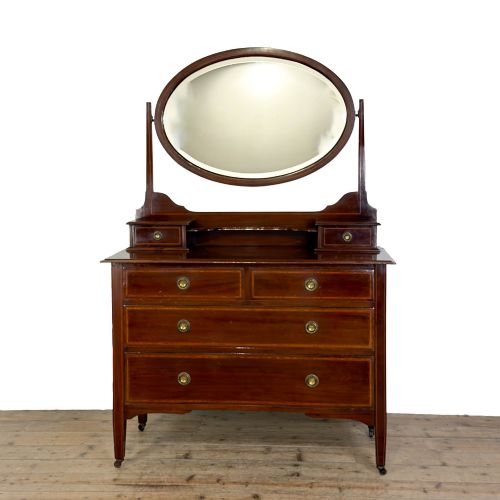


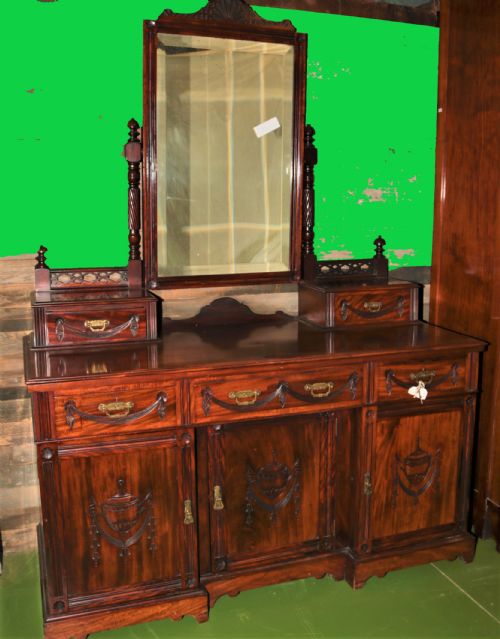
Duchess Vanity with Drawers
These duchess vanity with drawers pieces are practical dressing furniture offering surface space and storage, bringing period character to a bedroom.
Duchess Vanity with Drawers
A duchess vanity with drawers provides a dedicated station for grooming and personal care, combining a surface for everyday items with integrated storage below. These pieces span the Victorian and Edwardian eras, utilising forms such as dressing tables, dressing chests, and pedestal dressing tables.
The versions most commonly met on this page range from rustic painted examples to finer mahogany and satinwood designs. They frequently incorporate mirrors and multiple drawer configurations to balance utility with the distinct stylistic tastes of the nineteenth and early twentieth centuries.
How they were made
Makers constructed these dressing pieces using solid timbers like mahogany, pine, oak, and satin birch, often applying paint, scundle glazing, or stencilling for decorative surface effects. Burr walnut veneer also appears on select examples, highlighting the grain across larger drawer fronts and tabletops.
Structural hardware typically includes brass fixtures, while glass and mirror glass form the adjustable or fixed looking glasses attached to the upper sections. Carved wooden details and panelled drawer construction complete the build, joining traditional cabinetmaking methods with period aesthetic preferences.
Victorian stencilled pine chests prove that yesterday's budget-friendly faux finishes are today's charming folk art.
What varies in quality
The distinction between standard and superior pieces rests on the choice of timber and the refinement of the cabinetwork. Dense hardwoods such as mahogany and figured veneers like burr walnut elevate a piece above everyday painted pine utilities.
Execution of decorative elements further separates the range, from simple stencilled surfaces to intricate carved woodwork and brass mounts. The proportion of the mirror frame relative to the base and the integrity of the drawer construction define the overall calibre.
The Duchess Vanity with Drawers Glossary
- Dressing table
- A low table fitted with drawers and a mirror, designed for grooming. These items form the central hub of a period bedroom.
- Satin birch
- A pale, lustrous timber with a fine grain used for cabinet fronts and surfaces. It offers a bright alternative to darker mahoganies.
- Scumble glaze
- A translucent paint layer manipulated over a base coat to imitate wood grain or texture. It appears frequently on rustic pine pieces.
- Pedestal dressing table
- A vanity design featuring banks of drawers flanking a central kneehole space. This layout provides substantial storage beneath the main surface.
Duchess Vanity with Drawers: Frequently Asked Questions
What is a duchess vanity with drawers?
A duchess vanity with drawers is a period dressing table that combines a surface and mirror with integrated storage compartments. These furnishings were standard bedroom fixtures for personal grooming during the nineteenth and early twentieth centuries.
They provide both tabletop space and functional drawers to keep personal items organised. The designs range from simple painted pine versions to polished mahogany and satinwood models.
How do I date these pieces?
Dating relies on observing the timber choices, construction methods, and stylistic details recorded in the periods. Victorian examples often feature heavier carved mahogany or painted pine, while Edwardian pieces lean towards lighter woods and refined proportions.
Hardware styles and mirror attachments also provide chronological clues. Examining the drawer dovetails and secondary woods helps confirm the era of manufacture.
Are mirrors original to the tables?
Many surviving dressing pieces retain their original tilting or fixed mirror frames, secured by pivoting brass screws or upright supports. The glass itself sometimes shows period characteristics such as slight foxing or bevelling.
Because mirrors are vulnerable to damage, replacements do occur on older furniture. Checking the mounting points and wood patina around the fixings helps determine if the mirror assembly has remained intact.
How do I maintain the wood surface?
Maintaining these surfaces requires simple dusting with a soft, dry cloth and avoiding modern silicone sprays. Waxing polished hardwoods periodically helps nourish the grain and protects against dryness.
Painted or stencilled surfaces need extra care to prevent moisture damage and wear. Keeping the furniture away from direct heat sources preserves both the timber and the applied finishes.