



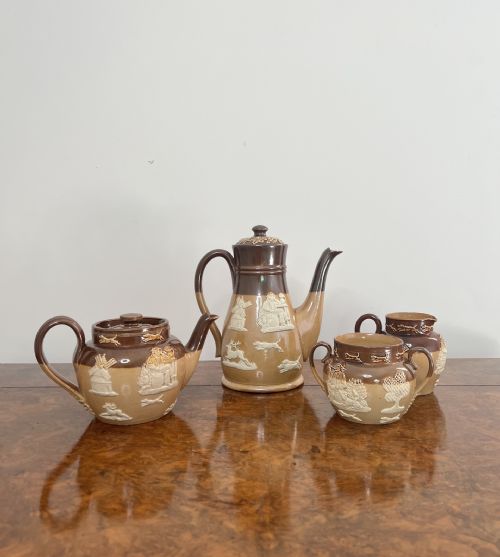
Doulton Stoneware Pitcher
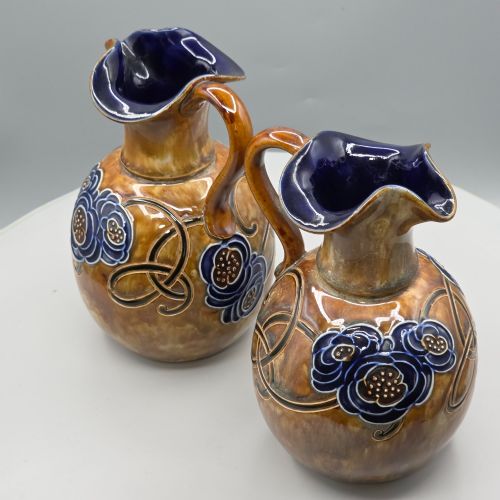
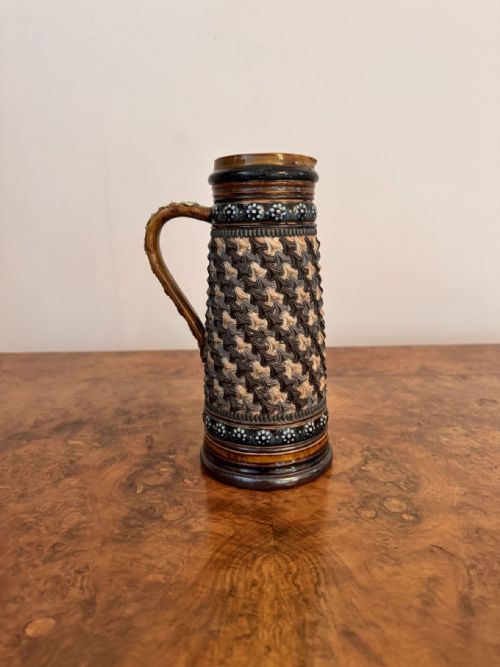
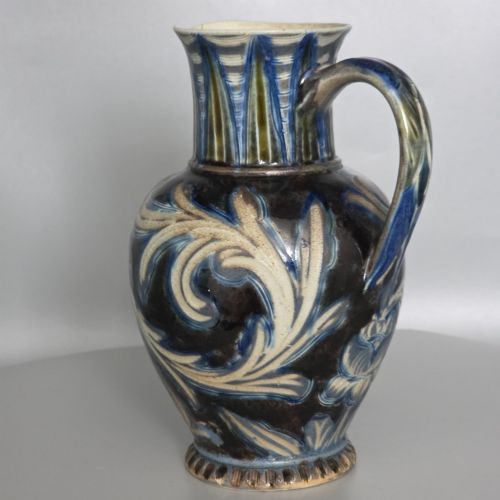
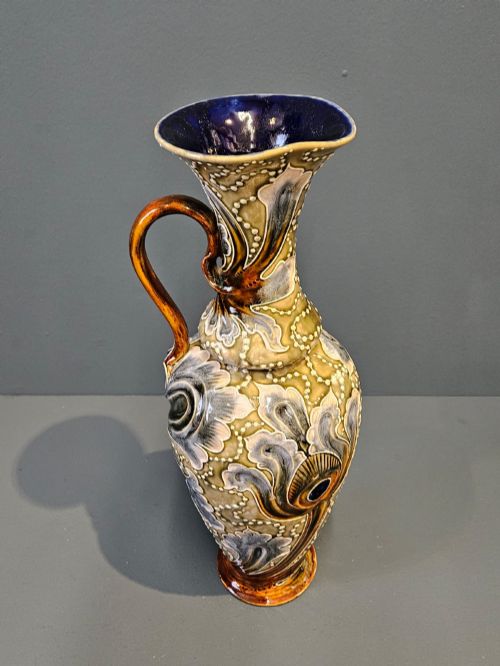
A doulton stoneware pitcher brings tactile Victorian craftsmanship to your table, combining robust salt glaze bodies with intricate incised decoration.
Doulton Stoneware Pitcher
When you search for a doulton stoneware pitcher, you are looking at substantial vessels produced primarily during the late nineteenth and early twentieth centuries. These utilitarian and decorative jugs emerge predominantly from the Victorian period, spanning the eighteen seventies through to nineteen ten.
The pieces listed here showcase a variety of forms ranging from harvest jugs and ewers to complete water jug sets and tea service components. Makers harnessed durable clay bodies to create pieces intended for both daily service and exhibition display.
Stylistically, these items cross several distinct design movements including Victorian Arts and Crafts, Art Nouveau, and the Aesthetic Movement. Collectors frequently encounter pieces bearing the Doulton Lambeth mark alongside specialised artist signatures.
How they were made
Potters utilised dense stoneware and earthenware clays, applying salt glaze techniques to achieve characteristic textured surfaces during high-temperature firing. Enamel colours and incised patterns were then worked directly into the damp clay before glazing.
Many examples incorporate applied sprigged reliefs and silver rims that contrast sharply against the salt-glazed body. The combination of utilitarian ceramic strength and delicate hand-carved ornamentation defines the production methods of the period.
Doulton Stoneware Pitcher Retail Price Guide 2026
Typical asking prices for doulton stoneware pitcher among the pieces listed under this phrase on Sellingantiques today, from the lower quarter to the upper quarter. They describe what is for sale here now, not the wider market.
Puzzle jugs challenge drinkers to solve an invisible fluid mechanics riddle just to take a sip.
What varies in quality
Quality rests upon the crispness of the incised or sprigged ornamentation and the depth of the salt glaze finish across the stoneware body. Pieces executed by named artists or produced for exhibition display command greater artistic recognition.
The presence of hallmarked silver rims and the structural integrity of matching components, such as ewers paired with bowls, elevate a piece above standard domestic ware.
Doulton Lambeth·Royal Doulton·Emma Shute
The Doulton Stoneware Pitcher Glossary
- Salt Glaze
- A vitreous coating formed by throwing common salt into the kiln during high-temperature firing, producing a pitted texture resembling orange peel.
- Sprigged
- A technique where moulded clay motifs are applied to the surface of a vessel before firing.
- Incised
- Decoration cut directly into the damp clay body prior to glazing and firing.
- Ewer
- A large ornamental jug with a flared spout and handle, traditionally used for water.
- Puzzle Jug
- A vessel with a perforated neck that requires the drinker to cover hidden holes in order to imbibe without spilling.
Doulton Stoneware Pitcher: Frequently Asked Questions
How do I clean a salt glaze jug?
Wash the stoneware gently in warm soapy water using a soft cloth to protect the historic glaze and any applied decoration.
Avoid harsh scourers or abrasive cleaning agents that can dull the salt-glazed finish or damage older silver rims.
Can I use these pitchers for serving drinks?
Many of these jugs remain robust enough for functional table use, particularly the larger water and harvest jugs.
Collectors often restrict antique stoneware to display purposes to preserve the historical surface and any delicate applied ornament.
What is a harvest jug?
A harvest jug is a traditional stoneware vessel typically decorated with applied hunting or agricultural motifs.
These pieces were frequently fitted with silver rims and utilised during communal gatherings and seasonal celebrations.
How do I identify a Victorian piece?
Look for specific impressed factory marks, particularly Doulton Lambeth stamps alongside nineteenth-century date indicators.
Stylistic cues such as Aesthetic Movement patterns and Arts and Crafts incising also point towards the Victorian era of production.