

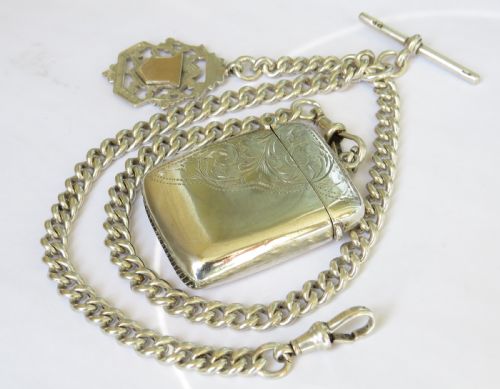

Double Silver Chain
A double silver chain brings substance to the neckline or pocket, offering the weight and craftsmanship of earlier centuries.
Double Silver Chain
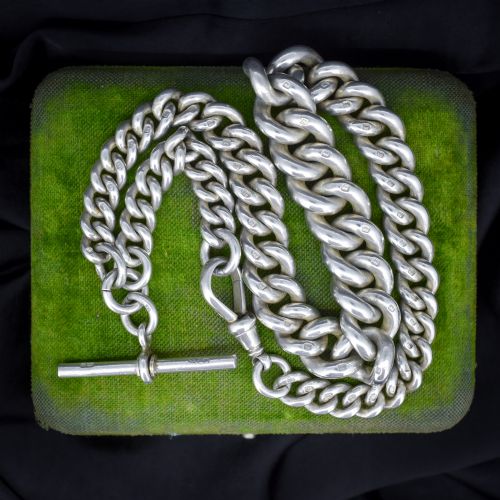
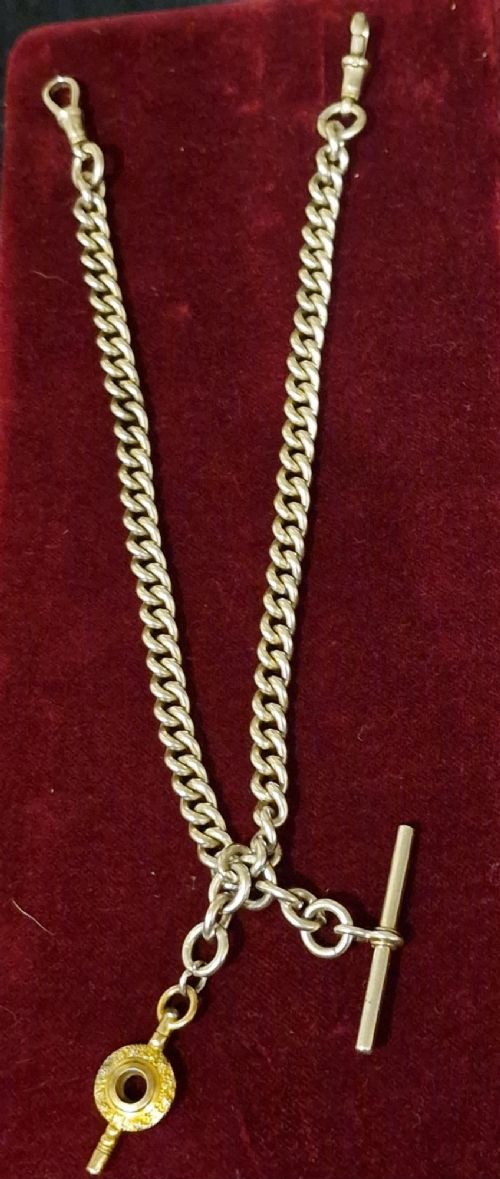
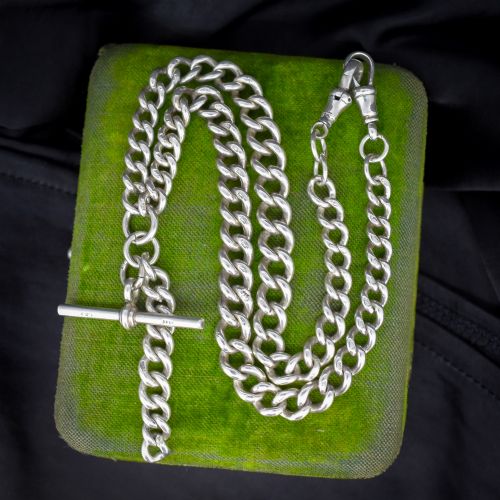
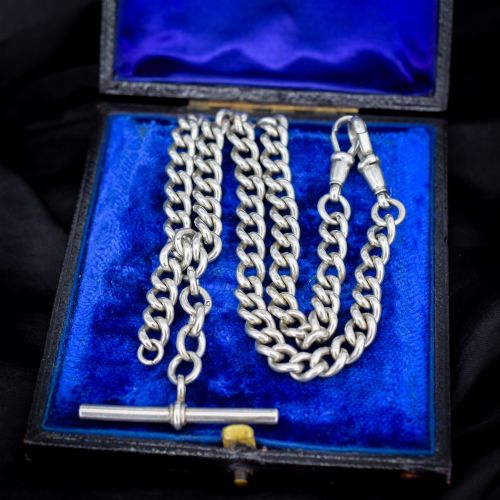
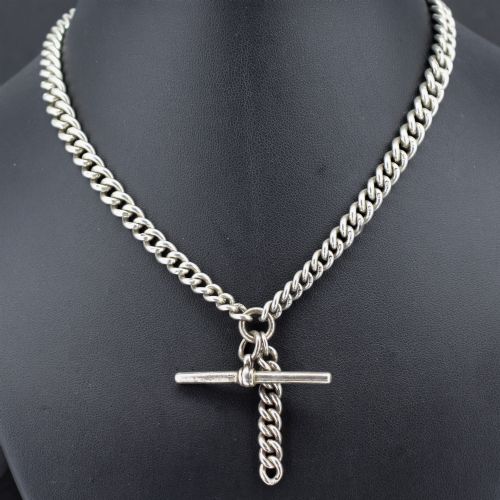
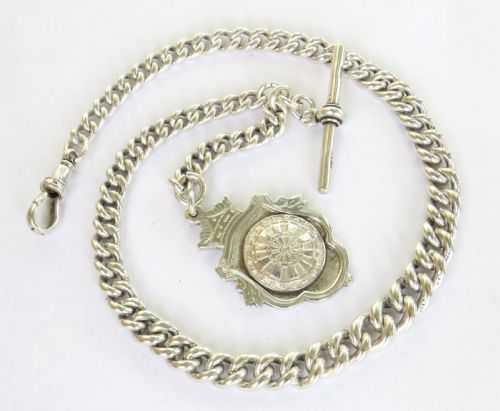
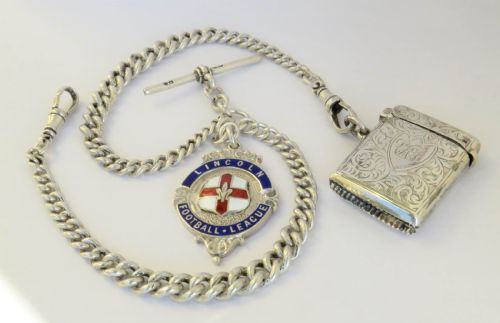
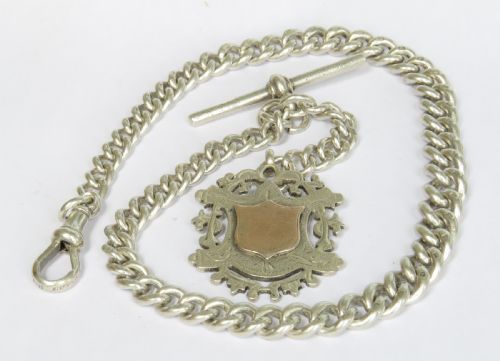
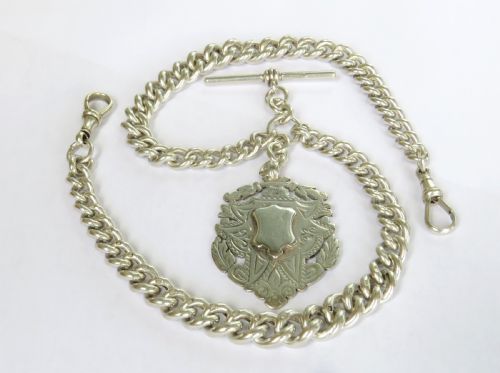
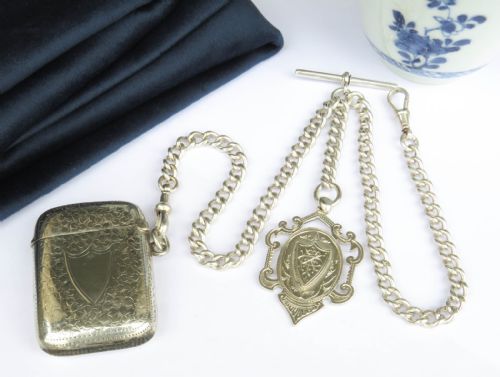
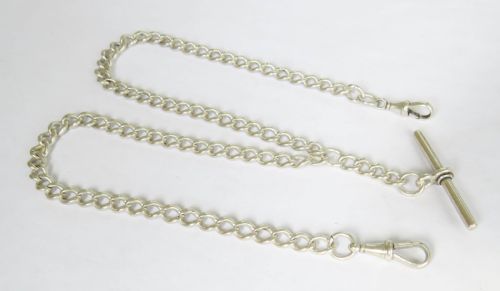
A double silver chain primarily appears here as a pocket watch albert chain or necklace, styled with curb links designed to loop securely from a pocket or wear around the neck. These pieces span the Victorian, Edwardian, and Art Deco periods, capturing distinct eras of metalwork.
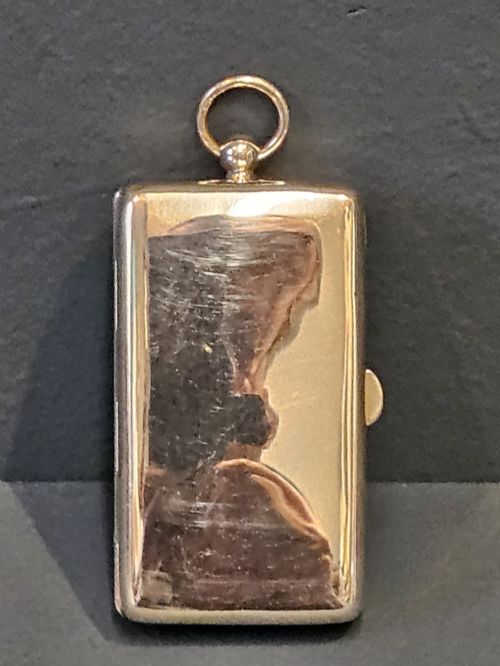
The selection also includes related items like sovereign cases, vests, and mantel clocks featuring double chain movements, showcasing how silver and other materials were utilised for utility and adornment alike.
Buyers will encounter items originating from the late nineteenth century through to the 1930s, each piece demonstrating the substantial build characteristic of early watch chains and associated accessories.
How they were made
Makers fashioned these pieces predominantly from sterling silver and solid silver, frequently integrating gold accents, rose gold, or enamel for decorative contrast. Certain clock and accessory pieces incorporate mahogany and brass alongside the core metalwork.
Links were meticulously formed into sturdy curb patterns to handle the daily wear of pocket watches, vestas, and fobs. Goldsmiths and silversmiths relied on traditional hand-assembly methods to ensure durability and distinct visual balance across each chain and associated fob.
Double Silver Chain Retail Price Guide 2026
Typical asking prices for double silver chain among the pieces listed under this phrase on Sellingantiques today, from the lower quarter to the upper quarter. They describe what is for sale here now, not the wider market.
Listings feature items spanning the Victorian, Edwardian, and Art Deco periods, utilising sterling silver, gold, enamel, mahogany, and brass.
What varies in quality
The calibre of a piece rests on the heft of the silver links and the integrity of the original construction, distinguishing heavy-duty items from lighter variants. Solid sterling silver formations command attention for their tactile presence and enduring structure.
Detailing such as integrated gold accents, enamel work, and the inclusion of original fobs, darts, or sovereign cases elevate certain examples. The precision of the engineering, particularly visible in fusee clock movements and double albert configurations, defines the upper tier of the range.
The Double Silver Chain Glossary
- Vesta
- A small pocket case designed for holding matches. These often accompanied watch chains in the nineteenth and early twentieth centuries.
- Fusee
- A conical pulley used in clockwork mechanisms to maintain even tension as the mainspring unwinds. This mechanism is often found in quality nineteenth-century clocks.
- Curb link
- A style of chain composed of interlocking links that lie flat. This design offers notable strength and flexibility for daily wear.
Double Silver Chain: Frequently Asked Questions
How do I wear a double silver chain?
These chains function effectively as necklaces or traditional watch chains, depending on the length and style of the links. Many buyers choose to adapt pocket watch albert chains for modern neckwear.
The central T-bar can be removed or tucked away discreetly, allowing the double strand to sit comfortably against the collarbone.
What is an albert chain?
An albert chain is a specific type of watch chain designed to secure a pocket watch to a waistcoat or jacket. The design usually incorporates a T-bar and a drop piece for a fob or charm.
Double albert chains feature two strands that loop between pockets, offering a more substantial visual presence.
What period do most of these pieces come from?
The listings span from the late nineteenth century through the Edwardian era and into the 1920s and 1930s. Victorian and Edwardian examples represent the height of traditional silver watch chain production.
Later pieces often reflect the geometric influences of the Art Deco period.
Did these chains come with fobs?
Many watch chains were paired with fobs, dards, or sovereign cases to add weight and decorative appeal. These attachments hung from the centre of the double chain loop.
Original matching fobs help retain the historical context and complete utility of the piece.