

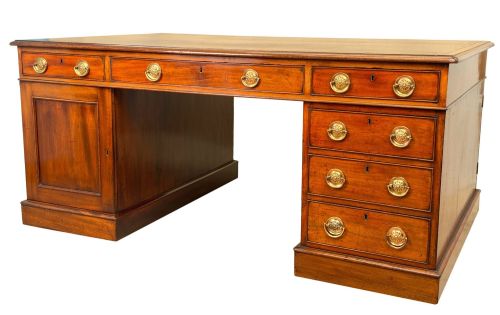
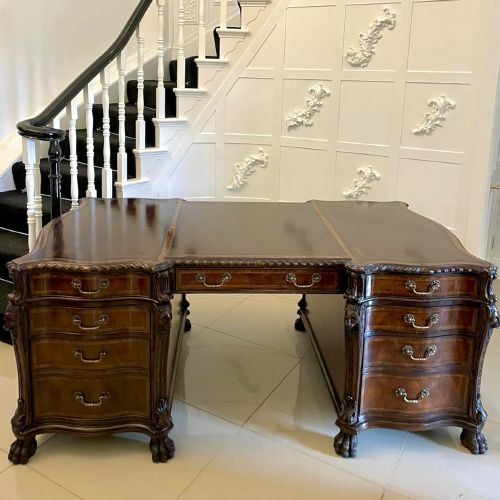
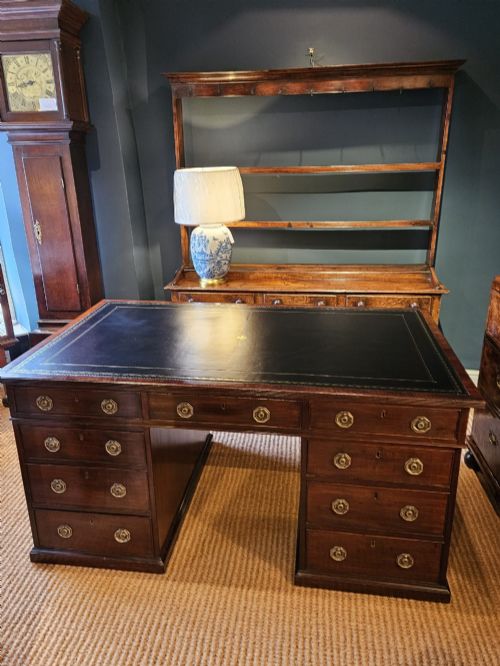
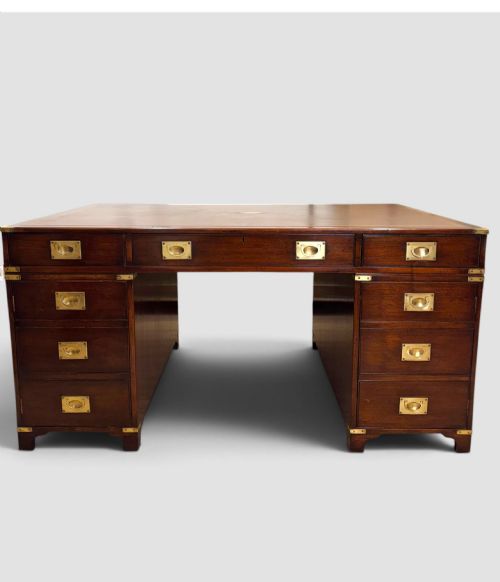
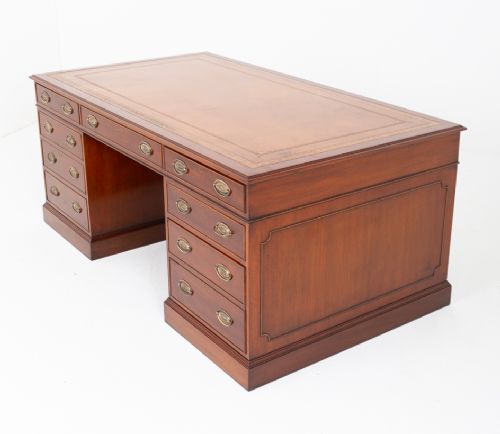
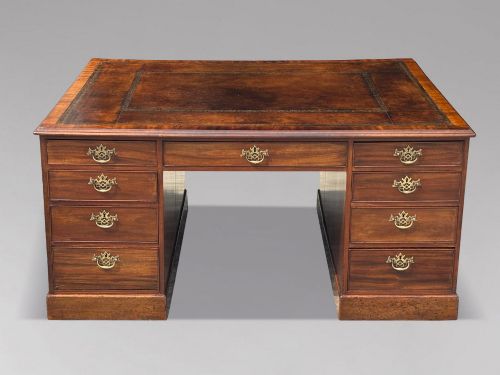
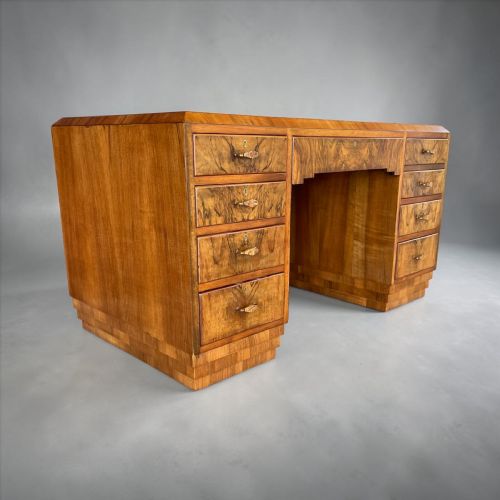
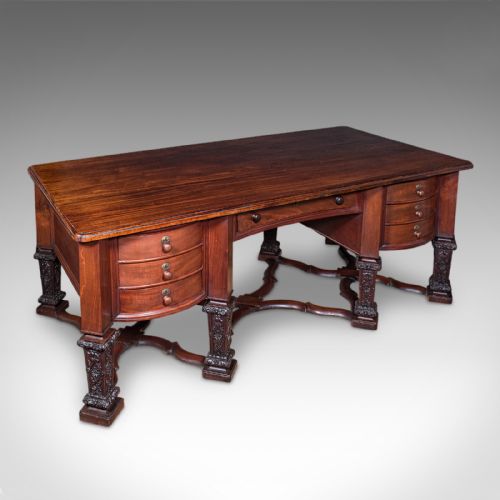
Double Pedestal Partner Desk
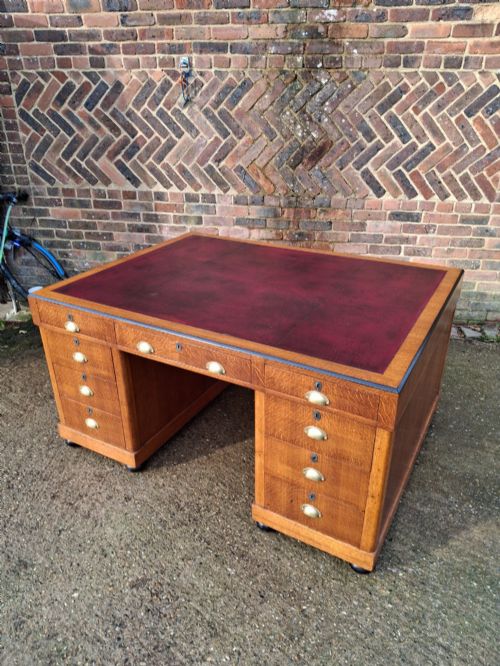
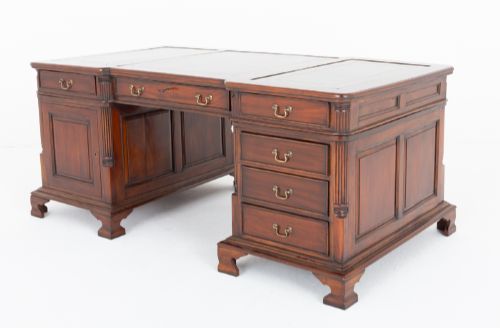
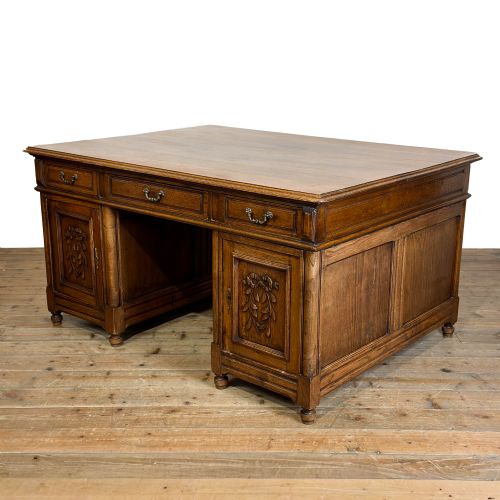
A double pedestal partner desk is a generous, two-sided workspace built for two people to sit face to face, offering a commanding presence in a large room.
Double Pedestal Partner Desk
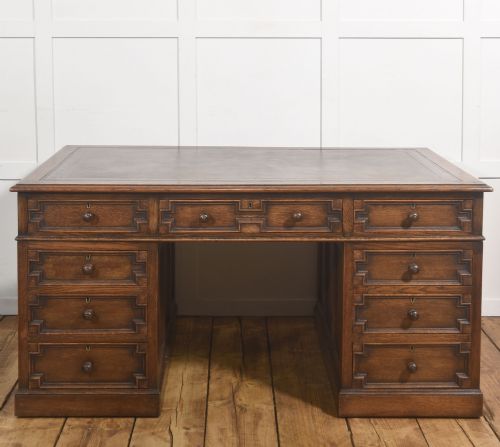
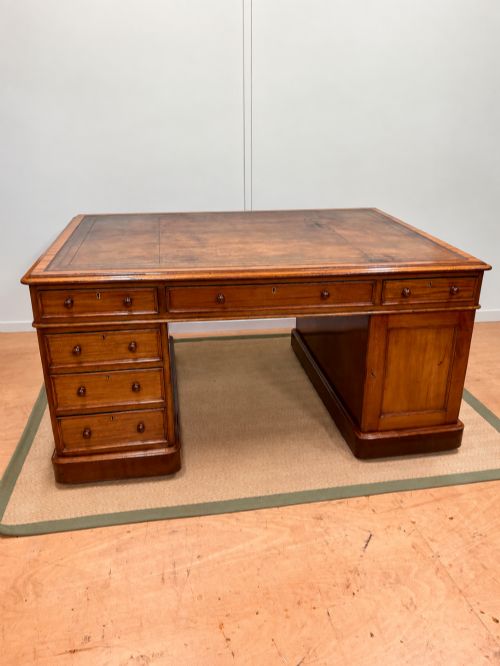
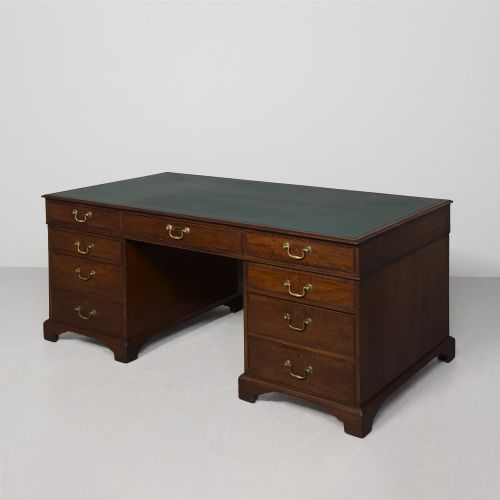
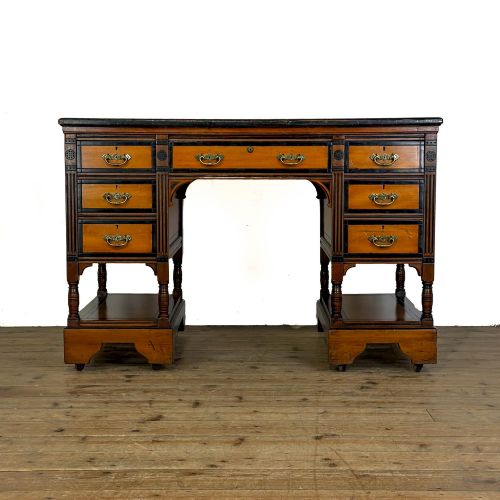
A double pedestal partner desk provides workspace on both sides, typically featuring banks of drawers or cupboards on either side beneath opposing writing surfaces. When searching for a double pedestal partner desk, buyers encounter substantial timber constructions designed to stand in the centre of a room rather than against a wall.
The pieces appearing on this page span from the 18th century through the Victorian and Edwardian eras into the early 20th century. Mahogany remains the most frequent timber found, alongside oak, walnut, burr walnut, and pine.
Forms range from straightforward Victorian and Georgian examples to revival styles including Chippendale, Jacobean, and Louis XIV. Many feature inset leather writing surfaces and multiple functional drawers accessible from both matching sides.
Materials and Construction
Cabinet makers utilised dense hardwoods such as mahogany, oak, and walnut, often selecting figured veneers like burr walnut or flame mahogany for the primary surfaces. These timbers were joined to sturdy carcases designed to withstand heavy daily use by working professionals.
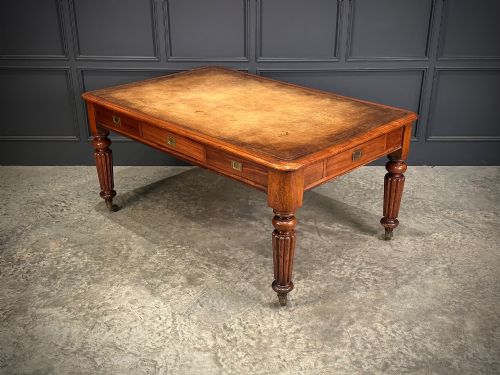
Writing surfaces were traditionally lined with leather, frequently decorated with gold tooling around the edges. Brass hardware, including campaign handles and drawer pulls, completed the functional fittings of these substantial desks.
Double Pedestal Partner Desk Retail Price Guide 2026
Typical asking prices for double pedestal partner desk among the pieces listed under this phrase on Sellingantiques today, from the lower quarter to the upper quarter. They describe what is for sale here now, not the wider market.
Listings feature woods including mahogany, oak, walnut, burr walnut, and pine across periods from the 18th century to the Edwardian era.
Evaluating Quality and Craftsmanship
Quality in a double pedestal partner desk rests upon the selection of timber and the precision of the cabinet work. Superior examples display carefully matched grain patterns across large surfaces and drawers that operate smoothly within solid linings.
The depth of carving, the originality of the brass hardware, and whether the piece is finished fully on both sides distinguish standard utility desks from the finest grand library pieces.
Maple and Co·Cookes of Finsbury London·Charles Andrea Nosotti·T Wilson
The Double Pedestal Partner Desk Glossary
- Partners desk
- A large double-sided pedestal desk designed with drawers and cupboards accessible from opposing sides so two people can work facing each other.
- Pedestal desk
- A freestanding desk comprising two supporting banks of drawers with a central recess for a chair.
- Flame mahogany
- A distinctive veneer cut from the branch junction of a mahogany tree, creating a flame-like pattern across the wood.
- Campaign handles
- Recessed brass handles set flush into the drawer fronts to prevent catching during transport or heavy use.
- Tooled leather
- Leather writing surfaces decorated with pressed gold leaf patterns along the perimeter.
Double Pedestal Partner Desk: Frequently Asked Questions
Where should a partner desk go?
Because a double pedestal partner desk is finished on all sides, it is designed to sit proudly in the centre of a room rather than pushed against a wall.
This placement allows both users to sit facing one another with adequate clearance around the entire piece.
How do I care for the leather top?
The leather writing surface benefits from occasional light conditioning with appropriate wax or balms to keep the material supple and prevent drying.
Avoid placing damp items directly onto the leather and protect the gold tooling from excessive moisture.
Can I use a partner desk alone?
Many people use a double pedestal partner desk as a single spacious workstation, utilising one side for seating and the opposite side for storage or display.
The dual-sided drawers provide exceptional capacity for organising paperwork and books.
How do I identify the wood type?
Close inspection of the grain, colour, and weight helps distinguish between timbers such as mahogany, oak, and walnut used in these desks.
Mahogany typically shows a reddish-brown hue with straight or figured grain, while oak displays prominent growth rings and medullary rays.