




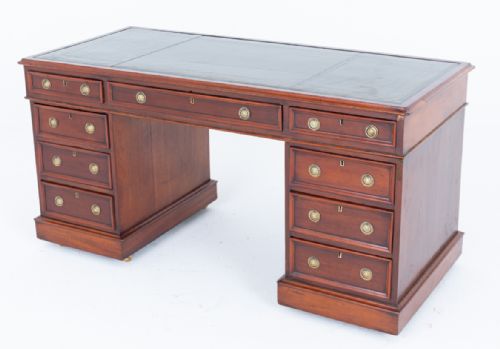

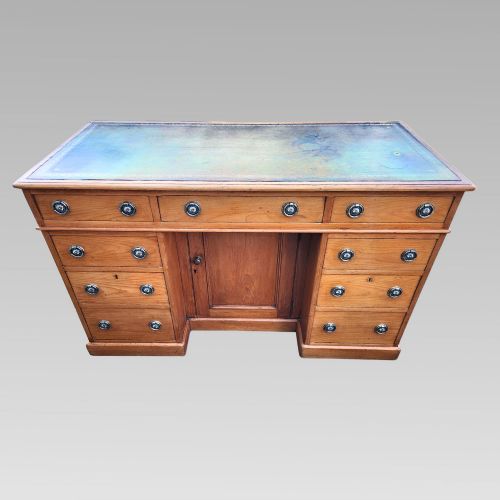
Double Pedestal Library Desk
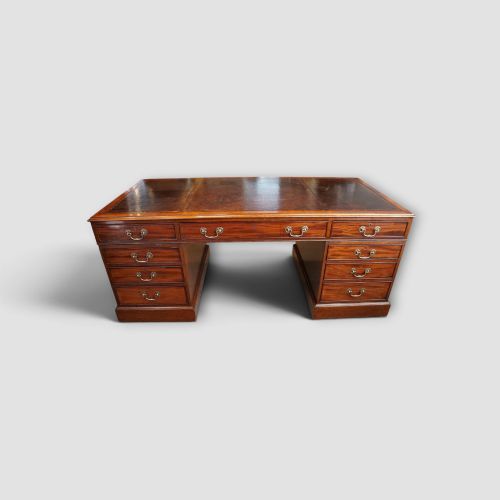
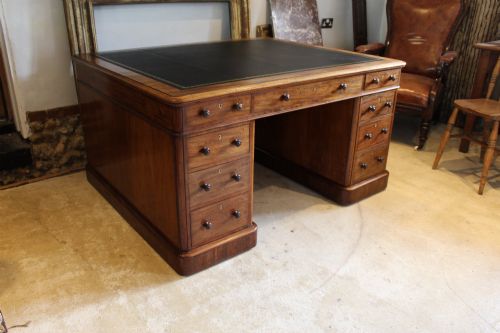
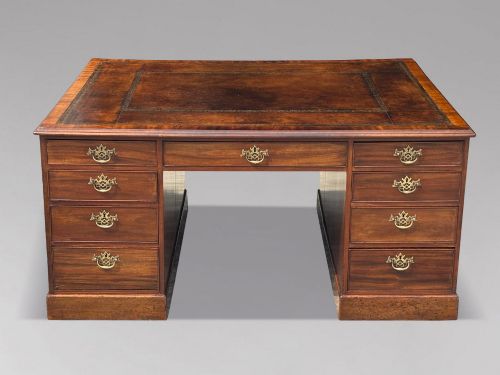
A double pedestal library desk provides generous workspace with banks of drawers flanking a central kneehole, built for two people to work face to face.
Double Pedestal Library Desk
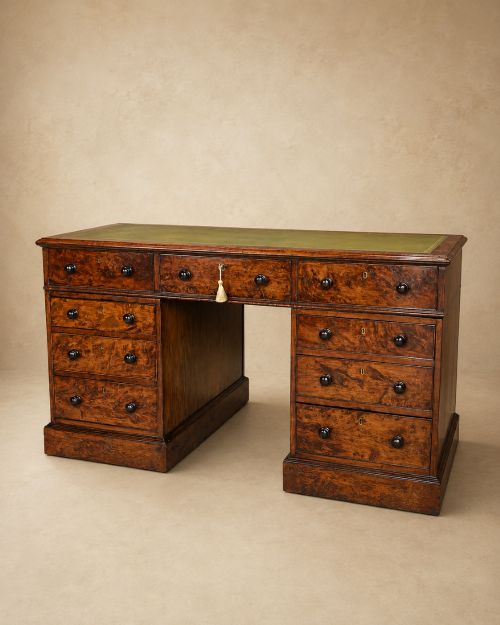
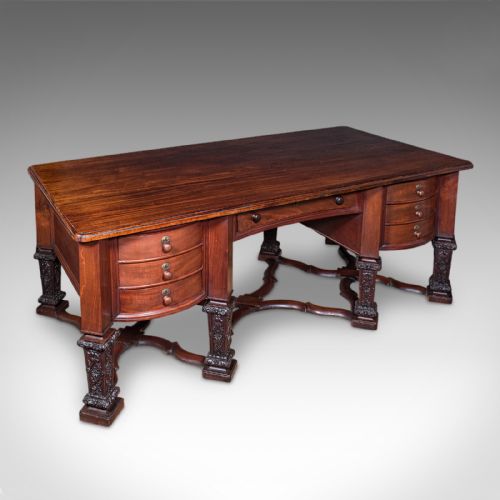
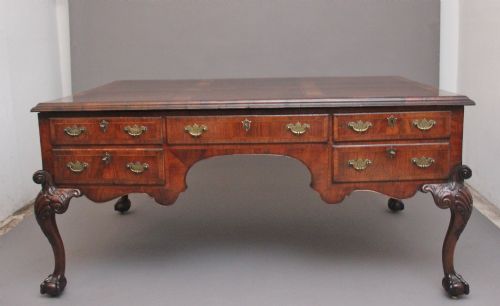
A double pedestal library desk, frequently encountered as a partners desk in the listings, organises storage across two supporting pedestals beneath a spacious top. These pieces emerge primarily from the Georgian, Regency and Victorian periods, reflecting the heavy administrative and scholarly needs of large households and institutions.
The layout typically incorporates drawers and cupboards facing both directions to accommodate two users simultaneously. Variations span the classical proportions of the 18th century through the robust styling of the Victorian era and into Edwardian examples.
Assessing the Pieces
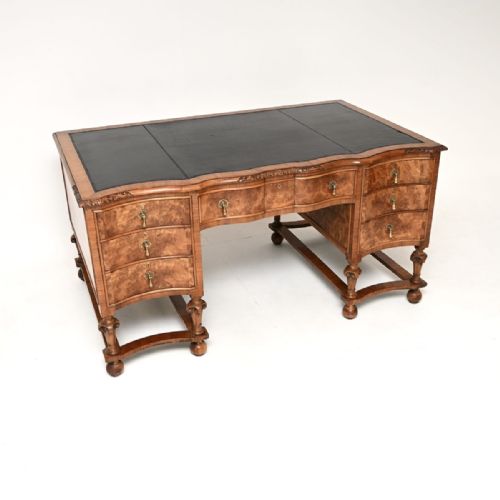
The distinction between standard examples and exceptional pieces rests upon timber selection and the precision of the joinery. Figured veneers such as flame mahogany or burr walnut indicate higher status commissions.
Hardware execution and the complexity of the drawer arrangements, including configurations reaching eighteen drawers, determine the level of craftsmanship invested by the maker.
Listings span from the 18th century through to the Edwardian era, predominantly featuring mahogany, oak, and burr walnut timbers.
Maple and Co·Cookes of Finsbury London·Charles Andrea Nosotti·T Wilson
The Double Pedestal Library Desk Glossary
- Partners desk
- A large double pedestal desk designed with drawers and cupboards on both sides so two people can sit opposite each other. This form dominates the available selection.
- Kneehole
- The central recess beneath the desk top that allows space for the user's legs when seated. It is often flanked by pedestals containing multiple drawers.
- Bureau Mazarin
- An early cabinet desk type referenced in specific stylistic descriptions within the inventory. It typically comprises a recessed central cupboard flanked by banks of small drawers.
Double Pedestal Library Desk: Frequently Asked Questions
How do I use a double pedestal library desk today?
These large pieces serve effectively as executive desks placed centrally in a room rather than pushed against a wall. Their double-sided nature allows two people to share the workspace or provides a grand focal point in a home study.
Drawers on both faces offer substantial storage for modern office supplies, paperwork and technology accessories while maintaining historical character.
Were these desks really used by business partners?
Historical working arrangements in banks, law firms and grand estate libraries required partners or clerks to share a single large writing surface. The opposing drawers and kneeholes gave each person equal access to storage and legroom.
Over time, the terminology shifted between library desks and partners desks, though the functional double-sided design remained consistent.
How can I tell a Victorian desk from a Georgian one?
Georgian pieces generally display lighter, restrained classical proportions with simpler bracket feet or plinths. Walnut and early mahogany dominate these 18th-century and transitional examples.
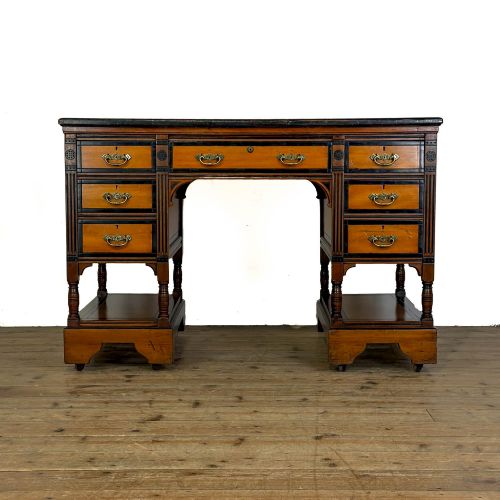
Victorian versions tend to be heavier and larger, incorporating dense flame mahogany, burr walnut, ebonised details, and more elaborate brass hardware or castors.
What maintenance does the leather top require?
The inset leather writing surface benefits from occasional conditioning with specialist leather balm or wax to prevent drying and cracking. Care should be taken to avoid abrasive cleaners near the gilt tooling surrounding the perimeter.
Using blotters or writing pads protects the historic hide from ink stains and deep impressions caused by modern ballpoint pens.