
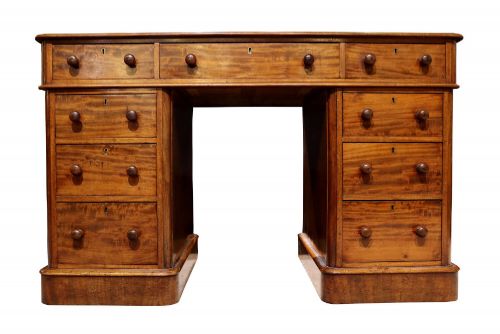


Traditional Wooden Executive Desk
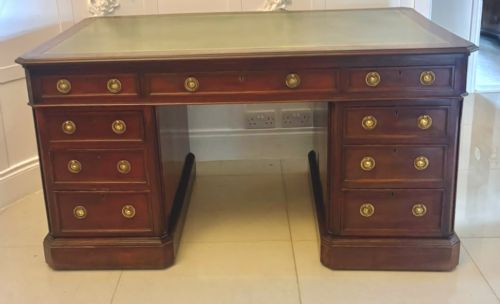
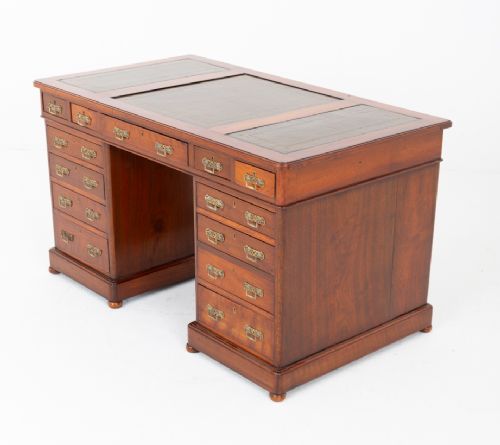
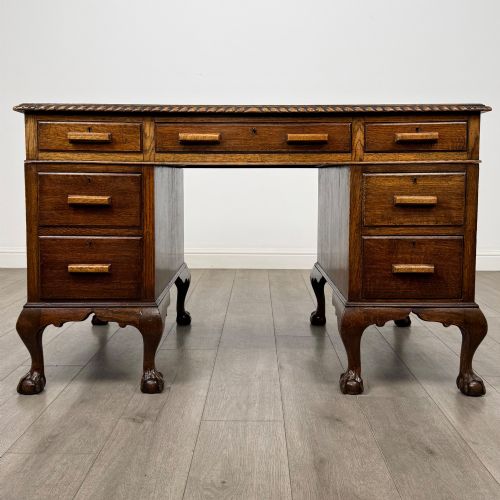
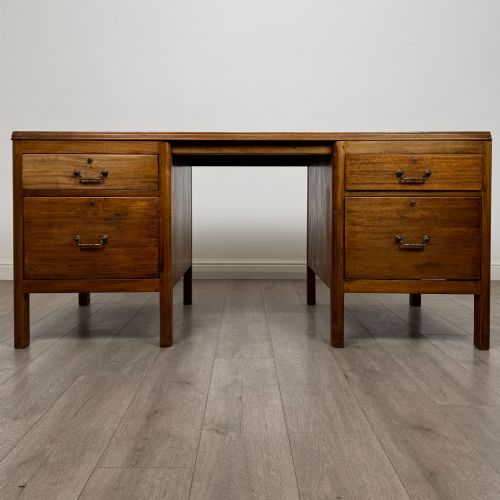
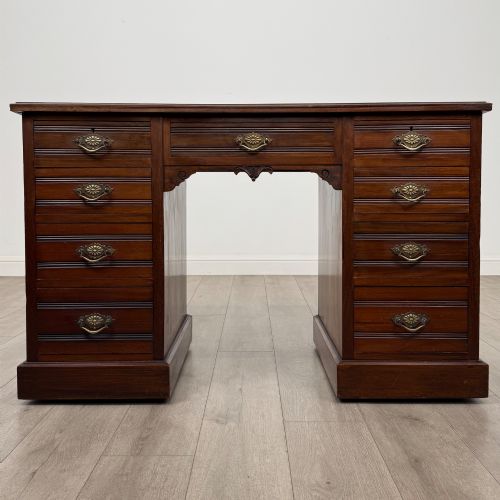
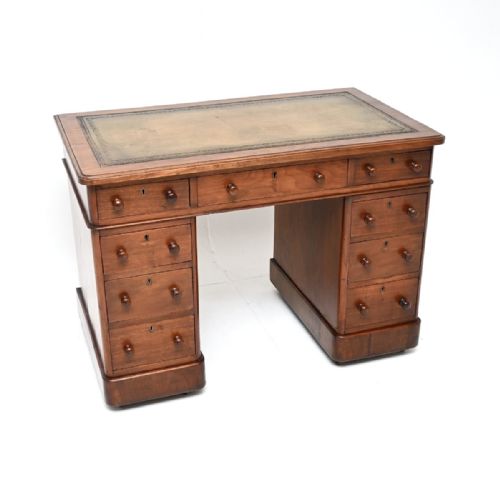
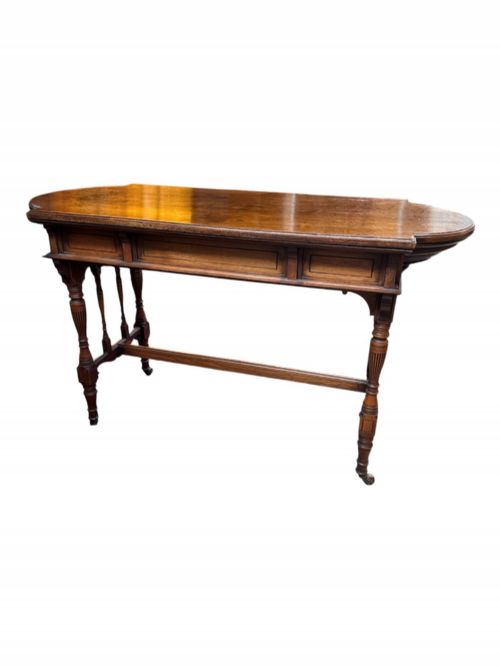
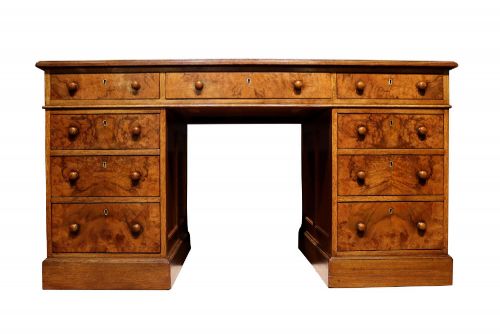
A traditional wooden executive desk grounds a study with timber presence and practical compartments.
Traditional Wooden Executive Desk
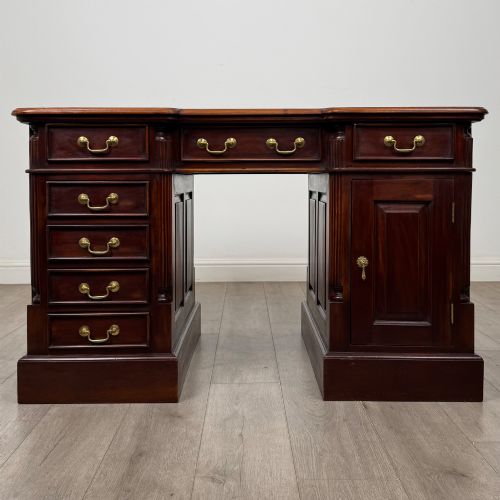
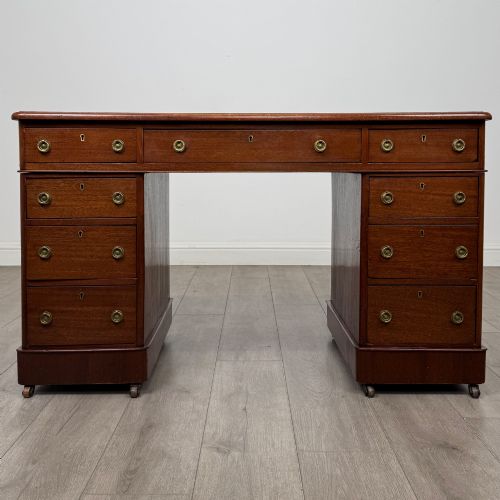
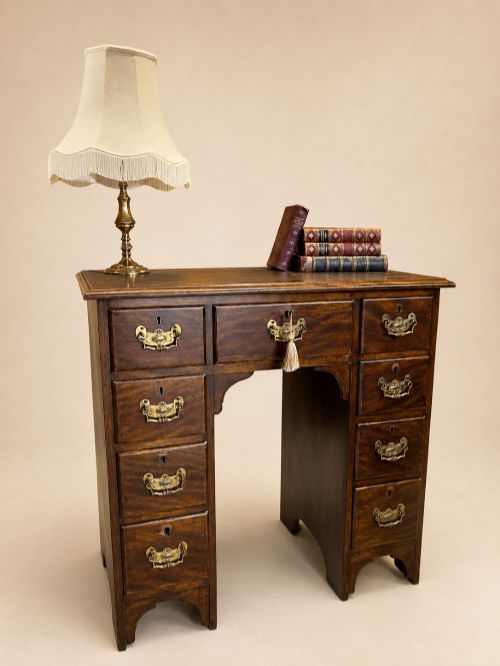
A traditional wooden executive desk appears most frequently as a twin pedestal desk or kneehole desk in mahogany, walnut, or oak. These workspace pieces emerge primarily from the Victorian and Edwardian eras, spanning the nineteenth and early twentieth centuries.
Makers shaped partners desks for grand rooms, allowing two people to work opposite one another with drawers on both sides. Smaller writing tables and Carlton house desks offer specialised writing surfaces with stacked stationery compartments.
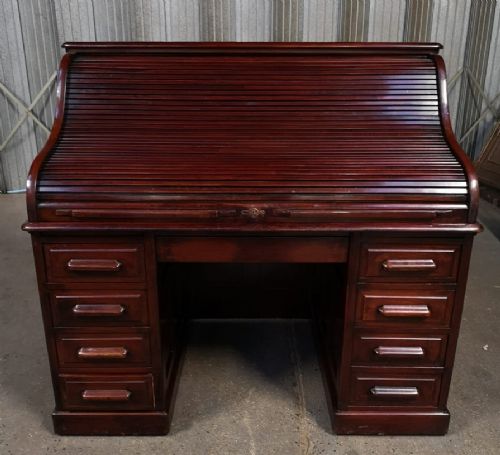
The heavy timber construction and inset leather writing surfaces meet the practical demands of private offices and libraries. Period examples integrate fitted drawers, pull-out writing slides, and occasionally roll tops.
Materials and construction
Cabinet makers utilised dense hardwoods like mahogany, oak, and walnut for the primary structure and drawer frames. Burr walnut and curl mahogany veneers provide decorative grain patterns across drawer fronts and top surfaces.
Tooled leather writing inserts are set directly into the timber tops, offering a resilient surface for daily correspondence. Brass handles, escutcheons, and drawer pulls finish the exterior framework.
Listings feature woods including mahogany, oak, walnut, burr walnut, maple, and ash across Victorian and Edwardian periods.
Craftsmanship and timber selection
Superior desks display highly figured mahogany, burr walnut, or solid oak timbers that command attention across a room. Finely grained panels and matched drawer fronts indicate careful material selection by the workshop.
Internal construction reveals the standard of manufacture through dovetailed drawer boxes and solid secondary woods. Well-engineered pedestals and smooth-running drawers distinguish substantial library and partners desks from standard utilitarian office furniture.
Maple and Co
The Traditional Wooden Executive Desk Glossary
- Pedestal desk
- A heavy office desk consisting of two independent pedestals of drawers supporting a wide writing surface. A central kneehole sits directly between the two banks of drawers.
- Kneehole desk
- A compact desk featuring a central recessed space for the legs beneath the desktop. A single shallow drawer often spans the central opening.
- Carlton house desk
- A fitted writing desk with a curved superstructure of small drawers and pigeonholes running along the back and sides. It originated in the late eighteenth century and continued into Edwardian production.
- Escutcheon
- A protective plate surrounding a keyhole on a drawer or cupboard door. They are frequently cast from brass on traditional office furniture.
Traditional Wooden Executive Desk: Frequently Asked Questions
What is a partners desk?
A partners desk is built with drawers and cupboards on both sides so two people can sit opposite each other.
These large pieces traditionally stood in the centre of libraries and private offices for shared administrative work.
How do I care for a leather desk top?
Leather desk inserts require gentle cleaning and occasional conditioning to prevent the hide from drying out.
Keep liquids away from the surface and use neutral waxes designed specifically for antique leather.
Are these desks suitable for daily computer work?
The generous proportions and solid timber construction of pedestal desks accommodate modern office equipment easily.
Their deep drawers and pull-out writing slides provide practical storage alongside contemporary workspace requirements.
How do I distinguish Victorian from Edwardian desks?
Victorian desks generally feature heavier mahogany or walnut construction with deep mouldings and dark finishes.
Edwardian pieces often display lighter oak framing, delicate satinwood stringing, or revival styles from the early twentieth century.