

Double Partner Desk
A double partner desk provides dual workspaces with matching pedestals on each side, designed originally for business associates sharing a single large table.
Double Partner Desk
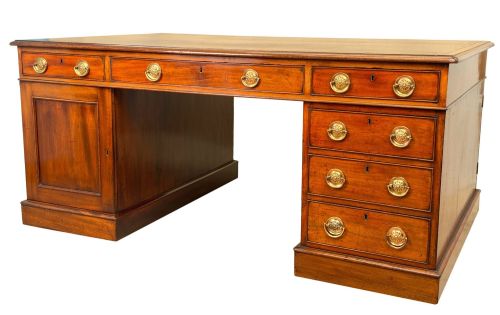
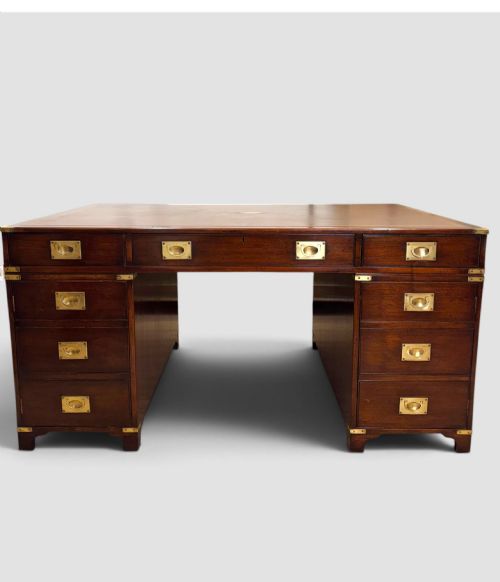
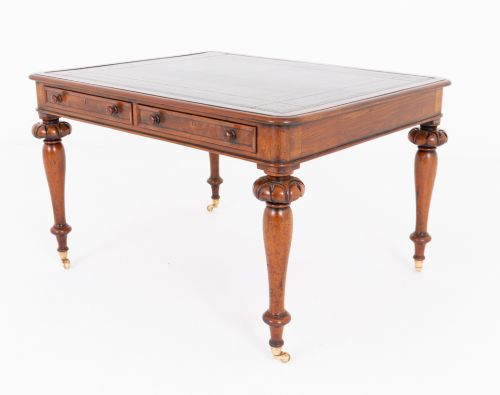
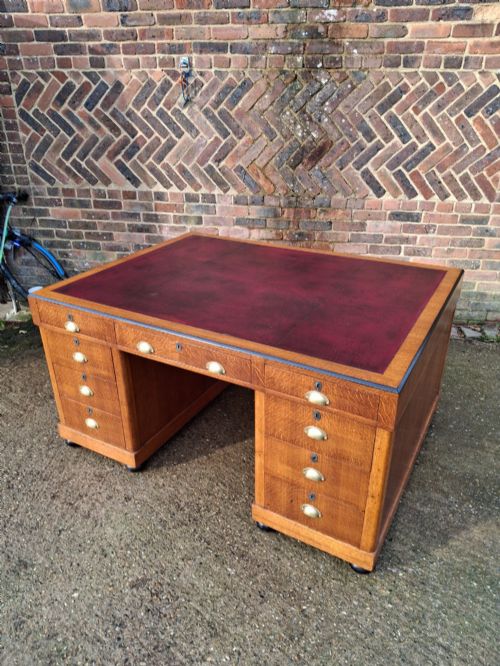
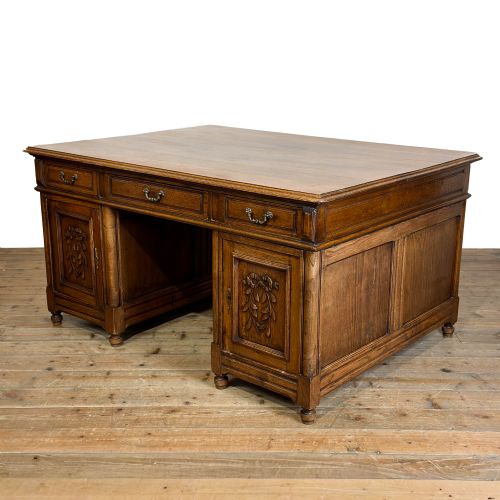
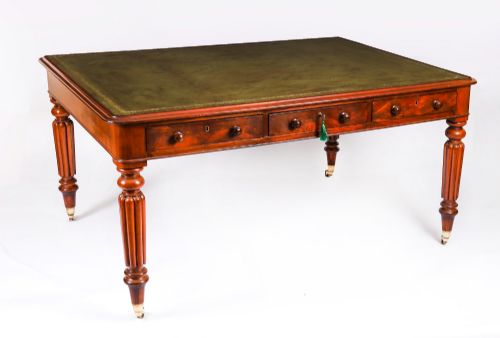
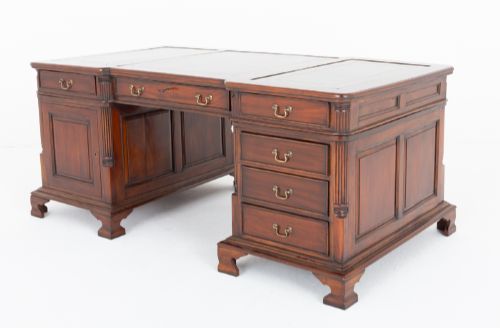
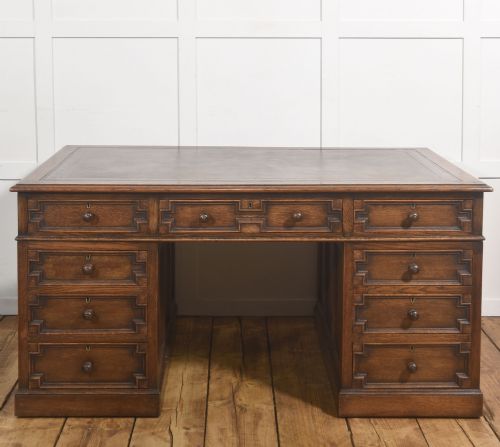
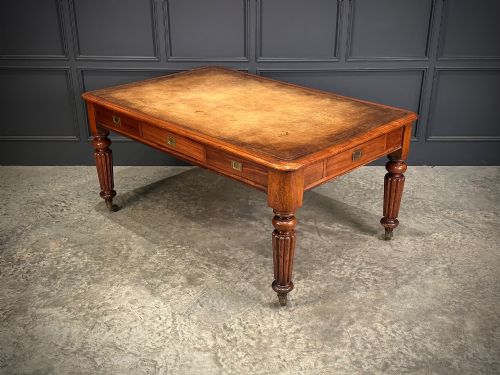
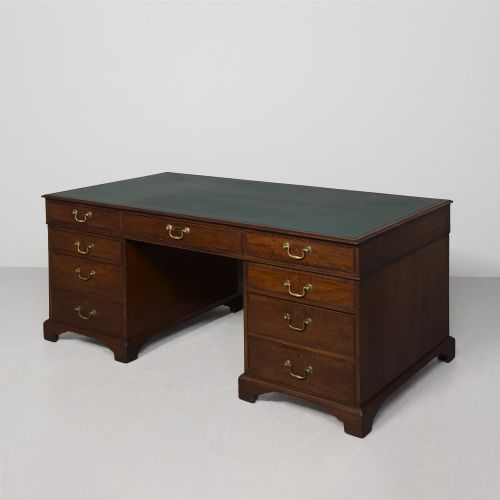
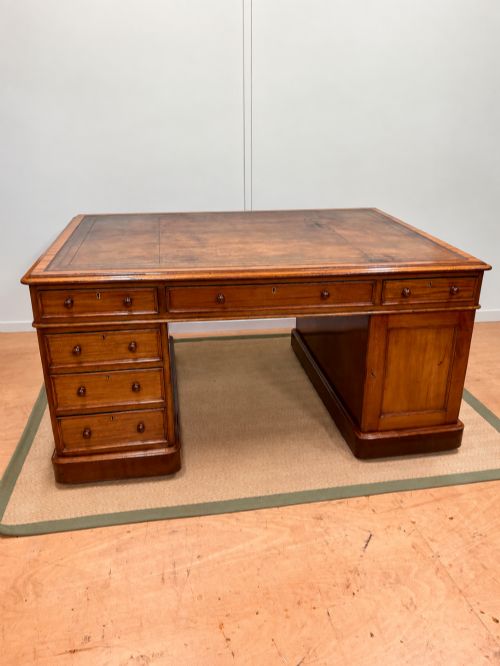
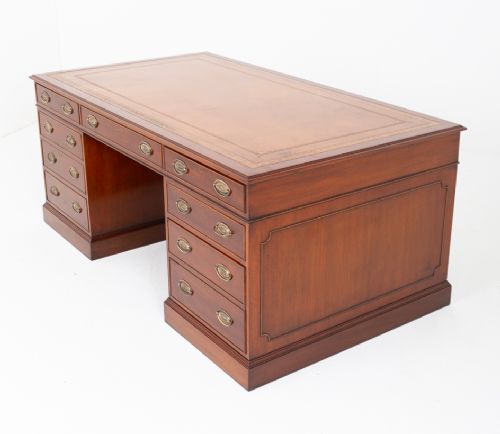
A double partner desk stands as a substantial free-standing piece usually built with banks of drawers or cupboards on both sides so two people can work facing each other. The most common examples met here belong to the Victorian period and the nineteenth century, often constructed from dense timbers.
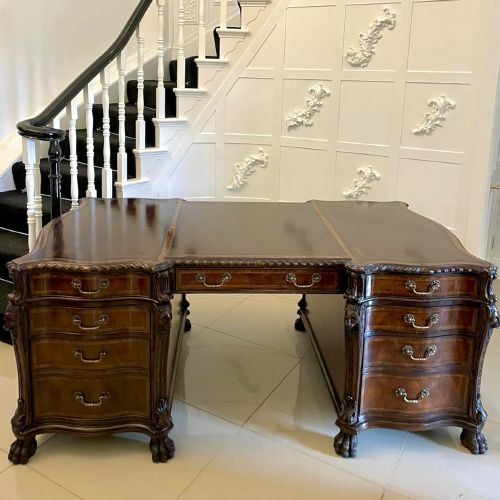
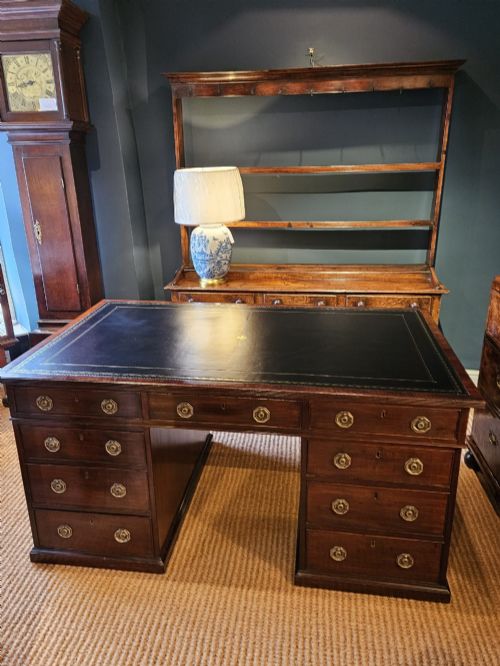
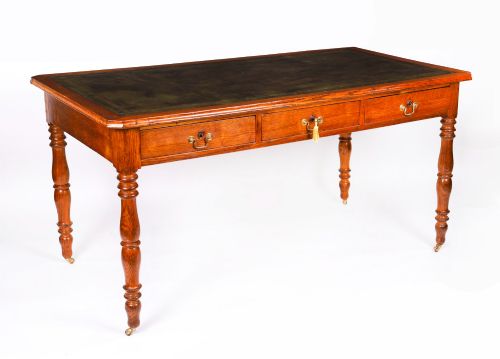
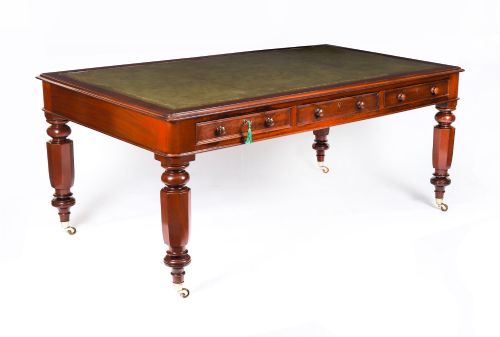
Many of these tables take the pedestal format, housing twin stacks of drawers beneath the writing surface, while others follow the library table design with simpler legs. Styles range from plain nineteenth-century utility pieces to revival designs drawing on Georgian or Chippendale forms.
The layout accommodates two users simultaneously, separating working areas with drawers, cupboards, or kneeholes arranged symmetrically on opposing faces. This configuration suits larger rooms where the furniture sits centrally rather than against a wall.
Construction and materials
Cabinet makers relied heavily on mahogany, oak, and walnut, often selecting figured timbers like flame mahogany or burr walnut for the primary display surfaces. These hardwoods were joined using traditional framing techniques to support the heavy double-sided pedestals.
Writing surfaces were routinely lined with leather, frequently tooled with gilt decoration around the perimeter. Brass handles, sometimes of the drop or campaign variety, and occasionally ebonised wood details completed the hardware and secondary trims.
Double Partner Desk Retail Price Guide 2026
Typical asking prices for double partner desk among the pieces listed under this phrase on Sellingantiques today, from the lower quarter to the upper quarter. They describe what is for sale here now, not the wider market.
Early nineteenth-century desks occasionally incorporated hidden compartments within the pedestals for private ledgers.
Factors distinguishing quality
The choice of timber underpins the distinction between standard examples and finer works, with figured veneers like flame mahogany or burr walnut indicating superior cabinet making. Carved ornamentation, when present, demonstrates the hand of a skilled artisan rather than routine workshop production.
Internal construction, such as the dovetailing of drawer boxes and the retention of original brass hardware or tooled leather inserts, separates unaltered pieces from later replacements. The symmetry and integration of double-sided drawer banks dictate the overall coherence of the design.
Maple and Co·Cookes of Finsbury London·Charles Andrea Nosotti
The Double Partner Desk Glossary
- Pedestal desk
- A writing table supported by two upright banks of drawers or cupboards flanking a central kneehole. This structure forms the base for the majority of large partner desks.
- Partners desk
- A double-sided writing table designed for two people to use simultaneously from opposite directions. Drawers and workspace are duplicated on both long sides.
- Campaign handles
- Recessed metal handles inset flush into the drawer fronts to prevent snagging during transport. They appear on pieces intended for military use or travel.
- Tooled leather
- Leather writing inserts decorated with gold leaf impressions stamped around the border. This material provides a traditional writing surface on antique desks.
- Flame mahogany
- Mahogany timber displaying a distinctive branching grain pattern resembling flickering flames. Cabinet makers used veneers of this wood on primary drawer fronts for visual impact.
Double Partner Desk: Frequently Asked Questions
What is a double partner desk?
A double partner desk is a large free-standing writing table built with matching drawers and workspaces on opposite sides. It allows two people to sit face-to-face while working.
Cabinet makers designed these pieces primarily for offices, libraries, and banking houses where business associates needed shared access to documents and storage.
How do I style a partner desk?
Because a partner desk is finished on all sides, it functions best positioned in the centre of a room rather than pushed against a wall. This placement highlights the symmetry of the dual pedestals.
Pair the desk with traditional seating and allow sufficient floor space around all four sides to maintain the balance of the room and permit access to the drawers.
How do I identify a Victorian partner desk?
Victorian partner desks typically feature dense timbers such as mahogany or walnut, often combined with tooled leather writing inserts and brass hardware. Construction methods rely on solid framing and hand-cut dovetails within the drawers.
Stylistic cues often include revival elements drawing from Georgian or Chippendale traditions, alongside functional additions like recessed campaign handles on military-influenced pieces.
Were these desks used in offices?
These desks served administrative roles in professional rooms, government offices, and large private libraries throughout the nineteenth century. The dual-sided storage made them practical for clerks and partners working together.
The inclusion of numerous drawers and cupboards ensured that both users could secure their paperwork within their respective pedestals.