



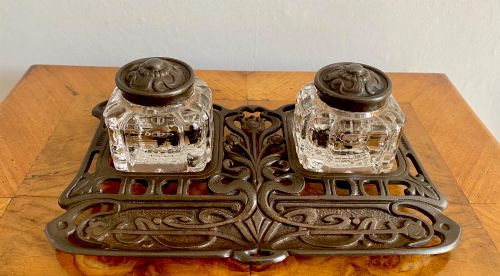

Double Glass Inkwell Stand
A double glass inkwell stand sits ready on the desk, holding two vessels for ink alongside pens in brass, silver, or polished wood.
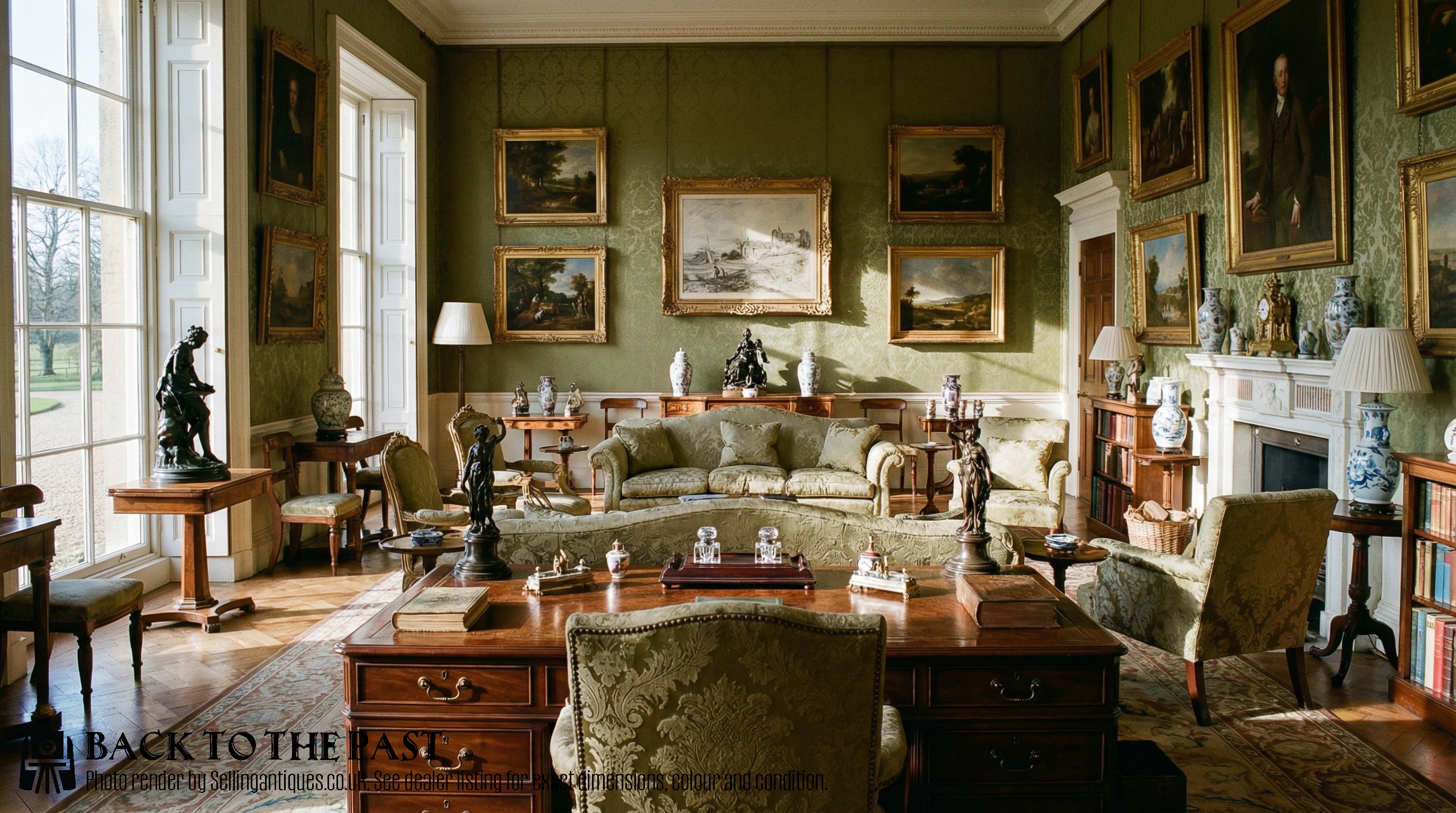
Double Glass Inkwell Stand
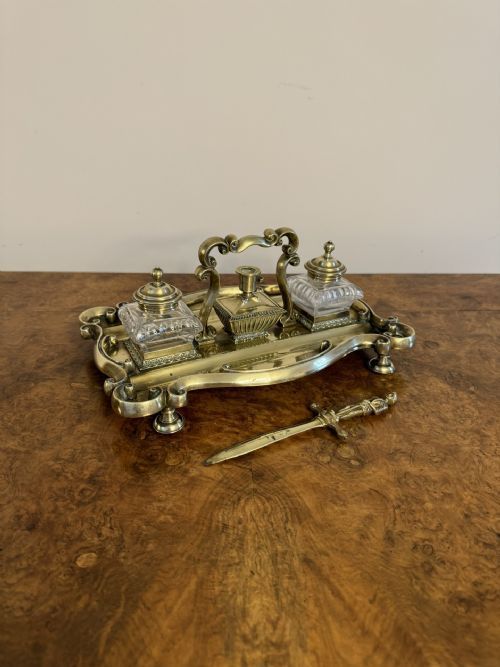
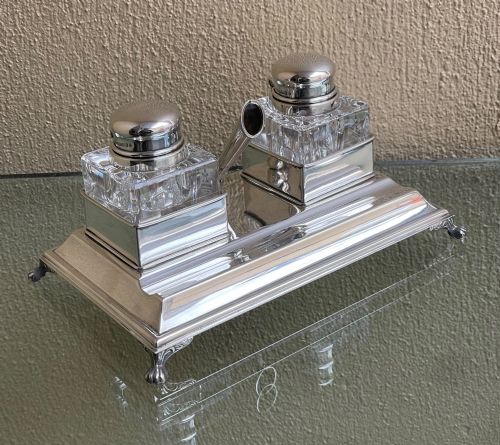
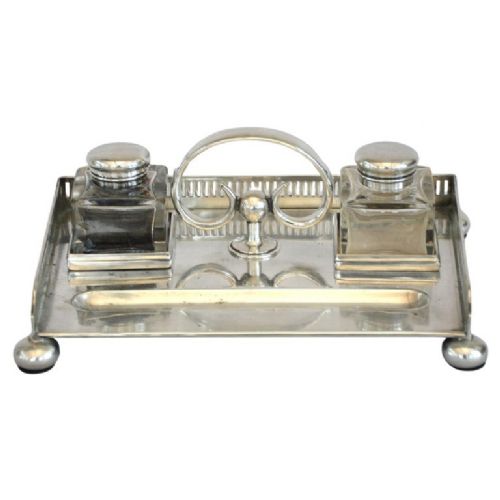
A double glass inkwell stand brings together a pair of heavy glass reservoirs mounted within a shared base for writing correspondence. These desk accessories appear frequently from the Victorian and Edwardian eras, fashioned from mahogany, walnut, brass, or silver plate.
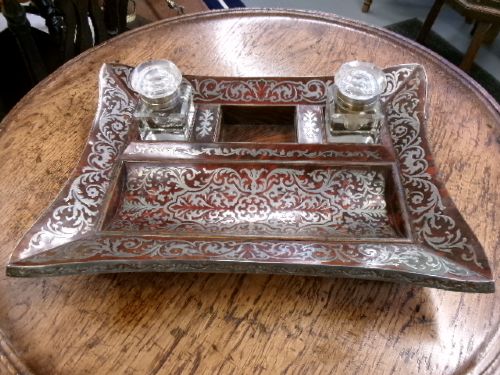
Buyers encounter heavy wooden trays fitted with brass mounts alongside elaborate French ormolu frames and Boulle work. Simpler variants utilise straightforward oak or mahogany bases holding cut glass bottles with hinged metal lids.
The form spans straightforward nineteenth century carriers to ornate twentieth century pieces incorporating chambersticks or small accessory drawers. Most examples combine a sturdy base with matching glass ink bottles designed to sit securely in fitted recesses.
Construction and materials
Makers combined heavy cast brass, silver plate, and solid timbers such as mahogany and walnut to form the structural base of each desk stand. Glass ink bottles were typically mould blown or cut with geometric facets to catch the light on a writing table.
Metals were cast, chased, or plated over base metals like Sheffield plate, while wooden trays received brass handles, gallery rails, and fitted collars for the ink pots. Inlaid pieces employed tortoiseshell and brass in intricate Boulle work, secured to wooden carcases with traditional adhesives.
Double Glass Inkwell Stand Retail Price Guide 2026
Typical asking prices for double glass inkwell stand among the pieces listed under this phrase on Sellingantiques today, from the lower quarter to the upper quarter. They describe what is for sale here now, not the wider market.
Periods represented on this page range from early nineteenth century examples through the Victorian and Edwardian eras into the mid twentieth century.
Judging quality in desk stands
Quality rests on the weight and crispness of the metal mounts, the thickness of the silver plating, and the clarity of the cut glass inkwells. Superior examples retain their original matching glass bottles rather than later replacements that rattle within their collars.
Finer pieces display meticulous joinery in the timber bases, precise brass inlay, and fully legible hallmarks on the silver components. The presence of integrated drawers, original pen rests, or matching chambersticks elevates the construction standard.
Walker And Hall·James Cartland And Sons·William Hutton
The Double Glass Inkwell Stand Glossary
- Inkstand
- A portable tray or stand holding one or more inkwells, pen trays, and sometimes a sander or wafer box. These desk accessories kept writing equipment organised on the desktop.
- Boulle work
- An elaborate form of marquetry using tortoiseshell and brass inlay, named after the French cabinetmaker André-Charles Boulle. Pieces featuring this technique often date to the mid nineteenth century.
- Sheffield plate
- An early form of composite metal made by fusing a thin sheet of sterling silver to a thicker copper base. It appears on older desk stands before electroplating became common.
- Ormolu
- Gilt bronze ornamentation applied to furniture and decorative objects during the nineteenth century. This technique added a rich golden finish to metal desk mounts and frames.
- Chamberstick
- A short portable candlestick fitted with a handle and a drip pan, occasionally incorporated into larger desk stands for illumination during evening writing.
Double Glass Inkwell Stand: Frequently Asked Questions
What is a double glass inkwell stand?
A double glass inkwell stand is a desktop accessory featuring a base made of wood, brass, or silver that holds two separate glass ink bottles. These stands provided a stable platform for writing with dip pens.
They were essential desk equipment in homes and offices before the invention of the fountain pen. The two wells typically held different coloured inks, such as black and red.
How do I date a wooden inkstand?
Dating a wooden inkstand involves examining the timber species, construction methods, and the style of the brass mounts. Victorian pieces often use mahogany or walnut with robust brass galleries.
Later Edwardian and early twentieth century examples may feature lighter oak or simpler turned feet. Hallmarks on any attached silver mounts provide the most precise date.
Are the glass inkwells usually original?
Many surviving desk stands retain their original matching glass inkwells, often featuring cut glass patterns or heavy moulded bases. Because glass bottles were prone to chipping or misplacement, replacements do occur.
Matching glass inserts that fit snugly into the brass collars indicate a higher degree of originality. Examining the wear around the base of the glass helps confirm period authenticity.
How do I care for a brass and wood desk stand?
Caring for these pieces requires keeping wood and brass away from direct sunlight and excessive moisture to protect the finish and prevent metal tarnishing. Gentle dusting with a dry cloth is usually sufficient for regular maintenance.
Silver plated or solid silver components can be treated sparingly with a mild metal polish while avoiding contact with the surrounding wood or glass.